Design and Construction of Parks and Recreation Facilities (2011)
In 2011, the Society of Afghan Engineers, led by Mr. Hamayon Ibrahim, transformed urban landscapes in Afghanistan by designing and constructing recreational and sports parks in three major cities. Leveraging his 30 years of expertise in city planning and infrastructure, these initiatives foster community engagement and enhance quality of life.
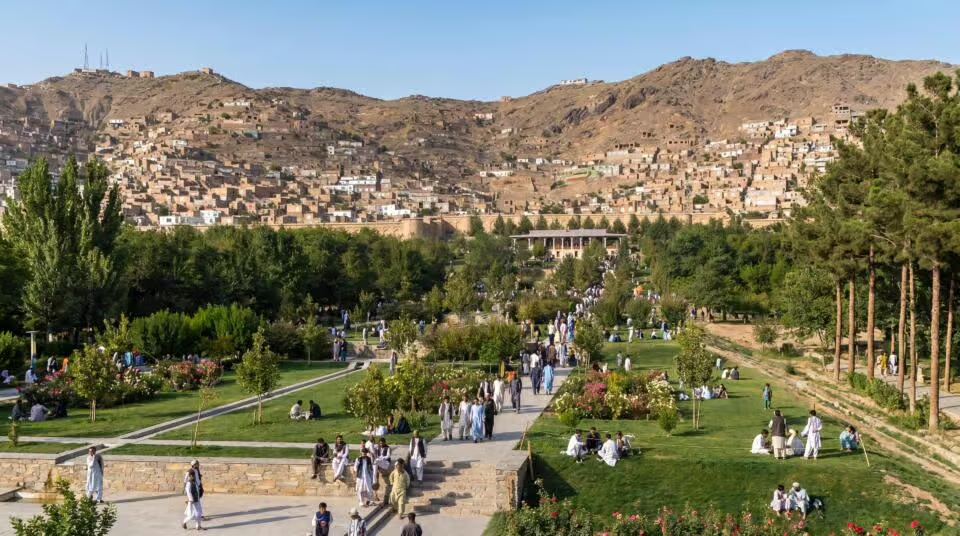
We, the Society of Afghan Engineers (SAE), through the dedicated efforts of our member Mr. Hamayon Ibrahim, contributed to urban development by designing and constructing recreational and sports parks across three major cities in Afghanistan in 2011. We achieved this by utilizing Mr. Ibrahim’s extensive professional background in city planning infrastructure, land development, and utility design.
Leveraging Technical Expertise for Public Infrastructure
Our ability to support the reconstruction of our homeland relies heavily on the diverse and specialized skills of our members. Mr. Hamayon Ibrahim, who received his B.S. degree in Architecture from the Faculty of Engineering at Kabul University in 1983, has built a robust career in the United States since 1986. Operating as a project manager with a private engineering firm in Northern Virginia, his expertise encompasses city planning infrastructure as well as urban and land development design. His 30 years of work experience in the U.S. includes the design of roadways, land, and utilities such as water, sewer, and storm water systems for both commercial and residential projects. Furthermore, he has consistently updated his technical knowledge to align with American design standards and industry changes by completing numerous training classes and seminars at universities.
Implementing Recreational Projects in Afghanistan
In 2011, we were able to directly apply this wealth of experience to public infrastructure initiatives within Afghanistan. During this time, Mr. Ibrahim’s work focused specifically on the design and construction of recreational and sports parks. These facilities were developed across three major Afghan cities, contributing to the urban landscape and providing dedicated spaces for recreation and sports for the local communities.