Bashir Kazimee
Join us in celebrating Professor Bashir A. Kazimee, a distinguished member of the Society of Afghan Engineers, whose impactful career spans architecture, sustainability, and education. From leading international design competitions to publishing acclaimed works, his dedication to Afghan heritage and community development shines brightly.
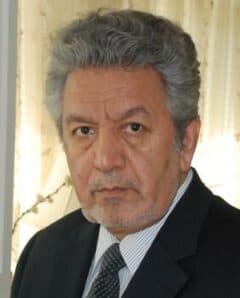
We at the Society of Afghan Engineers (SAE) are privileged to highlight the life and accomplishments of our esteemed colleague and active member, Professor Bashir A. Kazimee, AIA. Professor Kazimee earned his Bachelor of Architecture from Kabul University and subsequently attained a Master of Architecture in Advanced Studies from the Massachusetts Institute of Technology (MIT) in 1977. As a licensed architect in the United States, his extensive academic and professional practice has spanned across Afghanistan, Pakistan, Saudi Arabia, and the USA.
Academic Leadership and Professional Recognition
Professor Kazimee holds the distinguished title of Professor Emeritus at the School of Design and Construction within the College of Engineering and Architecture at Washington State University. His primary areas of expertise and research center on the traditional built environment, sustainable community development, affordable housing, and the intersection of architecture and culture.
He achieved international recognition in the field of sustainability for his collaborative proposed plan for the city of Pullman, Washington. This comprehensive proposal, which integrated sustainability strategies from the regional level down to individual dwelling designs, was awarded one of three UN/IAA Gold Medals presented globally at the UN City Summit Habitat II conference in Istanbul, Turkey, in 1996.
Contributions to the Society of Afghan Engineers
Within our organization, Professor Kazimee has provided steadfast leadership and vision. We rely on his expertise as the Chairperson of the SAE Architecture and City Planning Subcommittees. In this capacity, he successfully led the Bamiyan International Student Design Competition, an initiative aimed at proposing sustainable housing and infrastructure for the war-displaced families occupying the historic caves of Bamiyan.
Furthermore, he is a dedicated faculty member in our educational outreach programs, teaching online courses for Afghan architecture students through the Afghan Architecture Studio. Professor Kazimee also serves as the Editor-in-Chief of our SAE eNewsletter, where he diligently guides our publication’s editorial direction to keep our members and the global engineering community informed.
Service to Afghanistan
Throughout his career, Professor Kazimee has actively contributed as a consultant senior architect on numerous architectural, urban design, and reconstruction projects in our native Afghanistan. His involvement in preserving Afghan heritage dates back to the 1970s, when he collaborated with a group of architects and engineers from Kabul University to prepare schematic drawings for the reconstruction of the historic Char Chatta Bazaar.
More recently, under a joint Visiting Professorship program between the Aga Khan Trust for Culture (AKTC) and the Faculty of Engineering at Kabul University, he visited Kabul in August 2011 and July 2012. During these visits, he organized design workshops and delivered lectures focusing on urban conservation and sustainable architecture for university students, as well as for young professionals from the Kabul Municipality and the Ministry of Urban Development.
Research and Publications
As a prolific scholar, Professor Kazimee has contributed more than seventy national and international publications regarding traditional settlements and sustainable community development. He has authored four books, including Sustainable Urban Form: Theory, Design, and Application (2016) and Heritage and Sustainability in the Islamic Built Environments (2012). Additionally, he co-authored the 2003 book Place, Meaning, and Form in the Architecture and Urban Structure of Eastern Islamic Cities.
We are also proud to note his service on the editorial board for the International Journal of Ecodynamics, which focuses on sustainable development, and his role on the international editorial boards for various conferences on sustainable cities sponsored by the Wessex Institute of Technology and the Center for the Study of Architecture in the Arab Region (CSAAR).