SAE Newsletter – 2012-01 – Volume 2, Issue 1
Highlights the results of the 2011 Society election, discusses a strategic grain reserve program in Afghanistan, and reviews capacity-building efforts for the Ministry of Energy and Water.
Dear Colleagues:
I am pleased to provide you the first issue of the 2012 SAE eNewsletter (newsletter). This is the second year of the quarterly update from the Society of Afghan Engineers (SAE). The comments and suggestions from the newsletter readers indicate that they found the newsletter informative. They have urged us to continue this publication.
This issue of the newsletter features the results of 2011 election of the Society President and 9 members of the Board of Directors. The newly elected officers will serve during 2012-2014 term. Also, the news of the implementation of a strategic grain reserve program in Afghanistan is provided. There are two reports of the capacity building program of Ministry of Energy and Water professionals of Afghanistan. An article about the sediment management in reservoirs of Afghanistan is included. There is an interview with the President of the Society of Afghan Engineers.
Please do not hesitate to contact us, if you have any questions or comments. Your opinions always count. I hope that you find the newsletter interesting and useful.
Very Truly Yours,
Ghulam Mujtaba G. Mujtaba, MS-CE, P.E., CPM
Editor-In-Chief
SAE eNewsletter
“The newsletter features the results of 2011 election results of the Society President and 9 members of the Board of Directors.”
Greetings From The SAE President
July 16, 2012
Dear Members of the Society of Afghan Engineers:
The election process of the Society President and 9 members of the Board of Directors for the years 2012-2014 service term was held in the last quarter of the 2011 year. First of all, I would like to take this opportunity to thank the Election Committee, Chairman, Mr. Saber Sarwary; and members Ms. Aziza Tarin, Mr. Baseer Abdiani, Mr. Najib Kazimi, and Mr. Ghulam Qadir for the time that they took from their busy schedule to accomplish the election process in a timely manner and in accordance with requirements of the bylaws of the Society of Afghan Engineers (SAE).
Thanks to all of you for the trust and confidence in your elected officers. It is indeed an honor and privilege for me to serve as the President of the Society. As we begin our term, it is important to review our successes and outline the challenges for the coming years. With your support and working together we will reach our established goals.
The work of the SAE is a volunteer job. It requires devotion to duties and a lot of efforts. We should appreciate the work that past Executive Committee have done to carry these responsibilities. The efforts of Mr. Hadi Rakin, President; Dr. Abdul Wahed Hassani, Vice President-Technical Affairs; Mr. Farid Abass, Vice President-Administrative; Mr. Nagib Sayed, Treasurer; and Mr. Luis Durani, Secretary; are commendable. They have performed the volunteer work of the Society for the last few years. Their continued supports of their Society are of essence. Hopefully, we, the newly elected Executive Committee, continue to build on the legacy of our past presidents and executive committee members to perform our responsibilities in such a manner that meet the expectation of the Society members and other professionals of our beloved country, Afghanistan.
During the services of the last administration, the Society bylaws have been updated to incorporate the suggestions of the Society members in their development. A standard operating procedure, called the Society of Afghan Engineers Manual (Manual) has been developed. The guidelines for a quarterly electronic newsletter have been prepared. Accordingly, four issues of the newsletter have been published and disseminated last year. The newsletter has established better communication among Afghan professionals all over the world. The Society has been receiving articles and comments from readers of the newsletter.
I am proud that some of these improvements were the results of actions that begun during my term as Chairman of the Board of Directors. I greatly appreciated the type of support that I received from past members of the Board of Directors; Mr. Abdul Manan Khalid, Mr. Amanullah Mommandi, Mr. Iqbal Ahmad Ahadi, Mr. Mohammad Nagib Poya, Mr. M. Qasem Kadir, Mr. Mohammad Samey Stanackzai, Mr. Mohammad Yasin Khosti, and Mr. Mohammad Hashim Rayek. During their service term, they provided strong initiatives that will be sustainable over several years.
The SAE has been established nineteen years ago by a group of dedicated Afghans in the United States of America to provide technical assistance related to the reconstruction and workforce developmental activities of Afghanistan. Since its establishment, the SAE has tried to participate in a few technical activities of Afghanistan, including; training sessions, seminars, conferences, project design, and construction project management. In the past, a few SAE members have served as advisers, and also currently, many members are working in different projects inside Afghanistan. The Society has tried to provide connections among Afghan professionals throughout the world so that they will be able to find ways to be provide any technical assistance in the reconstruction and capacity building activities in Afghanistan.
Although, it is the goal of every Afghan, living inside Afghanistan or abroad to be of assistance in the activities of Afghanistan, but, those who are living abroad have their limitations. Most of them work and may not be able to be away from their current workplace for long period. Therefore, the Society should establish goals of providing assistance within the boundaries of the limitations that their members have. The management team should find ways to utilize the expertise of their members to assist Afghanistan in any way possible. There are many professional activities that the Society members can assist by being inside Afghanistan or abroad. The examples of a few of those activities include:
- Performing of work by members who are traveling to Afghanistan to visit their families and friends for short leave time from their work and extend their travel time to provide technical assistance while they are inside Afghanistan;
- Working from their place of residence in abroad;
- Providing consultation while in Afghanistan or abroad through email correspondence and virtual meetings;
- Participation in the technical committees that are established by Afghan government and Afghan societies within and outside Afghanistan;
- The promotion and development of proper planning, design, and construction standards;
- On-the-job-training;
- Development of Afghan codes; construction and maintenance specifications; and guidelines.
In performing of these activities, the Society members can serve as team members of each taskforce that are established by Afghan government or other Afghan societies. For the development of each society it is essential to have vision and mission; and pursue short-term and long-term goals toward the accomplishments their mission and vision. The accomplishment of each goal will assist in further enhancement and development of the society. The achievement of the goals of the Society of Afghan Engineers require teamwork and active participation of volunteers, including participation of members of the executive committee, board of directors, permanent and ad hoc committees, local chapters, regular and associate members. It is the management’s responsibility to work as team leaders in the accomplishment of the established goals.
The following list includes the items that may be considered as short-term and long-term goals for next few years. The selection of the items for each of the forthcoming years depends on the number of volunteering members that will be willing to participate in the accomplishment of these tasks. The suggested committees have been outlined in the Manual. Additional work is needed to implement the requirements of the SAE bylaws and Manual. The administration should primarily work toward the accomplishment of the short-term goals and plan for long-term goals. The following are the outline of the recommended short and long term goals of the Society:
A. Short-term goals
- Invitation of professors, architects, engineers, engineering technicians, construction inspectors, contactors, sponsors, students, and other professionals and technical experts to join the Society membership.
- Renewal and updating of current membership list, including their professions and contact information.
- Preparation of the Directory of the Society of Afghan Engineers, including the list of the Afghan professional companies and their services.
- Collection of annual membership fees.
- Improvement of the Society website
- Annual self-evaluation of the Society accomplishments.
- Formation of main committees, including; the Finance Committee; Corporation Committee; Membership Committee; Communications and Public Information Committee; and Technical Affairs Committee.
- Depending on the availability of budget, employment of a manager to assume a leadership position in directing and implementing the business affairs of the Society.
- Making arrangements for conferences; SAE Membership meetings; and meetings with other Afghan organizations and governmental agencies.
B. Long-term goals
- Planning for establishment of office space, equipped with telephone, fax machine, computer, printer, and file cabinets for the Society headquarter in the United States and branch offices inside Afghanistan and abroad.
- Development of Local Chapters and enhancement of their activities.
- Assist Society members in finding jobs.
- Promote member companies in finding jobs or finding professionals to work for them.
- Issuing of scholarship awards to students.
- Presentation of Awards to eligible members
- Formation of the Communications and Public Information Subcommittees, including: Capacity Building and Academic Development Subcommittee Website Development and Maintenance Subcommittee SAE Electronic Newsletter Subcommittee Conference and Training Subcommittee Student Subcommittee Advisory Subcommittee Publication Subcommittee Public Relation Subcommittee
- Formation of the Technical Affairs Subcommittees, including Roadway and Bridge Design and Specifications Subcommittee Materials Specifications and Test Methods Subcommittee Environmental Engineering Subcommittee Architectural Subcommittee Building Code Subcommittee SAE/AGA Liaison Subcommittee (SAE and Afghan Governmental Agencies Liaison Subcommittee) Afghan Professional Regulations Subcommittee Agricultural Engineering Subcommittee Water Resources Subcommittee City Planning Subcommittee
During my term as President, I want to focus efforts in two areas that influence SAE, namely relevance and participation. We have to get together, keep together, and work together. Our unity in performing of the activities will result in success. As the aforementioned list of the tasks indicates, the accomplishments of the goals require more volunteers to devote their time to help. I respectfully request all SAE members to participate actively in one of the main committees and a subcommittee. Also, it is necessary that local chapters start their activities. I am certain that your active participation in one of the committees/subcommittees will bring further improvement and success for the Society. Please send an email to Mr. Luis Durani, SAE Secretary and myself if you want to participate in any of the committee/subcommittee of your expertise. It is my hope that during our service term we work together to make a difference. I am looking forward to the receipt of your responses.
Very Truly Yours,
Ghulam Mujtaba G. Mujtaba, MS-CE, P.E., CPM
President
Society of Afghan Engineers
Responses To Readers’ Comments
The following are the SAE eNewsletter readers’ comments and the editor’s responses:
Dr. Zarjon Baha’s Comments:
Dear Mujtaba khana: Us-salamu-alaikum Thank you for sharing the SAE newsletter and this issue as usual is well done. I enjoy reading your newsletter every time and you are commended for this great service you are doing for the SAE and us all. I will add the following comments regarding your latest newsletter, issue 4:
- In the message of President an important issue is raised on the pollution of Kabul and may be the rest of Afghanistan. Unless something is done quickly the consequences
will be extremely painful for all those who are living there.
- I would like to take this opportunity to welcome his Excellency Ambassador Hakimi for joining our association and through this contact; I hope SAE will play an important role in the reconstruction process of Afghanistan.
- I enjoyed reading your interview with Mr. Wahid Enayat and I hope this will inspire more members of SAE to become entrepreneur and build their own professional businesses.
- I enjoyed your article on Quality Control of Construction Materials in Afghanistan. Investment in this area could be a profitable adventure and a great service for Afghanistan.
- On page 17 of your newsletter there are two typo errors, one on line five from the bottom 22, 2012, and the other on line two from the bottom They Society… Wish you all the best and have a great day Zarjon Baha
Editor’s Response: Dear Dr. Sahib Baha: Walaikum- Us- Salam: Thanks for providing valuable suggestions and comments regarding the fourth issue of the SAE eNewsletter. Since you have mentioned about a few articles of the newsletter, I will copy their authors and contributors in this e-mail. I have also copied Ambassador Mr. Hakimi; Mr. Nawandish, Kabul Mayor; Mr. Rakin SAE President; and Mr. W. Enayat, President Enayat Schneider Engineering Inc. to read your comments and suggestions. Thanks for bringing the two editorial errors to our attention. I made necessary corrections and attached file includes the updated version of the document. The updated version will be archived on the SAE website. The readers of the newsletter are interested to read an article about the history and current developmental status of the Faculty of Engineering of Kabul University. Since you served a few years as the former Dean of the Faculty of Engineering of Kabul University, it will be beneficial if we receive an article about the Faculty of Engineering of Kabul University for future issues of the newsletter. Thanks again for your continued support and contributions in the newsletter. Best regards, Editor-In-Chief SAE eNewsletter
Dr. Nadir Sidiqi’s Comments:
Muhtram Ustad Sahib Mujtaba: I would like to express gratitude towards you, as well as to Muhtram Manan Sahib and Dr. Sahib Hassani the Editorial Board members. This SAE positive vital eNewsletter could not reach our beloved Afghanistan as well as our respected colleagues abroad without your tireless efforts and dedication. Best regards, Nadir Sidiqi
Editor’s Response: Dear Dr. Sidiqi, Thanks a lot for your email and contribution to your newsletter. The readers have found your article to be educational and interesting. We are looking forward to your continued support of the SAE eNewsletter Best regards, Editor-in-Chief
Mr. Naim Shahab’s Comments:
Mr. Ghulam Mujtaba, Today as I opened my emails, the SAE eNewsletter attracted my eyes which were forwarded by a close friend of mine, Dr. M. Nadir Sidiqi. I have browsed through the SAE eNewsletter and found it very educational, informative and extremely important for the reconstruction of Afghanistan and how the Afghan engineers aboard could contribute to it. Personally, I like to congratulate your entire team for this great establishment, wonderful contributions and great job. I will be honored to be added to SAE eNewsletter subscribers. This subscription, very soon, will be followed by membership application. My very best regards, Naim M. Shahab naim.shahab@gmail.com (925)325-6234
Editor’s Response: Dear Mr. Shahab, It is a pleasure to read your email and kind words about the Society of Afghan Engineers (SAE). I will copy the Board and Executive Committee members on this e-mail for their information. I am glad that you have found the newsletter informative and useful for our beloved country. Thanks to Dr. Sidiqi for sending you the newsletter. Your name has been added to the distribution list of the SAE eNewsletter. We are pleased to know that you are planning to join the SAE team. I am looking forward to the receipt of your articles for the newsletter and further comments and suggestion for improvement of its quality. Best regards, Editor-In-Chief
- Najim (center) with Hans of the World Bank (left) and Ulrich Klocke of GIZ/WFP (right) discusses strategies for SGR in Mazar-e-Sharif.
Technical News From Afghanistan
The Afghan professionals in Afghanistan and abroad are interested to learn about the rebuilding activities of infrastructures of their motherland. The newsletter Editorial Board recommends that Afghan professionals share the news of interest with their colleagues through SAE eNewsletter. The news may include a brief introduction of their company and project planning, design, and construction activities. In this issue of the newsletter the following articles are included.
Implementation of a Strategic Grain Reserve Program in Afghanistan
By Najim Azadzoi, AIA
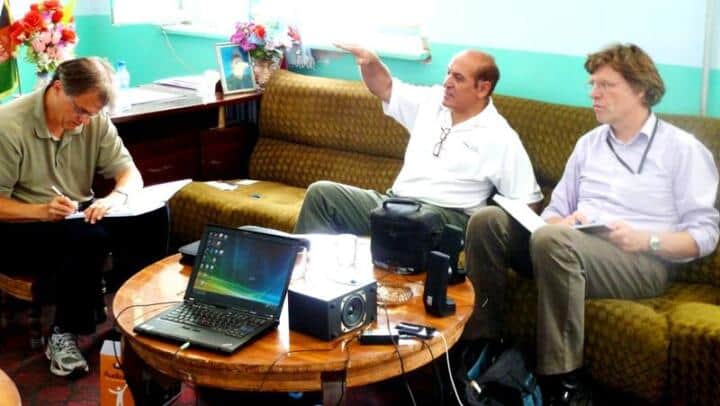
Introduction: Strategic Grain Reserve (SGR) project ranks among the highest priorities of the Ministry of Agriculture, Irrigation, and Livestock of the Government of Islamic Republic of Afghanistan. Government of Afghanistan through Ministry of Agriculture became interested in establishing a public grain reserve immediately following the 2008 food crises which had a devastating impact in Afghanistan. On May 2011, Najim Azadzoi of Azad Architects was hired as a consultant by the World Bank for a pre-appraisal mission for the proposed project, “Physical and Institutional Infrastructures for Strategic Grain Reserves in Afghanistan”. By definition, SGR is stocks of grain held in reserve intentionally by government programs for the purpose of meeting emergency domestic needs. Afghanistan is a chronic food deficit country. Even in years of good rainfall and inputs, Afghanistan is able to produce only about 90% of its domestic food requirement. This is estimated at 400,000 to 500,000 tons of cereal deficit in a year. In a drought year, the deficit can be over one million tons of cereal. This deficit is balanced by the emergency food aid and imports. In January, 2011 – USAID’s Food for Peace office awarded a grant to the World Food Program for a local purchase of 13,000 tons of wheat. This wheat was enough to feed approximately 500,000 vulnerable people for approximately three months. The United Nations World Food Program (WFP) announced in April 2011 that it urgently needs $257 million to continue providing food and assistance to over 7 million vulnerable Afghans, most of them are women and children.
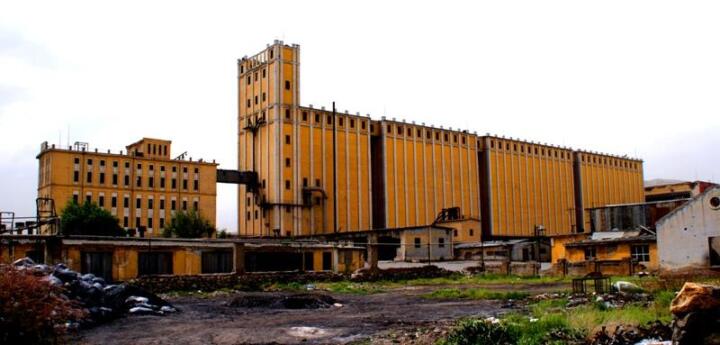
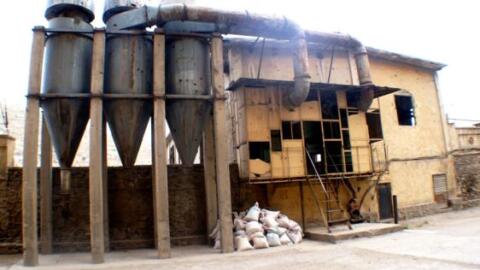
Background: Afghanistan currently does not have a Strategic Grain Reserve program. There are five Silos in the country that were built in the 1950s and 1980s. But these Silos were not designed and built for the purpose of a Strategic Grain Reserve program. They were designed and built to provide daily ration and to provide some storage capacity to balance the food shortage and food prices in the local market. Kabul Silo was built by the former USSR in 1954 with a capacity of 50,000 tons. It stored wheat and produced flour and bread. It also provided rations to government employees. Similarly, the Silos in Mazar, Herat, Kandahar, and Pul-e-Khumri were built by the former USSR in the 1950’s and 80s, not for the purpose of a Strategic Grain Reserve program. Mazar-e-Sharif Silo and Pul-e-Khumri have a capacity of 40,000tons each, Herat and Kandahar Silos have capacity 20,000 tons each. Therefore, Afghanistan’s current Silos have a total capacity of 170,000 tons of grain storage. For comparison, we found out that only the province of Punjab in Pakistan has a capacity of 18 million Tons of SGR program. Currently, these Silos are in a poor condition.
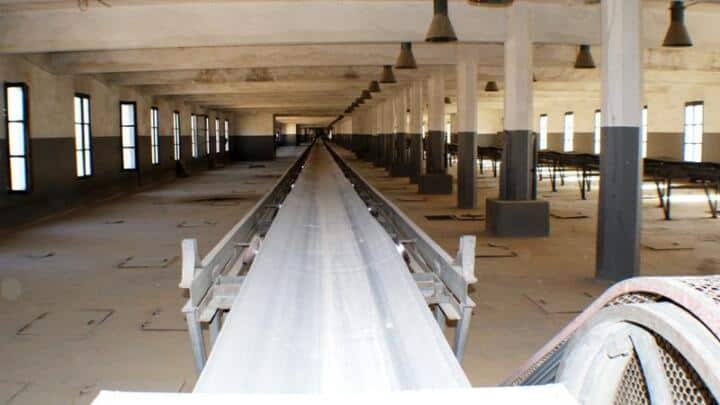
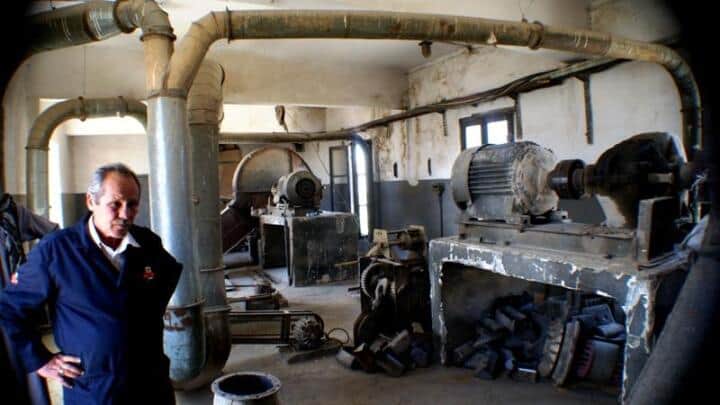
In Afghanistan are in a poor condition. None of the Silos is functioning in its full capacity. In Kabul Silo, only two out of the 200 storage bins are in use. The machineries are broken and the buildings are in need of major rehabilitation work. Similarly, Herat, Mazar, and Pul-e-Khumri Silos need major renovation and modification work. Weigh Bridges, Grain Intake buildings, Silo Bins, and laboratories are not functioning.
Overall Goal (SGR): Completion of this project will equip Afghanistan for the first time with a Strategic Grain Reserve program that will store 200,000 tons (by 2013) as a reserve stock with the potential to assist about 2.5 million people in times of natural and man-made calamities for six months at 80kg/person. The project includes rehabilitation of the existing four Silos (150,000 tons) SGR and the design and construction of new warehouses with a total capacity of 50,000 tons of grain.
Society of Afghan Engineers: December 2011
Najim is a former Assistant Professor of architecture at the Faculty of Engineering, Kabul University. He is the founder and Principal of Azad Architects, an architectural firm in Boston, Massachusetts.
The UNESCO-Technical Capacity Building Fellowship for Afghanistan
Mr. Hadi Rakin, past President of the Society of Afghan Engineers reported to the Board of Directors that the US State Department has provided funding to UNESCO for capacity building of Afghan professionals. The funding of $20,000 has been allocated to cover two-week trip for two professionals from Afghanistan This fund will include their transportation, meals, lodging, and other expenses. The objective of the program is to strengthen and support the professional engineering societies in Afghanistan so they may better represent the profession on matters with government and industry. The fellowship consists of two-week of activities and study in the USA, comprising of visits to several engineering professional societies and suitable engineering departments at a US universities. The UNESCO/State Department has decided to involve the American Society of Civil Engineers (ASCE) to bring the two professionals to the United States. The Society of Afghan Architects and Engineers (SAAE) has introduced Ms. Dalia Akbarmir and Professor Jamil Khalid as candidates. The candidates will travel to Washington DC metro area and other cities and institutions of the United States. The travel date and times have not been finalized yet.
Faculty of Engineering of Kabul University Will Add Two New Departments
Mr. Hamid Layan, Dean of the Faculty of Engineering of Kabul University has informed the Society of Afghan Engineers that the Faculty of Engineering is planning to expand by adding two new departments to their program. These departments are Environmental and Energy Departments. He has indicated that a committee has been assigned to prepare the curriculum of the two departments and they need the curricula of other universities. The SAE President has asked support from a few Afghan professors who are teaching in USA and United Kingdom. Professors Dr. Bahawodin Baha, professor of University of Brighton, UK and Dr. Fzel Tawab Najafi professor of the University of Florida, USA, have kindly responded by providing the curricula of their universities. Dean Layan and the SAE have appreciated the prompt responses of Dr. Baha and Dr. Najafi. The Committee will contact the professors if they need any additional information.
Capacity Building in Afghanistan
Dr. Hassani offered training courses to the engineers in Afghanistan. Dr. Hassani’s training was in the area of quality control and materials testing of construction materials. Mr. Hasan Nouri, former professor of the Faculty of Engineering of Kabul University, was invited as guest speaker to present the topic of the sediment management in reservoirs of Afghanistan. Ministry of Energy and Water presented him a certificate for his presentation. A review of the course evaluation indicates that his presentation was well received and the students asked to have more time for such valuable topic. The Editor In-Chief SAE eNewsletter asked Dr. Hassani and Professor Nouri to provide a report of their training and trip. They graciously accepted his request and provided the following reports.
Quality Control and Materials Testing of Construction Projects
By: A. Wahed Hassani, PhD, P.E.
Introduction I was given the opportunity to conduct two weeks training for the Engineers of the Ministry of Energy and Water (MEW) in October 2011. The subject of the training was Quality Control and Field/Lab Testing of Materials for Construction Projects. I also attended several meetings with the staff of MEW and Afghan
Engineers Association and have expressed their concerns in Part II of this report. The Ministry of Energy and Water, Islamic Republic of Afghanistan is currently implementing the Emergency Irrigation Rehabilitation Project (EIRP) with the financial assistance from the World Bank (WB). EIRP is a major project currently being implemented in the irrigation and water sectors in Afghanistan.
The project supports activities which are designed to improve livelihood opportunities in the rural areas through rehabilitated irrigation systems and improved management of national water resources. The Ministry of Energy and Water has also received a grant from the International Development Association towards the cost of Irrigation Restoration and Development Project (IRDP), and it has been using part of the grant for Institutional Development and Capacity Building. As part of their Capacity Building efforts, they have been arranging various short term in-country training courses. In line with this goal, the training was performed from October 10 – 23, 2011 at the MEW Project Coordination Unit (PCU), training facilities in Kabul. The training was aimed to introduce the principles, concepts, and applications of Quality Control / Quality Assurance for Construction Projects and Field / Laboratory testing of soils and other materials such as aggregate, cement, concrete, steel, bricks and various materials used in masonry constructions.
Part I: The Training Implementation
The training was conducted through the use of LCD projector, flip charts and white board. Participants were 33 Engineers (field engineers and construction managers from the various regions of MEW such as Kabul region, Jalalabad, Kandahar, Herat, Kunduz, Mazar-e-Sharif, Nimrooz, Bamyan, and the MEW’s central office employees and local Food and Agriculture Organization (FAO) professional staff). Most of the attendees had experience in testing, design and field supervision. The training was formally inaugurated by Engineer Sayed Sharif Shobair, National Project Coordinator & Chief Engineer, FAO, United Nations and Engineer Ghulam Mohammad, Deputy Director of Project Coordination Unit, Ministry of Energy and Water. Classes were conducted from 8:30 am to 4:00 pm. There were sessions for lectures, exercises, and case studies as well as field and laboratory testing. (Photo 1, shows participants in a training session).
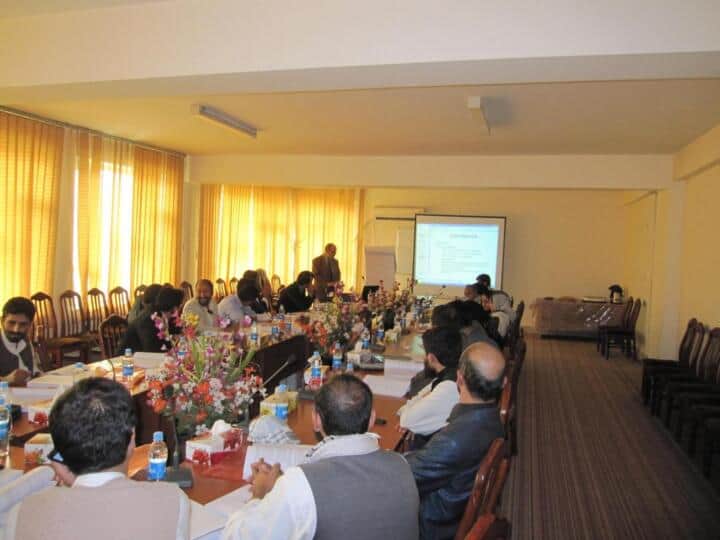
Photo 1, Participants in a Training Session
Field Trips and Guest Speaker Programs
Field and laboratory tests were performed using available testing equipments in the MEW Project Coordination Unit and the MEW main office facilities. There were two field visits to private testing laboratories, one of them was Zurmat Material Testing Laboratories and the second one was Afghan Coordination and Logistics Unit (ACLU) Material Testing Laboratories. Trainees were introduced to the material testing equipments which were not available at the MEW facilities. A number of demonstrational tests were performed by the staff of these organizations. Mr. Abdul Hadi Rakin, President of SAE was invited as a guest speaker during one of the lunch break sessions. He delivered an excellent and impressive power point presentation on the “Comparison of Afghanistan’s Socio-Economic Data with Neighboring Countries”. The trainees were very much impressed. The hour long presentation ended with question and answers session.
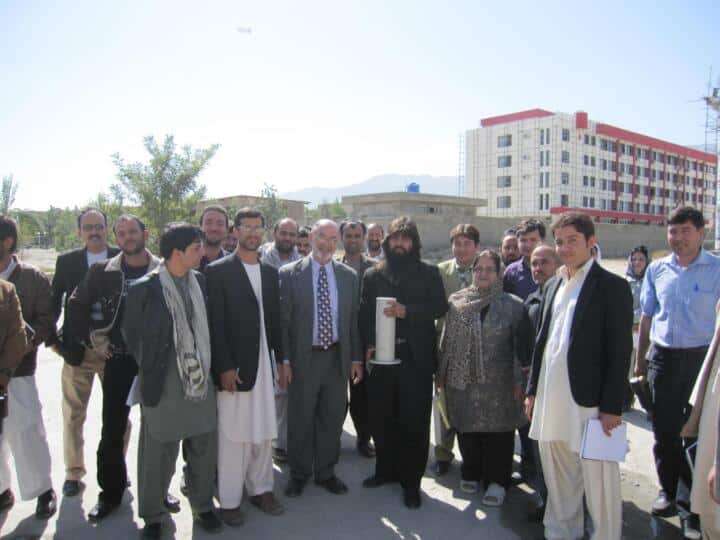
Photo 2, Training Participants during a Field Visit
Certificate Award Ceremony
Certificate award ceremony was presided by His Excellency Mr. Shujauddin Ziaie, Deputy Minister, Ministry of Energy and Water on October 23rd. Engineer Sayed Sharif Shobair, National Project Coordinator & Chief Engineer, FAO, United Nations and Engineer Mirwais Mirzad, Director of the Project Coordination Unit, Ministry of Energy and Water were also present. At the end of the ceremony, Mr. Ziaie invited us to meet with the Minister of Energy and Water Mr. Mohammad Ismail Khan. In a brief meeting, His Excellency Mohammad Ismail Khan appreciated the participation of the Afghan expatriates in the training programs and capacity building of Afghan engineers. He emphasized his desire for Afghan expatriates to continue and increase their participation in capacity building of Afghan professionals. In a luncheon meeting with Engineer Ghulam Farooq Qazizadah Deputy Minister of Energy and other dignities of the ministry, the role of the Afghan expatriates in the capacity building of Afghan engineers was highlighted and Mr. Qazizad expressed his support and encouragement of Afghan professionals to take active part in the training programs of Ministry of Energy and Water.
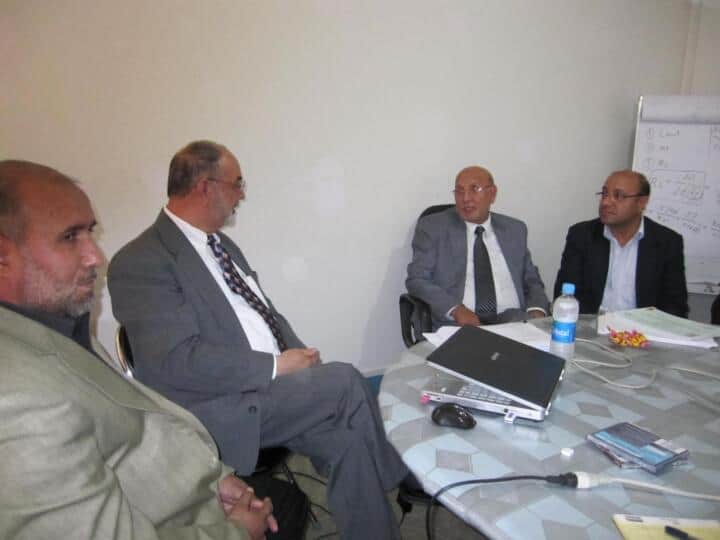
Photo 3, From Right, Engineer Sayed Sharif Shobair, Mr. Shujauddin Ziaie, Dr. Hassani, and Engineer Mirwais Mirzad
Conclusions
The training was conducted with the participants gaining substantial knowledge and skills in various aspects of quality control and quality assurance program. The participants were assisted in this learning process by a good mix of class lectures and practical field and laboratory testing of soils, aggregate, cement, concrete and steel. In-house laboratory of the PCU and central MEW were utilized. The unused testing equipment in the PCU lab was activated, used and made ready for the future use. An interesting part of the training was visits to the private organizations materials testing laboratories. The trainees were familiarized with various geotechnical, geophysical, cement and concrete testing equipment. Program evaluation and feedback by students indicated that most of the participants’ expectations were met. Time constraint is one area that they recommended for improvement. They indicated that their knowledge was greatly enhanced and will help them toward better contribution in the rehabilitation and reconstruction projects in the irrigation systems of Afghanistan. It was specially emphasized by the trainees in the class and the MEW counterparts that training imparted by the Afghan consultant is more effective and useful compared to non Afghan consultants, as most of the trainees have language barriers and they will need a translator in the class. The Afghan consultants have the advantage of speaking local languages and could save the time used through the translation of the lectures by a third party (translator) who is generally not an expert in the field that the training courses are offered.
Part II: Concerns and Suggestions
Trans-boundary Waters in Afghanistan
During various meeting with technical staff of the Ministry of Energy and Water, they expressed the role of Afghan expatriate living abroad in the reconstruction and rehabilitation of Afghanistan. One particular issue was the water law and the water right of Afghanistan. It was mentioned that the expatriates from the neighboring countries frequently write in the international forums and media about the water rights of their countries, while very little has been mentioned by Afghans. It was requested that all Afghans in general and SAE professional members in particular take active part in such activities. It was also suggested to establish a link through e-mail among water experts in Afghanistan and USA to share opinions on Trans-boundary Waters in Afghanistan.
Afghanistan Engineers Association (AEA)
During this visit, Afghanistan Engineers Association invited me to their board of directors meeting. In the meeting dated October 30, 2011, the following AEA board members were present in the meeting: Mohammad Arif Rasuli, Assadullah Oriakhil, Najibullah Aoudjan, Azizrahman Rafiee, Ahmad Shah Amiri, Mina Ghaleb, Mir Ahmad, Mohammad Saleh Akbari and Sayed Sharif Shobair. The following topics were discussed:
- Establishment of good relation and coordination among different Engineering Associations inside and outside the country.
- Establishment of a Union out of all existing Engineering Associations.
- Active communication among different Associations and establishment of a joint mail box.
- Joint participation in special projects related to infrastructure of Afghanistan.
I appreciated their interest to work together with SAE and elaborated that SAE has always encouraged the Afghan Associations inside the country to work closely with each other. It will be a noble goal if various engineering organization in Afghanistan come to a common understanding, to be united and work jointly with SAE. It will be a great success for rehabilitation and reconstruction of war torn infrastructure of Afghanistan.
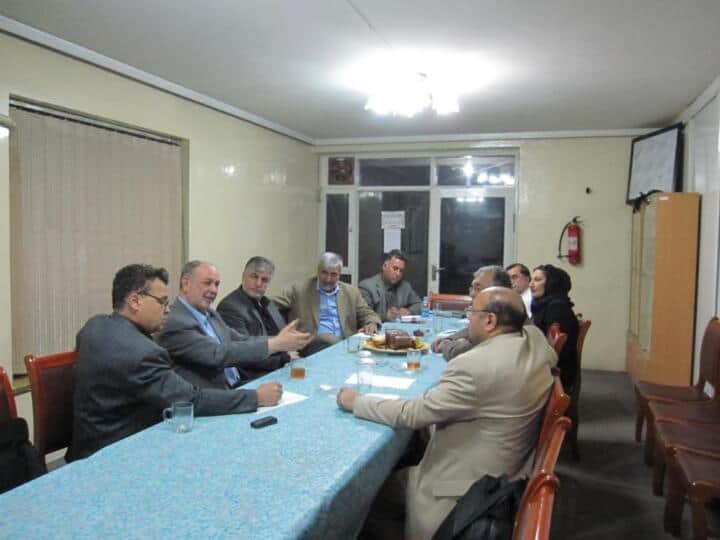
Photo 4, From Left to Right, Mr. Mir Ahmad, Dr. A. Wahed Hassani, Mr. Assadullah Oriakhel, Mr. M. Arif Rasouli, Mr. Ahmad Shah Amiri, Mr. M. Saleh Akbari, Ms. Mina Ghalib, Mr. Najibullah Aoudjan, Mr. Sayed Sharif Shobair
Dr. Hassani’s Biography
Abdul Wahed Hassani, PhD, P.E., MASCE received his bachelor’s degree in civil engineering from Kabul University, Afghanistan, his Master’s degree and Doctorate degree from Roorkee University in India. A licensed Professional Engineer in Nebraska and Iowa, he is the coordinator for consultants design projects with the Department of Roads of the State of Nebraska. Before joining the Nebraska Department of Roads, he served as senior civil engineer with the City of Sioux City, Iowa. He was involved in the design and construction supervision of water system, storm system, sanitary system and street projects. Dr. Hassani was assistant professor at the Faculty of Engineering of Kabul University and was coordinator of science and construction related programs at the International Rescue Committee for Afghan Refugees in Peshawar, Pakistan. It was in this capacity that he secured funds and established construction engineering, construction supervisor and construction foreman programs for Afghan refugees. Most of the graduates of these programs are very active in the reconstruction and rehabilitation of war torn Afghanistan. Hassani keeps close contacts for serving his native country. In 2007, he conducted a two week lecture on the capacity building of Afghan professionals at the faculty of engineering, Kabul University. The capacity building project was jointly sponsored by ASCE and Kabul University. His recent assignment was a two week training of quality control and materials testing of construction projects. This training was performed for Engineers of the Ministry of Energy and Water in Kabul, Afghanistan. Dr, Hassani served as a member of Board of Directories of the Society of Afghan Engineers from 2006 to 2009 and its Vice President- Technical Affairs from 2009-2011.
Sediment Management in Reservoirs of Afghanistan
By: Hasan Nouri, P.E., Hoover Medalist
Abstract
Sediment accumulation and loss of storage in reservoirs of the world is a major global problem. In Afghanistan this problem is more significant because during 32 years of war none of the reservoirs have been maintained. The international community and the neighbors of Afghanistan should help maintain the existing reservoirs as well as constructing new ones in Afghanistan. This is because snow accumulates in the mountains of Afghanistan during the winter season and melts during spring and summer seasons. In addition, rainfall during the spring season in conjunction with the accumulated snow creates major storm water events. Runoff from the snowmelt and rainfall can be stored in major reservoirs and can be used both by Afghans and their neighboring countries. To manage sediment in the reservoirs of Afghanistan two alternatives are presented. The first one is similar to the sediment bypass tunnel of Asahi Dam in Japan. The second alternative is the use of rubber dams in villages of Afghanistan. A rubber dam across a stream can be quickly deflated and would allow the transportation of sediment to the downstream reaches. Also, flow can be diverted to create hydroelectric power for that village. Historically, in Afghanistan for many centuries dams constructed of timber, boulders and cobles have been used to divert runoff from streams and rivers onto the floodplains. Those dams provided the opportunity for the villages of Afghanistan to grow crops and provide water supply. Depending on the location of the village and topography a timber pile dam may be substituted instead of a rubber dam.
Professor Hasan Nouri’s Biography
Hasan Nouri, President, FluvialTech Inc. Mr. Nouri has over 35 years of professional engineering experience in river engineering, sediment transportation, flood control and drainage, fields in which he has directed and managed numerous planning and design projects. He is the winner of six awards by five national engineering societies. In 1996, he became the fifty-sixth winner of the Hoover Medal and was named as the Engineer of the Year by the American Society of Civil Engineers (ASCE), Los Angeles Section. Other winners of the Hoover Medal include Presidents Hoover, Eisenhower and
Carter, Edgar Kaiser and Stephen Bechtel. He is the Co-founder of the ASCE/Los Angeles Section, Hydrology & Hydraulics Technical Group and the inventor of the Hydraulic Oscillating Diverter. The Hydraulic Oscillating Diverter diverts urban runoff to a treatment facility while permitting bypass of clean water, sand and gravel to the streams and beaches.
Afghan Professional Community News From Abroad
The Afghan professional community news and other topics of interest from abroad are as follows:
The SAE eNewsletter Have Expanded the Number of Their Editorial Board Members
Professor Mohamamd Mirwais and Mr. Daod Mohammad have joined the Editorial Board of the SAE eNewsletter. They will assist the Society by providing technical news from Afghanistan and Canada. Also, they will assist in the review of articles and dissemination of the newsletter. The following are the brief biography of the two new Editorial Board members.
Biography of Pohialai Mohammad Mirwais
Mr. Mohammad Mirwais was born in 1971 in Kabul. He finished his high school at AIT and received his bachelor degree in architecture from the Faculty of Engineering of Kabul University in 1998. Upon graduation, he joined the teaching cadre of the Faculty of Engineering. In 2009, he attended University of Florida’s on line post graduate construction management courses that were offered in the United States. Upon return to Afghanistan, he went back to his teaching job, where he continues to teach up to this date. In the last five years he has served on several committees. Last year, he was appointed as the Head of the Department of Architecture. In additon to his academic work, he has been actively involved in the reconstruction and landscaping of the campus of the Faculty of Engineering. Two conference rooms and the computer lab are examples of his completed projects. He has published a paper on construction estimating which is also being used as teaching material at the Faculty. He also manages a private Construction and Architecture company. He is married and blessed with a son and four daughters.
Biography of Mr. Daod Mohammad
Mr. Daod Mohammad is born in Kabul Afghanistan. He moved to India in 1989 and received his high school diploma from DAV high school in India. In 1998 he moved to Canada and completed the thirteen grade education in Canada and received his BS degree in Electrical engineering from Windsor University in 2003. After graduation he started his electrical engineering work with SNC-Lavalin, located in Sarnia, Ontario. He received his professional engineering license in 2006. He moved to Toronto in 2007 and has been working since that time as consulting engineer for Suncor (SUNCO or Petro-Canada) in charge of project design and management. He is a member of Joint Health and Safety Committee.
The Society Of Afghan Engineers’ 2011 Election
The Society of Afghan Engineers elected their President and 9 members of the Board of Directors in 2011. On December 28, 2011; the new Board of Directors elected Mr. M. Qasem Kadir as their Chairman of the Board. The elected members started their work on January 1, 2012 and will continue their services until December 31, 2014. Mr. M. Saber Sarwary served as the Chairman of the Election Committee; and Mr. Baseer Abdiani, Mr. Najib Kazimi, Mr. Ghulam Qadir, and Ms. Aziza Tarin served as the Election Committee members. Mr. Sarwary, the Election Committee Chairman, has sent the following election results on December 15, 2011 to all members of the Society:
Election 2011 Results
Dear colleagues,
The Society of Afghan Engineers election 2011 results are as follow:
President Elect: Ghulam Mujtaba
Board Members Elect:
- M. Najib Poya
- Yar M. Ebadi
- M. Qasem Kadir
- A. Saboor Rahim
- A. Manan Khalid
- Hashim M. Rayek
- Amanullah Mommandi
- A. Hamid Kazi
- Mohammad Saleh Keshawarz
Sincerely,
M. Saber Sarwary M. Saber Sarwary, P.E. Chairman, Election Committee The Society of Afghan Engineers
The biographies of the elected Board Members are included in this issue. The Biographies of the Executive Committee and other Society Committee Chairpersons will be included in the next issue of the newsletter.
Biographies Of The Elected Members Of The Board Of Directors
Mr. M. Qasem Kadir; Chairman, Board of Directors:
Mr. Kadir works as Metro Director of Information Technology, for the Southern California Metro at DeVry University. Mr. Kadir also teaches as Adjunct Professor graduate courses of Information Technology at the Keller Graduate School of Management of DeVry University. He received his Master of Information System Management from Keller Graduate School of Management, Pomona, CA and completed graduate coursework in Advanced Management Program at UC Riverside. He received his B.S. degree in Electrical Engineering from Aachen Technical University, Aachen, Germany.
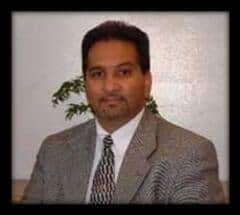
SAE Involvement And Leadership
- Joined the Society of Afghan Engineers (SAE) 1995
- Responsible for the Southern California Chapter of SAE 1996, President
- Vice President of the Society of Afghan Engineers 2002- 2004
- Actively organized and supported the first volunteer capacity building program with assistance of Afghan Assistance Coordination Authority (AACA)
- 2002 SAE organized in cooperation with the Ministry of Housing and Urban Development, Habitat for Humanity and the Japanese Society of Civil Engineers organized the first International Conference in Kabul, titled “National Urban Visions and the Future of Kabul City”.
- 2003 Chairperson of the SAE organized conference at Stevens Institute of Technology in New Jersey titled “Empowerment of Afghan Professionals.” This conference was attended by Afghan Scholars from all over the world. The Conference was attended by many government leadership team from Afghanistan. The Minister of Higher Education, Minister of Public Affair, Vice-Minister of Water and Power, Minister of Afghan Diasporas, Economic Advisor to Afghan President and Permanent Ambassador to United Nations were among guest from Afghanistan.
- 2004 Chairperson of the SAE organized conference at U.C. Berkeley, California, titled, “Infrastructure Rehabilitation and Development in Afghanistan”
- President of the Society of Afghan Engineers 2004 – 2009
- 2005 Chairperson of SAE / SAAE organized conference at Kabul University titled, “The Role of the Private Sector in the Reconstruction and Development of Afghanistan”
- 2007-2008 SAE jointly with the American Society of Civil Engineers (ASCE) have been awarded a capacity building contract. The ASCE is the prime contractor of this training contract. Twelve SAE members and five Kabul University staff were involved in this training program. The prime object was to start a program hosted by Kabul University for the enhancement and creation of private sector engineering consulting capability in Afghanistan in all engineering disciplines titled, “Enhancing The Private Sector Engineering Consulting Capability in Afghanistan( USTDA / ASCE / SAE / KU ).”
- Member of the Board of Directors 2009 – 2011
Dr. Yar M. Ebadi, Dean of the Kansas State University’s College of Business Administration; Member, Board of Directors
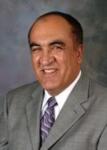
Dr. Ebadi was appointed the Dean of the College of Business Administration at Kansas State University in 1996. He also holds the Robin Hagans Maupin Chair of Business. Prior to being appointed as dean, he was serving as the interim dean of the college in 1995, associate dean from 1992-95, and head of the department of management from 1988-1992. Prior to coming to KSU, he served in various faculty positions at Indiana University and Kabul University in Afghanistan. After graduating from Afghan Institute of Technology (AIT) high school, Dr. Ebadi attended Faculty of Engineering at Kabul University. At the end of the second year at the Faculty of Engineering, Dr. Ebadi went to Georgia Institute of Technology where he finished his undergraduate program in 1968 and his M.S. in 1970, both in Mechanical Engineering.
After serving on the Faculty at Kabul University for several years, Dr. Ebadi returned to the United States earning his MBA in 1974 and his doctoral degree in 1977 from Indian University. He also received additional professional certifications from the University of Minnesota and from Harvard University. Dr. Ebadi has served as a member of the Kansas State University Council of Academic Deans, the Board of Directors of Commerce Bank, Manhattan, KS and the Board of Directors of the National Institute for Strategic Technology Acquisition and Commercialization Center. Dr. Ebadi also served as the Principle Investigator (PI) for the World Bank Grant of Kansas State University and Kabul and Balkh Universities. Dr. Ebadi is actively involved in service to the AACSB International, the premier business schools accreditation agency, having been a member of the Pre Accreditation Committee and chair and/or member of numerous Peer Review Teams for various universities around the world.
Abdul Hamid (Farid) Kazi, Ph.D., C; Member, Board of Directors (ﻘﺎﻀﻲ )ﻔﺮﻴﺪ( ﻋﺒﺪاﻠﺤﻤﻴﺪ داﮐﺘﺮانجینیر)
Short Biography
Dr. Kazi was born on Oct 7, 1949. He has over 33 years of experiences in the field of design, construction management, supervision, research and teaching. Dr. Kazi was awarded his Ph.D. by the Technical University of Krakow- Poland (TUK-P) with special emphasize on Technology and Properties of five modern concrete composite materials know as High Strength High Performance Concrete Construction Materials. He received his Master of Science Degree in Concrete Structural Design also from TUK-P back in 1978. He worked for two years as a Jr. Civil Engineer-Designer in one of the major design office in Krakow-Poland completing two mid size building complex structures for medical center.
Dr. Kazi has over 8 years of university-level teaching, and research experience. He has been awarded full fellowship by the Polish Government for research work in 1981 on five new modern high strength high performance concrete composite materials, such as Steel Fiber Reinforced Concrete (SFRC), Polymer Impregnated Concrete (PIC), Polymer Concrete (PC) and the last two with addition of steel fibers. He received II Individual Award of Rector of the Technical University of Krakow for his accomplishment and proposal of two new scientific methods for testing and analyzing of concrete materials, of which one of the methods considered and named by the jury of reviewer as a “The Kazi’s Coefficient Comparison Method”.
From 1986 to 1990 Dr. Kazi worked as an assistant professor-a full time employment at the Technical University of Krakow-Poland, Then from 1990 to 1992 established an Engineering Consulting & Trading Company in Krakow Poland “Mubtada Ltd”, and provided consultative services on the utilization of modern concrete construction material for the industry and Polish Government Entities. In 1993, Dr. Kazi and his family immigrated to the United State of America. In 1995 he obtained his permanent residency based on National Interest-Waiver Law of the US Immigration & Naturalization Service’s, for his achievements on modern concrete material research work. From August 1998 to June 19, 2009 worked for Pennsylvania Department of Transportation as a bridge and roadway designer.
Dr. Kazi has been actively involved in the reconstruction program of Afghanistan. He evaluated the condition of Ghorband Siphon in Parwan Province under the USAID/DAI management program in 2002. In 2004-2005 Dr. Kazi was assigned first as a senior Structural Engineer and then as a Chief Engineer and Urban Roads Manger and worked for the USAID/LBG on Reconstruction of Economic, Facilities and Services (REFS) program of Afghanistan. His activities concentrated on design review, supervision and management of construction of bridges and waterway structures on Kabul-Kandahar-Heart Highways as well as managing the design and construction of Kabul City Road Program. He supervised and overlooked the design and construction of Bibi Mahroo and Shash Darak roads in Kabul city.
Dr. Kazi’s involvement with SAE is dated since its establishment back in 1993, and he is considered as one of the society co-founders. He was responsible for New York and Pennsylvania Chapters. He recruited many members to the Society. He was actively involved in the SAE seminar and conferences organization task force as well as presented many papers and proposals regarding reconstruction of his war-devastated country of Afghanistan. Dr. Kazi has written a short concrete manual in Dari (Farsi) language, which was presented to some of SAE members for final review, but unfortunately never received reviewers’ opinion.
Professor Dr. Mohammad Saleh Keshawarz, P.E. Member, Board of Directors
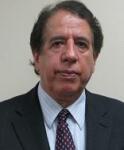
University of Hartford
West Hartford, CT
Phone: (860) 768-4032
Fax: (860) 768-5073
E-mail: keshawarz@hartford.edu
Dr. Mohammad Saleh Keshawarz is a Full Professor and former Chair of the Civil and Environmental Engineering Department at the University of Hartford in West Hartford, Connecticut, USA. Dr. Keshawarz was awarded his Ph.D. by the University of Oklahoma in Norman, Oklahoma with special emphasis on Geotechnical Engineering and minors in Math and Geology. He received his Master’s degree in Civil Engineering from Tennessee State University in Nashville, TN., and B.S. degree in Civil Engineering from Kabul University in Kabul, Afghanistan. Dr. Keshawarz has over twenty five years of university-level teaching, research, and consulting in geotechnical and in water resources areas of civil engineering. He is a Registered Professional Engineer in the states of Connecticut (active) and Virginia (inactive).
Dr. Keshawarz has been actively involved in the reconstruction activities in Afghanistan. He wrote the first water sector assessment on Afghanistan for USAID and served as a senior advisor to USAID on water issues. He led a team of international experts to assess soil and water in Afghanistan. He spearheaded attempts at resurrecting civil engineering education in Afghanistan and is currently leading a cooperative effort between Herat University and University of Hartford, through which engineering education at Herat University is revitalized. Dr. Keshawarz has led short courses and workshop on water management, shifting sand stabilization, flood management, and drought management in Afghanistan. Dr. Keshawarz has traveled widely in the Central Asian region and is intimately familiar with the region. He was selected as a member of a team of scientists from the American National Academy of Sciences to visit the water resources facilities of Uzbekistan and Turkmenistan. He has been to Afghanistan many times working on a variety of assignments. He knows the region well and speaks several regional languages.
Abdul Manan Khalid, M.S., P.E., LEED AP; Member, Board of Directors
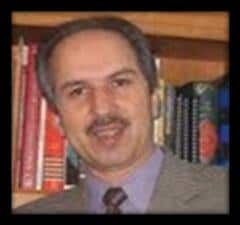
Abdul Manan Khalid has graduated from the Department of Civil Engineering of the Faculty of Engineering in January of 1981. He finished his Masters Degree in the field of Hydrology in the fall of 1984, and was awarded university’s Gold Medal for his work. He also completed post graduate studies in the field of Infrastructural Rehabilitation at Polytechnic University and Leadership at Baruch College, both in New York. He was a professor at the Faculty of Engineering of Kabul University, and later on worked in many project management capacities in the Kingdom of Saudi Arabia. He has also worked as Lead Bridge Inspector with NYCDOT; Assistant Chief Structural Engineer and Administrative Engineer with NYC Housing Authority, and is currently working as Managing Engineer, with the Department of Architecture and Engineering at NYC School Construction Authority. He is a Professional Engineer in the State of New York and a LEED Accredited Professional in Building Design and Construction.
Amanullah Mommandi, M.S., CE, P.E.; Member, Board of Directors
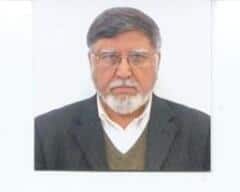
P.E. Colorado Department of Transportation Hydraulic Program Manager
Phone (303) 757-9044
E-mails: amanullah.mommandi@dot.state.co.us,
mommandia@yahoo.com
Mr. Mommandi was born in Logar, Afghanistan in 1947. He attended school in Logar, Paktia, and Kabul before finishing secondary school at the Afghan Institute of Technology (AIT). After AIT, Mr. Mommandi attended Kabul University where he graduated from the College of Engineering with a degree in Civil Engineering in 1968. Upon graduation from Kabul University Mr. Mommandi went on to complete a year in the Reserved Military Officer Corps. Next, he joined The Soil and Water Survey Authority in the Ministry of Agriculture and Irrigation and served as a water resource engineer until 1973. After working for the Ministry of Agriculture Mr. Mommandi went on to complete graduate studies in Water Resource and Hydraulics at Colorado State University located in Fort Collins, Colorado. After completing his graduate studies in the United States, Mr. Mommandi returned to Afghanistan and started working for the Ministry of Water and Power. He started as a water resource engineer, then assumed the roles of Director of Planning, General Director of Planning and General Director of Technical Monitoring and Inspection and finally as the President of Kunduz Khanabad Water Resource Authority. Mr. Mommandi then transitioned to the private sector as a consultant after immigrating to the United States. His next career move landed him at the Colorado Department of Transportation (CDOT), a position he has held for the last 26 years. Present day, Mr. Mommandi is a professional engineer holding the position of CDOT Hydraulic Program Manager. His current responsibilities are to initiate, participate and conduct research projects related to Water Resource and Hydraulics, to develop and update drainage design manual and drainage related specifications, and to teach drainage related classes. Mr. Mommandi joined SAE in the early nineties and serves as the SAE Chair for Colorado Chapter and served two terms in SAE Board of Directors.
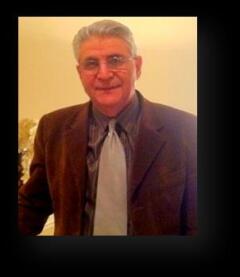
Mohammad Najib Poya, P.E.; Member, Board of Directors
(925) 597-1834 (Cell)
(510) 622-8769 (Office)
Mr. Poya is a member of the Society of Afghan Engineers and serving as the member of the Board of Directors and Chairman of the California Chapter of the Society. He has actively participated in several Society conferences, meetings and capacity building activities. He participated as a trainer in the Afghanistan Capacity Building Training Program of the American society of Civil Engineers, which was held in Kabul, Afghanistan by Society of Afghan Engineers in November 2007. He received his B.S. Degree in Civil Engineering from Kabul University Polytechnic Institute, Kabul, Afghanistan in 1974. He is a licensed as a Professional Engineers (P.E), California, License number C74478. He is currently working as the Transportation Engineer with California Department of Transportation (CALTRANS). During the last 24 years with CALTRANS he has performed planning, design and cost estimate for variety of the transportation facilities in Bay Area with focus on drainage, geometric design, transportation planning, surveying and project study reports. From 1975 -1981, Mr. Poya was working with Ministry of Public Works, Kabul, Afghanistan. During his work in Kabul, he served as Project Engineer and Structural Engineer with the Ministry of Public Works. His duties included engineering management and design of variety of structures such as industrial, commercial, institutional, and public buildings. He also participated in the design and analysis of Afghan Embassy Building of New Delhi, India. During his service with the Ministry of Public Works, he worked as the Supervising Engineer, in charge of the construction activities of Afghan Embassy Building in New Delhi, India.
Dr. Abdul Saboor Rahim, P.E.; Member, Board of Directors
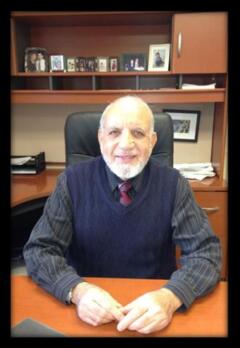
Dr. Rahim has over 35 years experience in Geotechnical Engineering, Environmental Engineering, Construction Observation and Material Testing. Dr. Rahim established ASR Engineering, Inc. in 1994 in Fresno, California. He is serving as the firm’s Managing Principal. Prior to establishing ASR, Dr. Rahim was the Senior Geotechnical Engineer and Manager of BSK & Associates in Fresno, California. During 1986-1987, Dr. Rahim was the Supervisory Engineer for Cooper Engineers, Inc. in Mountain View, California. From 1980 to 1986, Dr. Rahim was the Director of Engineering for GDC Engineering, Inc., in Denver, Colorado and Baton Rouge, Louisiana. During the period 1970- 1971, he conducted a pile testing research project in Bangkok, Thailand. Between the years 1967-1970, 1971-1972 and 1977-1980, Dr. Rahim has taught various courses at the Faculty of Engineering, Kabul University. During the years 1977-1980, he also served as the Director of the Center for Engineering Consulting Services and Applied Research. In the summer of 1991, Dr. Rahim conducted a graduate- level course in design of highways and bridges in Peshawar, Pakistan through the University of Nebraska. Dr. Rahim received his Ph.D. from the University of Pittsburgh, M.S from Purdue University and B.S. from Kabul University.
M. Hashim Rayek, DPE; Member, Board of Directors
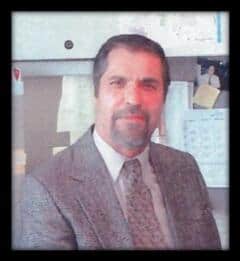
Mr. Hashim Rayek is a Designated Plans Examiner (DPE) Engineer for Prince William and Loudoun Counties in the State of Virginia and is working with Loudoun County, Virginia Department of Building and Development as a Project Manager. He received his B.S degree in Civil Engineering from Kabul University Kabul/Afghanistan. Hashim completed the training program with the Bureau of Relations in Denver, Colorado in the field of Hydraulics and Drainage. He received his Masters degree in the field of Hydrology from Roorkee University in India.
In the United States:
- Project Manager with Department of Building and Development, Loudoun County, Virginia. July 1995- Present.
- Engineer with Department of Public Works, Prince William County Virginia. October 1989-March 1995.
In Afghanistan:
- Director of Technical Evaluation, Ministry of Irrigation and Water Resources, Kabul/Afghanistan. February 1983-1986.
- Consultant Engineer, in Water and Power Engineering Company (WAPECA) Afghanistan. Kabul. January 1978-February 1983.
- Director General of Planning and Development in Helmand and Arganbab Valley Authority (HAVA), Lashkergha, Helmand. July 1975-January 1978.
- Director General of Operation and Maintenance in (HAVA) Helmand, Afghanistan. May 1972-July 1975.
- Office Engineer, with the Technical and Engineering Department, (HAVA). Helmand. April 1969- May 1971.
- Design Engineer Engineering Department, with (HAVA). Helmand. 1968-1970.
The Society of Afghan Engineers:
- One of the founders of the Society of Afghan Engineers (SAE)
- Served as President of SAE (one term).
- Member of the Board of Directors for SAE.
- Participant and presenter of a paper twice at the SAE conference in Kabul.
- Participant at a workshop at Kabul University, Engineering College conducting Capacity Building classes.
Interview with Ghulam Mujtaba, P.E., MSCE, CPM; President, the Society of Afghan Engineers
By: A. Manan Khalid, M.S., P.E., LEED AP
An interview was held with Mr. Ghulam Mujtaba, immediate past Chairman of the Board of Directors and current President of the Society of Afghan Engineers. The interview was held at the time that he was the Chairman of the Board of Directors. The following are the interview questions/discussions (Q) and Mr. Mujtaba’s responses (R):
Q: It is a pleasure and an honor to get the opportunity to interview a friend, a professor and a mentor whom I admire for his tireless efforts both in his personal and professional life. I would like to begin by asking you to tell the readers briefly about yourself.
R: It is also a privilege for me to respond to the interview questions of my respected colleague and friend. I have enjoyed working together as team members of the Board of Directors of the Society of Afghan Engineers (SAE) and Editorial Board members of the SAE eNewsletter. I greatly appreciated the type of cooperation that I have received from you and other team members in the accomplishment of the aforementioned duties. In response to your inquiry about myself, I offer the following: Since 1982, I have lived and worked in the United States. Currently, I am living in Gainesville, Florida and working with Florida Department of Transportation. My birth place is Pawyawndih Village of Khoshi County, located in Logar Province of Afghanistan. I attended Khoshi Elementary School, Ebniseena Middle School, and Afghan Institute of Technology High School. I received my B.S. degree in civil engineering from Kabul University in 1969, M.S. degree in civil engineering from University of Cincinnati in 1972, and public manager certificate from the Florida Center for Public Management at the Florida State University in 2002. After my official working hours with Florida Department of Transportation; I have occasionally been involved in teaching courses such as ACI, PCI, University of Florida, and FDOT inspector/technician training and certification courses. I am certified ACI and PCI trainer and examiner. As a volunteer member, I have worked with nonprofit organizations, including the Society of Afghan Engineers and the Islamic Center of Gainesville. I have had the pleasure of serving as member and Chairman of the Board of Directors of both organizations.
Q: I had the pleasure to meet your family in a short trip to Florida, and ever since, I have learned a lot about the accomplishment of your children. Please tell us more about your children and their level of education and current jobs.
R: I have two sons, Bahaudin and Mustafa; and four daughters, Belqis, Anisa, Nilofar, and Farzana. Bahaudin received his PhD in management and is working as Professor of Management with H. Wayne Huizenga School of Business and Entrepreneurship, Nova Southeastern University. Belqis received her M.S. degree in Civil Engineering from University of Florida. She is registered Professional Engineer and working with Florida Department of Transportation as the District 2 Roadway Design Engineer. District 2 covers 18 Florida counties. Anisa received her M.S. degree in health nutrition dietetics from University of North Florida. She is registered Dietitian/Nutritionist in the State of Florida and working with Grey Stone Healthcare Management as Regional Dietitian. Mustafa received his PhD in microbiology from University of Florida and is working as Assistant Professor of Microbiology with Department of Biological Sciences of Florida Gulf Coast University. Nilofar received her Doctor of Dental Medicine (Honors) from University of Florida, College of Dentistry. She is working as an Associate Dentist with Orange City Towncare Dental Office. Farzana received her Master of Arts in Education in Elementary Teacher Education from University of Phoenix and is working as Rehabilitation Therapist with Agency for Persons with Disabilities.
Q: I know that life has brought you from the plains of Logar all the way to Gainesville, Florida. It is a long physical and mental journey. What types of careers you have had along the way both in Afghanistan and in the United States?
R: In Afghanistan, I taught various courses at the Faculty of Engineering of Kabul University. During my employment at the Faculty of Engineering; I occasionally performed other duties, including, the position of Director of Center for Engineering Consulting Services and Applied Research; Chairman of Pre-Engineering Committee; Secretary and Acting Chairman of Civil Engineering Department. During my sabbatical leave from University; I worked as geotechnical engineer with SAUTI (Italian Company) while the company performed the survey of 300 Km, Lashkargah to Dishu, roadway project. I also worked as geotechnical engineer with Water and Power Engineering Company of Afghanistan.
In the United States, my first job was in Fort Myers, Florida. I worked with Florida Department of Environmental Regulations as the District Groundwater Engineer (Environmental Specialist). My second job was with Wingerter Laboratories, which I was in charge of the engineering activities of the Fort Myers Office of the Company. During the absence of the company’s Vice President, I served for six months as the Acting Vice President-Engineering, in charge of the Miami (Headquarter) and Fort Myers Offices of the Company. In 1988, I moved to Lake City, Florida and started my work with Florida Department of Transportation. I served as District 2 Concrete Engineer in Lake City and after working for six years in that position; I moved to Gainesville, Florida and worked as the Construction Project Engineer/Manager. My current job is with State Materials Office, in Gainesville, Florida. I work as the State Prestressed Concrete Engineer and oversee the field operation activities of the State Materials Office, including, quality control/quality assurance programs of precast/prestressed concrete products; concrete pipe; treated timber; and metal products that are delivered to the FDOT projects. I am also in charge of the materials related specification development of the aforementioned areas.
Q: You have been a member of the board of SAE and are currently the chairman of the board, but I know that you are a member of many other Professional Associations. Please tell us about these Associations and your level of involvement with them.
R: In the past, I have been member of a few technical societies; including American Society of Civil Engineers (ASCE); American Welding Society (AWS); Southeast Asian Society of Soil Engineering; American Society of Foundation Engineers; Federal Highway Administration (FHWA) Technical Review Committee for High Performance Bridge Projects; and American Concrete Institute (ACI). Currently, I am active member of American Institute of Steel Construction (AISC), American Society for Testing and Materials (ASTM), Precast/Prestressed Concrete Institute (PCI), and National Steel Bridge Alliance (NSABA). I am actively involved in three ASTM Committees and 9 of its Subcommittees; and one PCI Committee. My involvement in ASTM and PCI Committees and Subcommittees are in the areas of aggregate; cementitious materials; concrete admixtures; conventional, flowing, and self-consolidating concrete; concrete materials technology; concrete drainage structures; porous concrete; and concrete pipes.
Q: You are the Editor In-Chief of the SAE’s colorful eNewsletter, a publication which was long needed and you were the push and the brain behind establishing it; please tell us more about it.
R: SAE eNewsletter is a quarterly update from the Society of Afghan Engineers. It includes contributions from the Editorial Board, SAE members, and other interested individuals or organizations. It features the latest news and information of interest to Afghan professionals. The news may include the reports of the activities of the SAE members and committees. The intent of the newsletter is to provide information about technical publications; meetings; conferences; seminars; and Afghan projects. In each issue of the newsletter, we try to publish an interview report with the executive of an agency or educational institutes. In this issue, the Editorial Board decided to have an interview with Editor-In-Chief so that they inform readers about the history of the newsletter publication and its development process. The newsletter may provide architectural, engineering, and abstracts of research papers or references to technical and other professional publications. The intent of the newsletter is to make the members aware of information about projects in Afghanistan or outside Afghanistan, especially, the projects that SAE members would be involved. The guidelines and policy of the newsletter was approved by Board of Directors in their meeting of November 10, 2010. In accordance with the approved guidelines, the first issue of the newsletter was published in January of 2011. The Editorial Board has published four quarterly issues of the newsletter in 2011. This issue is the first publication of 2012 SAE eNewsletter. It is a pleasure to be continuously receiving valuable articles, reports, news, comments, and suggestions from readers in Afghanistan and abroad. The publication of the newsletter made it possible to reestablish contacts among Afghan professionals all over the world. Additional information about the newsletter may be obtained in the SAE eNewsletter guidelines.
Q: You have been a professor, a research scholar and you have written many beneficial articles and papers. Can you tell us how many articles and papers have you written and have they been published?
R: I have written more than 20 papers. Most of my papers have been based on the applied research, which included the laboratory and field testing. A few FDOT specification development and modifications have been made based on the results of my research work. The papers that I have presented during symposiums and conferences have been published in the proceedings of the symposiums and conferences. There are five published papers that are included in the proceedings of the conferences. One of my papers about Flowing High Performance Concrete has been published in April 2005 issue of ACI Concrete International Magazine. My other publications are my M.S Degree thesis; the FDOT specifications and materials manual related to timber, precast prestressed concrete products, pipe, and drainage structures. The FDOT published documents are in the form of the supplemental specifications, special provisions, or standards. The published documents are available on the Florida Department of Transportation’s website.
Q: Recently, you presented a test method to ACI that you have pioneered in conjunction with another colleague of yours for “Aggregate Distribution of Hardened Concrete Products”. I will appreciate if you can briefly explain this and other similar achievements.
R: The aggregate distribution determines uniformity of the hardened concrete within a structure. The uniformity of concrete within a structure is determined by measuring the coarse aggregate content of the hardened concrete at different location of a product. I had a presentation in ACI Convention in Tampa, Florida on April 4, 2011. My presentation was about aggregate distribution of hardened Concrete products. During the presentation, I described Mujtaba and Bühler test method and its application. The test was presented for the first time in a paper entitled, “Development and Utilization of Flowing High Performance Concrete-A Review of Incorporating this Technology in Two Florida Precast/Prestressed Bridge Project Components by Ghulam Mujtaba and Eckart Bühler, presented in the 2003 PCI/FHWA International Symposium on High performance Concrete, in Orlando Florida.” Since its development, the test method has been included in the FDOT Materials Manual. Subsequent to a satisfactory laboratory trial batch of flowing and self-consolidating-concrete, the FDOT specification generally requires the manufacturers to perform field demonstration of the proposed mix design by manufacturing of a mockup product. As part of the field demonstration, it is required that the aggregate distribution test should be performed in accordance with Mujtaba and Bühler test method, as described in Section 8.4 of FDOT Material Manual. It should be noted that the aforementioned presentations, both, in 2003 and 2011 conferences were well received. After the presentation of 2003, the editor of the ACI Concrete International magazine who was present during the presentation, wrote me an email and mentioned that my flowing concrete presentation was informative, and requested that I write a paper about the subject for the ACI International Magazine, which I submitted a paper and it was published in 2005. Also, after April 4, 2011 conference, I received a letter, dated April 19, 2011, from Mr. Ronald G. Burg, Executive Vice President of ACI, who thanked me for serving as speaker. In his letter he has added that my presentation was informative and I have had an integral part in the success of convention program.
My other achievements have been in the development and implementation of the quality control/quality assurance (QA) program for fabrication of precast/prestressed concrete products that are delivered for FDOT projects. We have received good comments about the program that I have written. The National Cooperative Highway Research Program-Research Results Digest Number 274 has mentioned in their report that “Some states have QA documents that may be of use to other states as a model. Florida’s Manual for Quality Assurance of Precast prestressed Concrete members is one such document”. In the other part of the research it mentions that “Florida’s Manual for Quality Assurance of Precast prestressed Concrete members (and other similar manuals) provides an excellent example of a QA manual for this particular structural material/component.” I have also developed guidelines for acceptance of the precast prestressed concrete plant certification agency program and standards for inspector qualifications. The guidelines of the certification agency program are included in Section 8.5 FDOT Materials Manual. After the preparation and implementation of the document, Mr. Fred McGee, President CCI, wrote to Governor of Florida and thanked him for development of such a program. In his letter he indicated that Ghulam Mujtaba, P.E., State Prestressed Concrete Engineer was an integral part of the change, who constructed the acceptance criteria for new certification programs, the standard for inspector qualifications, and formed a skilled and knowledgeable review committee to oversee inspection programs and agency credentials.
During my work with FDOT, I have been the winner of a few awards, including:
- In 1989, in recognition of dedication to quality Concrete in Florida through continuing service as an ACI Examiner and Field Technician Workshop Instructor, presented by Concrete Materials Engineering Council (CMEC);
- In 1990-1991, for achievement of excellence in the field of highway engineering and rendering distinguished service to the Department of transportation;
- In 1992-1993, for contribution to technical advancement of transportation facilities and rendering distinguishable service to Department of Transportation and the people it serves;
- In 1994, Davis Productivity Award for smart work, dedication above and beyond the call of duty, which resulted in increased performance, added value, and enhancement of the productivity of Florida government, presented by Florida council of 100, Florida Tax Watch, Inc and State of Florida.
- In 1994-1995, for recognition as role Model by Peers;
- In 1997, for Outstanding Project of Special Significance and Quality-Construction, presented by Florida Transportation Association to me as the Paynes Prairie Construction Project Engineer
- In 2007, for special quality achievement resulted in benefit to FDOT; In Afghanistan, I received an award from United States Engineering Team in 1970 for the research work in the testing and design of Afghan poplar pole beams.
Q: How many times have you been back to Afghanistan? What was the purpose of your trips?
R: I have been back to Afghanistan three times since 1982. Two times I went to visit family and friends in Kabul and Logar. One of the visits during 2007 was related to the capacity building project. The objective of the program was to enhance Afghanistan’s professional engineering capability by training and mentoring the principles of the engineering consulting firms in the skills required for running the business of such firms. The contractor of this project was American Society of Civil Engineers and the Society of Afghan Engineers was the subcontractor of this project. In accordance with the contract, three ten-day training sessions were held in the Faculty of Engineering Building of the Kabul University. My colleagues; Mr. A. H. Rakin, Mr. M. N. Poya, Mr. M.N. Noori; and I were involved in teaching of the third group, which was held on November 17-28, 2007.
Q: You have a family, and a full time job; you are the chairman of the SAE’s Board of Directors, the writer and the Editor in-Chief of the newsletter and many more things. From my almost two years of experience with you as the SAE’s board member, I have seen you write the minutes of every meeting and you never miss responding to any e-mail. I have admired your patience and hard work and would like to know, how do you manage all this?
R: Thanks for mentioning about my working style. In any job, it is important that you have to have passion and interest for the task that you perform. I enjoy my work when I know that somebody will benefit from it. I work after hours and reduce my sleeping time to a manageable level to complete the scheduled task. During my work with FDOT or SAE, I have tried to list priorities and schedule my work accordingly so that I would be able to promptly finish my work activities. It bothers me if I have any unfinished pending item on my list. Also, I have to allow time to be together with my children and grandchildren. If any accomplishments you have observed in SAE or during my work with other agencies, they have been the results of having a good team and working together with the team members. The credit for our accomplishments goes to all team members.
Q: What advice do you have for the young engineers of Afghanistan?
R: The young engineers in Afghanistan and abroad have to gain knowledge and experience in their professional fields so that they will be able to compete with their peers and could serve better their communities. They have to work hard in their jobs and be loyal to the institutes that they work with. We should follow and learn from all good things that the people of the advanced societies have done, which have caused the development of their countries. In each area that they see a problem, they form associations of volunteers to work together to reach the established goals by solving the problem and bringing improvement. As an example, in the United States most of the homeowners in their residential areas form homeowner associations in order to maintain the safety and the cleanness of the roads, sidewalks and parks of their residential areas. There are a lot of areas in Afghanistan that need volunteer Afghan professionals who could work together to bring improvement. Examples of those are preparation of the construction specifications, design standards, environmental protection, professional regulations, materials testing and specifications, codes, construction inspections, etc.
Q: Thank you for taking the time to share your thoughts with the readers of the newsletter. Your accomplishments and your lifetime of experience is a leading torch for current and future generations. All Afghans, especially the Society of Afghan Engineers are very proud of you and appreciate all that you have done and are doing for the Society. As a final note, what advice would you offer to the expatriate professionals and the members of the Society to better help in the reconstruction activities of Afghanistan?
R: Thanks for the time that you have taken for the interview. It is a great honor for me to be of service to our Society and to other professional agencies in Afghanistan. We could be of better services in the reconstruction activities of Afghanistan if we have the required knowledge and experience. While we are in these developed countries, we should take advantage of the education of these countries by taking courses in any area that are needed. All members should voluntarily join the committees of their expertise and work together with their peers. This will bring success. For example, if we want SAE to help in Afghanistan’s reconstruction activities, all of us have to participate in any activities that we have professional expertise. The Society of Afghan Engineers have developed and modified bylaws of the Society and developed the Manual, which is a standard operating procedure of the SAE. These documents describe the formation of committees and local chapters. By willingness of every member to do volunteer work and by working together we will find means and methods to be of help in the reconstruction activities of Afghanistan.
“By willingness of every member to do volunteer work and by working together we will find means and methods to be of help in the reconstruction activities of Afghanistan by itself.”
Membership News
In this section the news about the new membership will be provided.
Obituary of Mr. Shuja Najem—An SAE Member
Mr. Shuja Najem; a member of the Society of Afghan Engineers (SAE) and past member of the SAE Board of Directors, passed away in the Virginia Fairfax Hospital at 10:30 AM on Thursday, December 29, 2011 (1390 H.S.) at the age of 61. Mr. Amad Shuja Najem was born on May 2, 1950 (1929 H.S.) in an intellectual and religious family in Karta-I-Char of Kabul City, Kabul, Afghanistan. He was in good health until he was 3-year old. Unfortunately, due to polio illness his health condition changed. In the same neighborhood that Najem family was residing, six children at the same were diagnosed with polio disease and Shuja was one of them. Most of the children died due this disease and Shuja was one of those who survived from the polio disease, but his legs were paralyzed and unable to walk without canes and wheelchair. From his childhood he had great desire to learn, go to school, and be together with other children. He was admitted to Said Jamaluddin Elementary school while he was 9-year old and graduated as top student. He received his diploma from Habibia High School and Bachelor’s degree in civil engineering from Faculty of Engineering of Kabul University. He was interested to watch sports and games. After his graduation, he served for one and half years in Kunduz province as a civil engineer. He immigrated to the United States in 1980. He started his first job in the United Sates as a draftsman with New Jersey Department of Transportation and then he was promoted to the project engineer/manager positions. After 25 years of employment with New Jersey Department of Transportation, he retired. During his last few years of his retirement life, he was living in Virginia. His friends, classmates, and professors describe him to be a hard working, intelligent, friendly, cooperative, kind, and honest person. He was held in high regards by his colleagues. The Editorial Board of the SAE eNewsletter, Board of Directors, Executive Committee, and other SAE members express their condolences to his family and friends. Our sympathy, thoughts, and prayers, are with Najem family for the great loss. Mr. Shuja Najem with his wife Mrs. Jamila Sanie Najem, and their daughter Mahdia Najem.
New Members
The Society of Afghan Engineers (SAE) welcomes Mr. Muhammad Mujtaba, Vice President Omicron LTD, who joined the Society. In his email, Mr. Mujtaba has indicated that he would like to consider the corporate membership for their company, Omicron ltd. If there is any other requirement, they will be glad to comply with. He has mentioned that Omicron is an Afghan owned company which provides construction, logistics and consultancy services to Afghan and international clients. His desire is that Omicron maintains professional affiliation with SAE. In his email, he has indicated that main aim behind the desire of Omicron’s affiliation is to promptly reach to Afghan Engineers and other professionals and involve them in their projects rather than the professionals from other countries. The Society of Afghan Engineers appreciates Mr. Mujtaba’s suggestions and will be very pleased to be of any assistance to Omicron. At his time there are no other requirements for corporate membership. But, a committee has been formed to discuss the requirements of corporate memberships.
Membership Renewal 2012
The attached form includes application for the new members and membership renewal. The application forms may be viewed at SAE website. The members are requested to take a few minutes of their time to inform the Society by sending their updated contact information.
The completed application/renewal forms may be mailed to Mr. Nagib Sayed at P.O. Box 11520, Burke, Virginia 22009-1520.
Achievements and Awards
The newsletter will inform their readers of winners of awards or any other successes of Afghan professionals and students, especially, their Society members. You can help the SAE eNewsletter editors by providing the news of the achievements, award winners, and any other success stories. In this issue the achievement of an SAE Member, Dr. Bahaudin Mujtaba, will be introduced.
Source: The SharkBytes, An Online Newsletter from NSU, January 2012 issue H. Wayne Huizenga School of Business and Entrepreneurship Nova Southeastern University (NSU)
Bahaudin G. Mujtaba, D.B.A., professor of management at the H. Wayne Huizenga School of Business and Entrepreneurship, presented his research at the International Conference on Management Research (ICMR) in Lahore, Pakistan on Dec. 15-16. Professor Mujtaba discussed a paper that he coauthored, titled “Re-Industrialization Lessons, Policies and Strategies for a Post-Revolutionary Period in Cuba.” The conference was sponsored by Superior University of Pakistan, the University of Newcastle, Australia, and Rouen Business School of France. In addition, Mujtaba also presented a two-hour workshop on “Situational Leadership amid a Diverse Workplace: Considerations for Fairness and Employee Development,” and served as a panel member discussant on “Emerging Market’s Future: Business, Innovation, Entrepreneurship, and Finance.” The panel discussion was moderated by Dr. Sikander Khan, Professor and Pro Rector, Superior University, Lahore, and included faculty members from universities in France, Italy, the United Kingdom and the United States.
The information is posted in the January 2012 issue of the Sharkbytes, newsletter under the title: NSU Achievements. The details of the news and award may be viewed at the following web link: http://nsunews.nova.edu/huizenga-school-professor-travels-pakistan-present-research-lead-workshop-participate-panel/
“Advise us of success stories or achievements of the Society members and any Afghan professionals and students.”
SAE E-Executive Committee Members:
- President: Ghulam Mujtaba
- Vice President: To be announced
- Treasurer: Nagib Sayed
- Secretary: Luis Durani
SAE Board of Directors:
Chairman:
- M. Qasem Kadir
Members:
- Yar M. Ebadi
- Abdul Hamid (Farid) Kazi
- Mohammad Saleh Keshawarz
- Abdul Manan Khalid; Amanullah Mommandi
- Mohammad Najib Poya; Abdul Saboor Rahim
- Mohammed Hashim Rayek
SAE Past Presidents:
- Malik Mortaza
- Sohaila Sanie Shekib
- Mohammed Hashim Rayek
- Mohammed Wali Shairzay
- Abdul Hadi Rakin; M. Qasem Kadir
- Abdul Hadi Rakin
SAE eNewsletter Editorial Board:
- Editor-In-Chief: Ghulam Mujtaba, M.S, CE, P.E., CPM
- E-Mail: mujtabaghulam@bellsouth.net
- Editorial Board Members: A. Wahed Hassani, Ph.D., P.E. Email: awhassani@gmail.com; A. Manan Khalid, M.S., P.E., LEED AP E-Mail: manank10@gmail.com; Mohammad Mirwais Email: mirwaisarchitect@gmail.com; Daod Mohammad Email: dmohammad@suncor.com
Subscribe/Unsubscribe: The subscription to the SAE eNewsletter is free. If you are not receiving the SAE eNewsletter directly
and would like to subscribe, please send a note to: mujtabaghulam@bellsouth.net with the subject “Subscribe: SAE eNewsletter”. To unsubscribe, send a note with the subject “Unsubscribe: SAE eNewsletter”.
Disclaimer: The author, reporter, or agency of each publication, project, news, and products is included in this newsletter. Additional contact information of the authors and their agencies are available with the Editorial Board of the newsletter and may be provided upon request. The Editorial Board of the Society of Afghan Engineers, Executive Committee, Board of Directors, or any of its members is not liable for the accuracy or contents of the information. The reports and information are included as provided by the authors and agencies without any changes in the substance of the documents. The information about the agency products or services is not the SAE endorsement.
The Society Of Afghan Engineers
https://www.afghanengineers.org/donate/
P. O. Box 11520
BURKE, Virginia 22009-1520
Telephone: 909-868-4212
Email: info@afghanengineers.org