SAE Newsletter – 2012-10 – Volume 2, Issue 4
Highlights the Minister of Public Works’ extensive US tour, evaluates the feasibility of alternative Salang routes, and examines urban development plans for Kabul New City.
October 2012, Volume 2, Issue 4, Jadi 1391
P.O. Box 11520, Burke, Virginia 22009-1520
Dear Colleagues:
This issue of the SAE eNewsletter (newsletter) features news about the 10-day visit of Afghanistan’s Minister of Public Works, Mr. Najibullah Aoudjan, to the United States, especially his meetings with the SAE members.
There is news about the award of two contracts. One of them is the USAID contract which has been awarded to the two USA engineering companies, Tetra Tech and Louis Berger Group. These companies will perform the feasibility study of the Salang Tunnel. The other contract is the Afghan Government contract, which includes the development plan for phase 1, Kabul New City, Deh Sabz. The contract has been awarded to Umar Munshi Associates of Karachi, Pakistan.
There is an interview with Professor Zarjon Baha, former Dean of the Faculty of Engineering of Kabul University.
Your contributions in the development of the newsletter by sending technical related news, articles, comments, suggestions, and opinions, would be appreciated.
We hope that you find this issue of the newsletter interesting and useful.
Please let us know if you have any questions or comment.
Very Truly Yours,
Ghulam Mujtaba G. Mujtaba, MS-CE, P.E.,
CPM
Editor-In-Chief,
SAE eNewsletter
“This issue of the SAE eNewsletter (newsletter) features news about the 10-day visit of Afghanistan’s Minister of Public Works, Mr. Najibullah Aoudjan, to the United States, especially his meetings with the SAE members.
Inside This Issue
- 2 Greetings from SAE President
- 2 Responses to Readers’ Comments
- 4 Technical news from Afghanistan
- 5 Minister of Public Works’ Visit to USA
- 14 Developmental Plan for Phase 1, Kabul New City, Deh Sabz
- 16 The Salang Feasibility Study Presentation
- 18 News Updates from Faculty of Engineering of Kabul University
- 19 The Travel Reports and Engineering activities of SAE Members in Afghanistan
- 20 Afghan professional community news from Abroad
- 21 Interview with Professor Zarjon Baha, former Dean of the Faculty of Engineering of Kabul University
- 32 Membership News
- 38 Seminar
- 40 Membership Updates
Greetings From The SAE President
Dear Members of the Society of Afghan Engineers:
The members of California, Colorado, and Washington DC Chapters of the Society of Afghan Engineers held their conference and meetings with H.E. Mr. Najibulah Aoudjan, Minister of Public Works during his 10-day visit to the United States. Mr. Aoudjan has visited numerous infrastructure sites. He has held meetings with different governmental and industry leaders in the United States. The Society of Afghan Engineers is pleased that Minister Aoudjan took the time from his busy schedule to meet with Afghan community in the United States, especially with the members of Society of Afghan Engineers (SAE). The SAE members have found their conference, meetings, and discussions with Minister Aoudjan to be informative and productive.
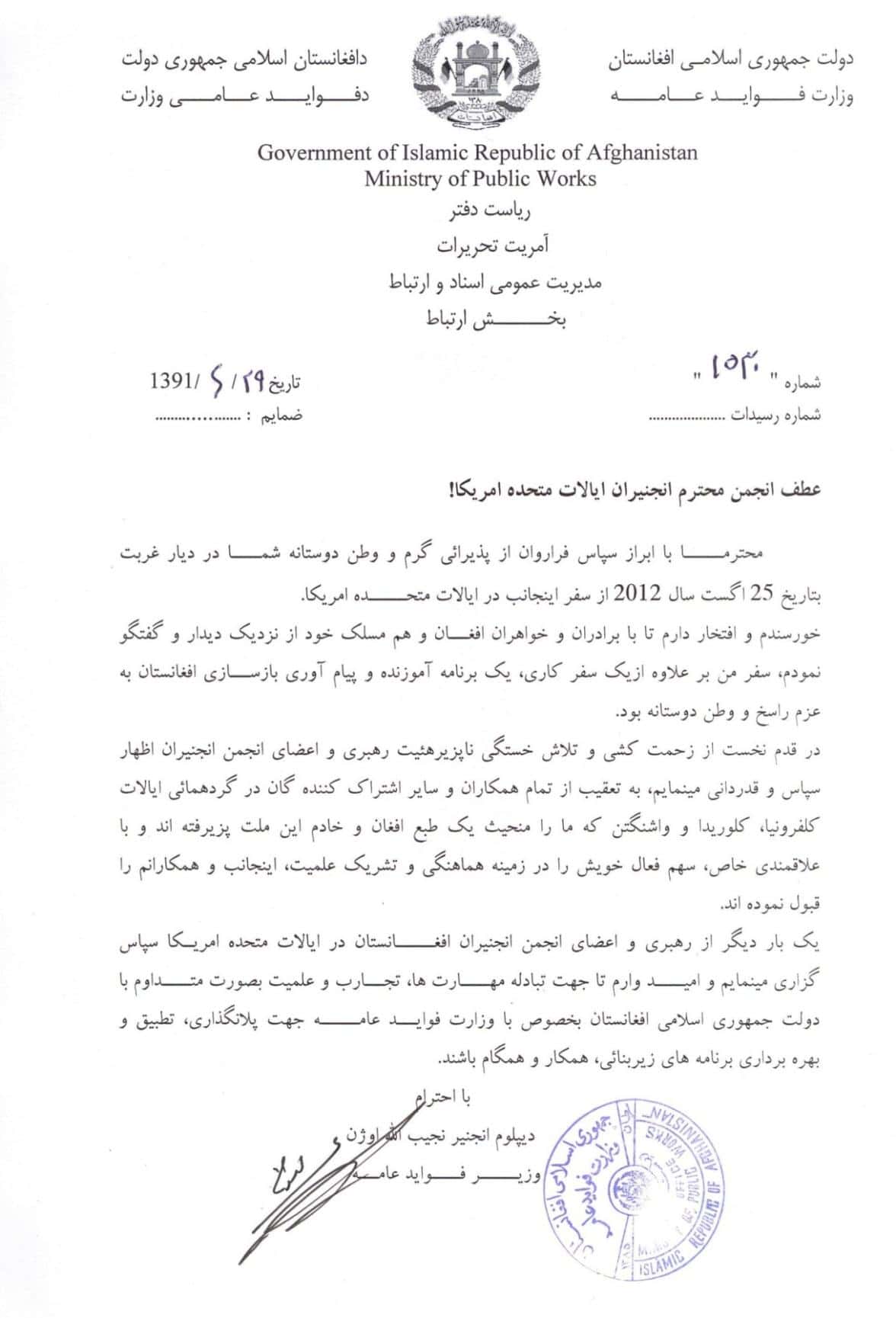
It is an honor that SAE has received two appreciation certificates from Ministry of Public works. One of the certificates is regarding the SAE’s assistance in the design of the emergency repair of Salang Tunnel. The other certificate is the appreciation for the arrangements that the Society Chapters have made for the construction project site visits, conference, and meetings. In the certificate of appreciation, Minister Aoudjan has indicated the need for continues technical cooperation between SAE and Ministry of Public works.
On behalf of the members of the Society of Afghan Engineers, I appreciate Minister Aoudjan’s appreciation certificates and kind words. The Society members would be very pleased to be of any service in the reconstruction and other developmental activities of Afghanistan infrastructures.
Very Truly Yours,
Ghulam Mujtaba G. Mujtaba,
MS-CE, P.E., CPM
President, the Society of Afghan Engineers
Responses to Readers’ Comments
Comments from Engineer from Mr. Mohammad Azim Alozai
Dear Mr. Ghulam Mujtaba:
Thanks a lot from your kind considerations for keeping me update of 3rd Issue of SAE eNewsletter, concluding of nice suggestion & comments to reader and about the traveling of Mr. Manan Khalid to Afghanistan and his training workshop and presentation to Ministry of Water and Power and Kabul University and joint teleconference of SAE officers and Ministry of public work.
I have some suggestions which would bring not only an internal update between members inside Afghanistan but also in capacity building of members as:
- The participation of the SAE members in the conferences, trainings and workshops which holding inside Afghanistan through a mutual invitation and Confirmation of SAE and the proposed sectors which hosting workshop or Training inside Afghanistan.
- An arrangement of quarterly meeting of SAE members which are in Afghanistan by SAE Head representative in Afghanistan, for an internal update communication and coordination between members from such workshop, conferences and trainings.
In this regard I am looking for your kind considerations and regards,
With thanks,
Mohammad Azim Alozai
Structural Design Code Officer
Afghan National Standard Authority (ANSA)
Cell no. +93 700017528; +92 3335259248
Email: mazimalozai@gmail.com
Responses to Mr. Alozai’s Comments and Suggestions
Dear Mr. Alozai:
Thanks for the email and suggestions. You have suggested about the involvement of SAE members within Afghanistan in the seminars and training programs. I agree with your suggestions. We will inform the SAE members within and outside of Afghanistan, whenever we hold seminars, conferences, and symposiums. The training sessions or topics might be very specific to the agency staff members. It is the responsibility of the agencies within Afghanistan to inform those who will benefit from the capacity building activities.
In the past SAE has made arrangements for conferences within and outside Afghanistan. Also, SAE members have participated in the capacity building activities of professionals in Afghanistan. We will make extra efforts to increase the level of these activities so that the Society could be of better help to the improvement of technical activities of our beloved country, Afghanistan. We are seeking for different methods to perform these activities.
In accordance with SAE policy, the administration has requested SAE members who are traveling to Afghanistan to transfer their technical knowledge to their colleagues in Afghanistan by offering seminars, trainings, and discussions. Accordingly, during the last one year, Dr. Hassani, Mr. Abdul Manan Khalid, and Mr. Amanullah Mommandi presented the topics and performed trainings at Kabul University and other governmental agencies. They met with their colleagues in different institutes. The reports of their activities are described in this issue and the last few issues of the SAE eNewslettter.
You have mentioned about the quarterly gathering of SAE members within Afghanistan. It is great idea. I agree that it will be beneficial to form an SAE Chapter in Kabul. I will propose to the Board of Directors to include this item as part of the agenda of one of their upcoming meetings. The formation of local chapters requires the approval of Board of Directors. After formation of the SAE Local Chapters there will be better communication among member within and outside of Afghanistan.
Once again, thanks for your suggestions about the development of the Society activities.
Thanks
Editor-In-Chief
SAE eNewsletter
“In accordance with SAE’s policy, the administration has requested SAE members who are traveling to Afghanistan to transfer their technical knowledge to their colleagues in Afghanistan by offering seminars, trainings, and discussions.”
Comment from Dr. Zarjon Baha, Professor at Purdue University
Grana Mujtaba Khana: Us-salamu-alaikum
Your team is doing great job and you should be proud to have such a team working for SAE eNewsletter.
Best wishes always and have a great day
Zarjon
Response to Dr. Baha’s Comment
Dear Doctor Sahib Salam:
Thanks for the email and kind words about the Editorial Board members of the SAE eNewsletter. We are proud that we are receiving these types of comments from our respected readers. They will be very pleased to read the comment from their colleague, former Professor, and Dean at the Faculty of Engineering of Kabul University.
Thanks
Editor-In-Chief
SAE eNewsletter
Technical News from Afghanistan
In this issue of the newsletter the following two reports are included:
- Report of Minister Najibullah Aoudjan’s Visit to USA and certificates of appreciation s that he has sent to SAE from of appreciation from Afghanistan;
- Developmental Plan for Phase 1, Kabul New City, Deh Sabz
- The Salang Feasibility Study Presentation
- News Updates from the Faculty of Engineering of Kabul University
- The Travel Reports and Engineering activities of SAE Members in Afghanistan
Minister of Public Works’ Visit to USA
By: M. Qasem Kadir, SAE Chairman of the Board of Directors
In accordance with the mission of the Society of Afghan Engineers (SAE) on May 1st, 2012 the SAE leadership conducted a conference call with the Ministry of Public Works and reaffirmed their commitment to support the reconstruction activities in Afghanistan. During this call more than 30 high ranking officials of different governmental organizations in Afghanistan, including H.E. Mr. Najibullah Aoudjan, Minister of Public Works participated. The SAE was represented by Board of Directors and Executive Committee members.
Along the same line of cooperation two Board members of the Society of Afghan Engineers, Mr. Amanullah Mommandi and Mr. Abdul Manan Khalid, traveled to Afghanistan, conducted trainings and visited the Salang Tunnel at the request of H.E. Mr. Aoudjan. After that trip, a special task force from SAE worked tirelessly with the Ministry of Public Works supporting the temporary repair of the Salang Tunnel.
In continuation of the cooperation spirit between SAE and Ministry of Public Works of the Islamic Republic of Afghanistan (MPW), the Society of Afghan Engineers was privileged to host H.E. Mr. Najibullah Aoudjan, Minister of Public Works of Islamic Republic of Afghanistan in the U.S.
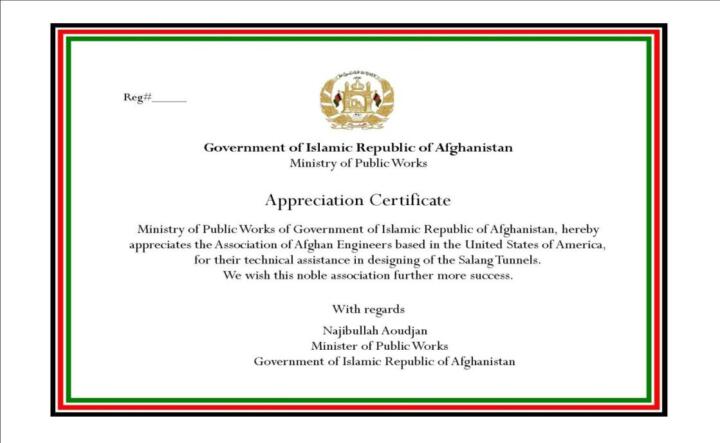
Minister Najibullah Aoudjan visited the United States of America for 10 days from August 21-31, 2012. During his visit, he met with the Chapters of the Society of Afghan Engineers in Washington DC, California, and Colorado. After his return to Afghanistan he sent SAE certificates of appreciations. It is an honor for SAE to receive these certificates, indicating cooperation between the two agencies.
Minister of Public Works’ Visit to Washington D.C.
His first stop was Washington D.C. The SAE leadership has organized a meeting with the assistance of Ambassador H.E. Eklil Hakimi at the Marriott Hotel Washington DC, on August 22, 2012. The meeting started with remarks by SAE Vice President Atiq Panjshiri welcoming Minister Aoudjan to the United States, followed by a brief introduction of the six other participating SAE members.
Minister Aoudjan began by expressing appreciation for SAE’s willingness to help MPW and stated that he was very proud to be a representative of the engineering community at the cabinet. He also mentioned that he was nominated for this post by the Society of Afghan Architects and Engineers (SAAE).
Minister Aoudjan talked about his ministry’s needs, problems, challenges and the lack of professional capacity in nearly every field of operation. The ministry needs well qualified professionals to look after projects with confidence and competence. Lack of technical capacity is one of the areas the ministry desperately needs SAE’s help in the form of technical training and capacity building at MPW. He also mentioned that his ministry needs this assistance from SAE as a top priority and is willing to sign a memorandum of understanding (MOU) with SAE to facilitate all future cooperation. He iterated his full support in bringing more Afghan professionals to the MPW instead of non-Afghan advisors who are not only cost prohibitive, but also ineffective and non-committed as Afghan professional can be to his Ministry.
He stated that he understands the personal obligations and responsibilities of SAE members and would give consideration accordingly when SAE members are ready and willing to provide assistance in either short term training or a long term advisory role. The Minister promised to promote and advocate “Afghans First” during his meetings with the US relevant agencies.
The Minister was very pleased with the two SAE colleagues who recently were in Afghanistan. Mr. Manan Khalid and Mr. Amanullah Mommandi, during their short stay in Afghanistan provided valuable presentations and capacity training to MPW staff. He requested for the continuation of this program if possible.
Prior to Mr. Atiq Panjshiri’s closing remarks, all attendees offered some comments and shared valuable real life experiences with the Minister. Mr. Panjsheri in his closing remarks on behalf of SAE thanked the Minister for his time and support of the SAE and promised that SAE in return would do its best to support MPW, to the extent possible, and promised to assist MPW by expediting the selection and deployment of the most competent to his assistance. On Thursday evening August 23, 2012, SAE hosted a dinner reception in honor of Minister Aoudjan’s visit to the USA. The dinner was arranged at Dunya Banquet Hall in Alexandria, Virginia.
In addition to several members of the Society, a few members of the Afghan Community, a few personal friends of the Minister and Ambassador Hakimi and the Afghan Embassy staff, attended the reception. Minister Aoudjan’s US tour guide Mr. Hassan Reza of Federal High Way Administration (FHWA), Melvin Cintron, Aviation Safety Flight Advisor at Federal Aviation Administration (FAA), and Julie Abraham, Director of Special International Policy Initiatives at USDOT accompanied Minister Aoudjan at the reception.
Minister of Public Works’ Visit to California
After this great interaction with His Excellency Minister Aoudjan in the greater D.C. area, SAE was honored to host another gathering with Mr. Aoudjan in California.
The SAE Chapter in North California was the next host of Minister Aoudjan on August 25 at the Afghan Coalition Office in Fremont, California.
After the recitation of the Holy Quran, Mr. Najib Poya Chairman of the SAE North California Chapter welcomed Mr. Najib Aoudjan, the Minister of Public Works of the Islamic Republic of Afghanistan and his advisor, Mr. Jamil Hares, SAE members, and other Afghan community members and guests.
Mr. Aoudjan was greeted by other community leaders and received a gift from Afghan Coalition in Fremont presented to him by Ms. Rona Popal, who spoke about the Role of Woman in our Community.
Dr. S.A. Kazem, representative of Afghan Seniors Association of the Bay Area indicated that all professionals and educated members of the Afghan community will be very pleased to support Minister Aoudjan and his activities. He thanked him for his effort to come to California and keep Afghans informed and involved in his activities.
Minister Najib Aoudjan, after his greeting to audience, thanked SAE for their continued support in different project, including the preparation of the Emergency Repair Plan for Salang Tunnel. He also thanked Ms. Rona Popal for the gift; and Dr. Kazem and all other Afghan Seniors Association for type of Support that they expressed to Minister in his activities.
Minister Aoudjan mentioned that he is working hard to perform his job in a best manner that he can. He asked all professionals to help him in his efforts of the rebuilding Afghanistan infrastructures. He specifically mentioned the need for the SAE members to help his administration. He reminded everyone that rebuilding Afghanistan is the responsibility of each and every Afghan in all part of the world and in particular it is the duty of Afghan engineers to contribute. He emphasized on the importance of Salang Tunnel for the financial and social life of Afghan people.
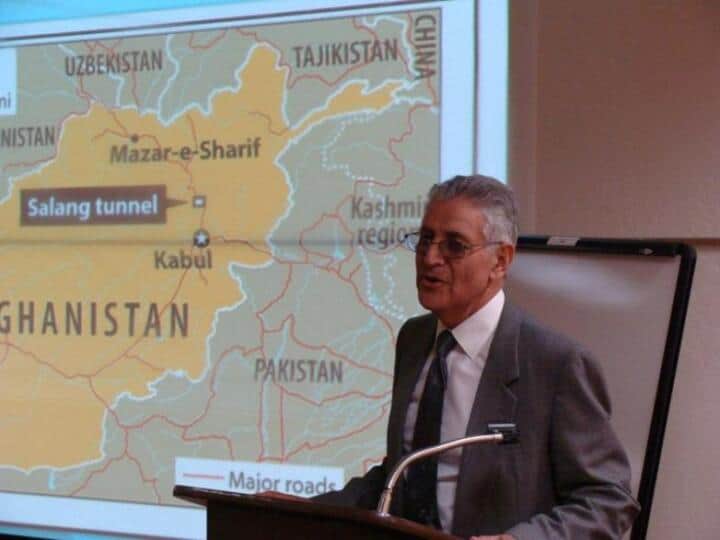
Mr. Poya provided power point presentation regarding the highlights of the SAE activities related to the emergency repairs of the Salang Tunnel. He added that the SAE taskforce worked on the preparation of the design plan and specifications. A 30-page document comprising the repair plans and specifications was submitted to the Ministry of Public Works. The preparation of the documents was based the site condition survey that was provided by the staff members of the Ministry of the Public Works.
Mr. Aoudjan discussed the dangers of avalanche of Salang Tunnel each year, which occurs, during months of February and March and results in the loss of lives. He talked about different challenges and solutions, especially the needs of the Ministry of Public Works and lack of resources. Minister Aoudjan talked about the plan for railroad that connects Kabul to a few other provinces. He talked about increasing roads and highways to connect the remote area of Afghanistan. He explained the importance of all of these connections and how it will enable Afghans to reach mines and underground resources.
Dr. Qayoumi, President of San Jose State University, mentioned that Ministry of Public Work is lacking professionals to review and inspect the work of contractors and added that the Ministry needs to provide training classes for technicians who do not have the college degree and they are doing most of the work. Minister Najib Aoudjan appreciated his suggestion and promised that he will bring this issue to the attention of the meeting of the Ministries.
Mr. Najib Poya hosted dinner in honor of Mr. Najib Aoudjan and invited all guests to join the dinner. After dinner the attendees had discussions with Mr. Minister Aoudjan. He appreciated their comments and suggestions. The meeting and the dinner was attended by over 40 guests.
Minister of Public Works’ Visit to Colorado
SAE was privileged and honored to accompany Minister Aoudjan in another state of the U.S. This time Mr. Aoudjan visited Colorado, where Mr. Najibullah Aoudjan, Mr. Hassan Reza, United States Department of Transportation (USDOT), and Mr. Abdul Jamil Hares, Program Director at MPW were greeted at Denver International Airport by Dr. Yar Mohammad Ebadi, SAE Board Member, Mr. Mommandi, SAE Board Member and Colorado Chapter Chair, Dr. Molinas, President of Hydrau-Tech and Mr. Jawid Ebadi, Hydrau-Tech Geotechnical Engineer. Mr. Mommandi hosted a dinner in honor of Mr. Aoudjan and his team at his resident and had invited other Afghan community leaders and SAE members in Denver to participate.
Mr. Mommandi mentioned that during his Capacity Building training at Ministry of Public Works (MPW), it was recommended that the MPW officially visit Department of Transportations in the United State. He appreciated the effort of Mr. Reza for making SAE recommendation a reality and arranging a trip for Mr. Aoudjan to visit various institutions, departments and meeting with upper management official related to transportation and funding institutions.
The Itinerary for Colorado trip was prepared by Mr. Mommandi, SAE Board member in close consultation with Mr. Reza, USDOT, MPW and Colorado Department of Transportation (CDOT) Government Relation Office. Mr. Aoudjan and his team attended multiple meetings and conducted many site inspections during this visit. He found the meetings and site reviews both informative and productive.
On August 28, 2012 Mr. Aoudjan, MPW, met Mr. John Cater Fedral Highway Administration (FHWA), Mr. Don Hunt, CDOT Executive Director, Tim Harris, CDOT Chief Engineer at CDOT Head Quarter. After introduction and welcome by Mr. Hunt, Minister Aoudjan thanked CDOT Management for arranging meetings and field inspections. The minister have breifly mentioned the challenges that MPW is facing in the area of highway, design, contruction and maintenance. Mr. Aoudjan also thanked Mr. Mommandi for providing very valuble Capacity Building training in various topics related to highway operation at MPW in Kabul and was looking for more similar training.
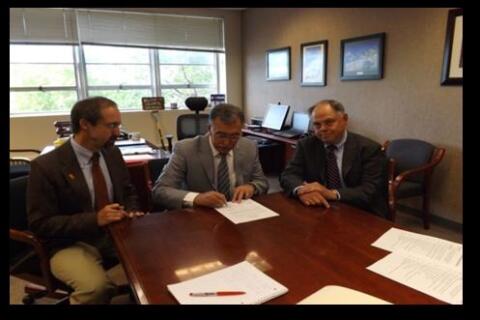
During his visit, Mr. Audjan, Minister of Public Works, Mr. John Cater (FHWA), and Mr. Don Hunt signed memorandum of understanding for Technical Exchange Program betwheen CDOT and MPW.
After the meeting Mr. Aoudjan, participated and observed a practical Pothole repaire at CDOT Head Quarter (HQ) Parking lot. Mr. Mommandi will be preparing a seperate report for Pothole repaire for MPW.
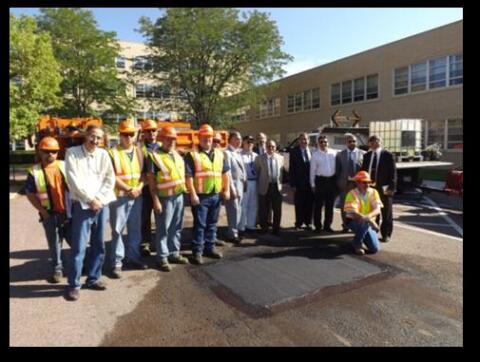
After the Pothole repair at CDOT HQ, Mr. Aoudjan, MPW, Mr. John Cater, Colorado FHWA, Mr. Hasan Reza, USDOT, Mr. Abdul Jamil Hares and Mr. Mommandi left CDOT HQ and travelled along Interstate 70 (I-70) toward Eisenhoure / Jonhson Memorial Tunnule located west of Denver in the Rocky Mountains.
During the trip along I-70 Mr. Mommandi, CDOT Hydraulic Program Manager, explainde the fuctions of the few highway features locted along I-70 west of Denver.
Duruation of the trip was one day. In order to make the trip more efficent, the following main items were selected for the field visit.
- Widening the Twin Tunnel
- Weight Station
- Chain Station.
- Colorado Welcome Center
- Rockfall mitigation,
- Eisenhower/ Johnson Momorial inside the Tunnel Tour,
- Avalauncher Review and inspection,
- Drive through the tunnel and,
- Runaway Truck Ramp,
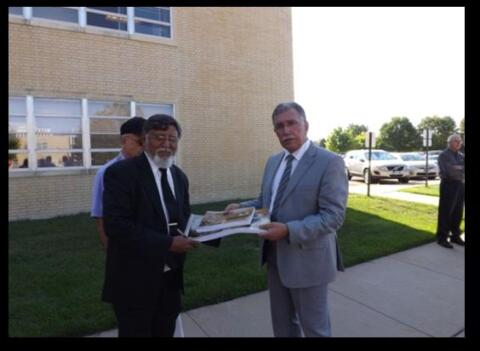
During the visit, Mr. Mommandi, CDOT Hydraulic Program Manager, presented CDOT newly published M & S Standard to Mr. Najibullah Aoudjan, at CDOT HQ in Denver, Colorado, which was very well received and appreciated.
At the closing of his trip, Mr. Aoudjan was very pleased and found the meetings, field Inspections, Visit of the Eisenhower Tunnel and the documentation provided by Mr. Mommandi very helpful and valuable for the Ministry of Public Works. Mr. Mommandi, CDOT Hydraulic Program Manager and SAE Board Member, promised to provide the following additional documents and reports to MPW in the near future:
- CDOT Maintenance Operation
- CDOT Division of Transportation Development Organizational Chart
- Step-By Step Pothole repair instructions of the test in Denver
- Field observation of the trip from Kabul to Dushi.
It was a privilege and an honor to host His Excellency, the Minister and we are pleased to know that he enjoyed his trip and considered it very productive. We sincerely appreciate his thoughtfulness in acknowledging the cooperation of the SAE, mentioned in the below document, and look forward to further and better cooperation in the future.
Author’s Biography: M. Quasem Kadir
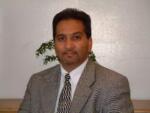
Mr. Kadir joined SAE in 1995, and he was assigned the responsibility for the Southern California Chapter at the same year. He served as Vice President of the SAE from 2002-2004 and as Chairperson for the SAE 2004 and 2006 Conferences. Mr. Kadir served as President of SAE from 2004-2009 and as member of the SAE Board of Directors from 2009-2011. He is the current Chairman of the Board of Directors.
M. Qasem Kadir is the Director of Information Technology at DeVry University. He is serving as an Adjunct Professor of Information Technology at Keller Graduate School of Management of DeVry University. Mr. Kadir received his BS in Electrical Engineering from Aachen Technical University, in Aachen, Germany.
Mr. Kadir received his master in Information System Management from Keller Graduate School of Management of DeVry University in California.
Developmental Plan for Phase 1, Kabul New City, Deh Sabz
by Najim Azadzoi, AIA
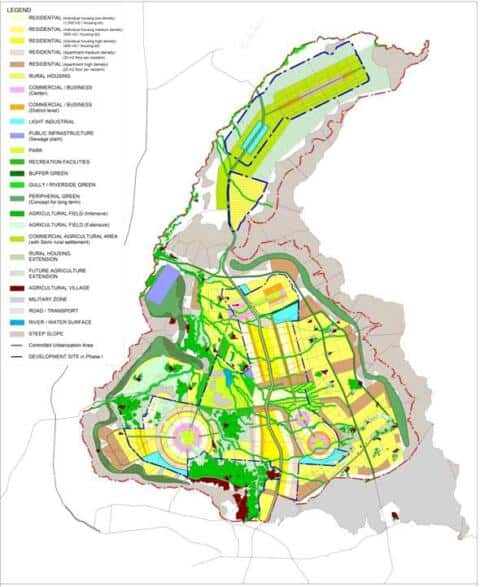
In 2006, the President of Afghanistan established an Independent Board for the development of a new city in the Dehsabz area of Kabul. The Board consists of Senior Economic Advisor of the President, Minister of Urban Development, Minister of Agriculture, Irrigation and Livestock, Kabul Mayor, leading private sector representatives, urban planning specialists and an urban economist. As a national priority, the Board formed the Dehsabz – Barikab City Development Authority (DCDA) in late 2006 as its executive and consultative body. The DCDA was tasked to pave the way, through mostly private sector-led activities, for the administration, design, documentation, marketing, implementation and maintenance of this exciting new economic hub for Afghanistan and the region. A number of European companies specializing in urban design, water management, and sustainable environment and landscaping, business strategies and energy resource management were commissioned to develop the conceptual master plan for the new city. Preliminary conceptual designs, initial feasibility, technical and economic impact studies and a 1:20000 model of future city were completed in 2008. With the assistance of Japan International Cooperation Agency (JICA), the master plan of the New City is now complete and fully endorsed by the Afghan Cabinet. The project is moving into the implementation phases and enjoys growing support from the national and international private sectors as well as government agencies.
The services for preparation of Developmental plan for Phase 1, Kabul New City. Phase 1 structure plan which was considered as pilot project and it was announced for the developmental planning in May, 2012. The structure plan of phase I is within 5000 hectare area of South Dehsabz, comprising of 80000 housing units for an approximate population of 400000 to be settled till 2025. The developmental plan is to be prepared based on previously prepared structure plan of phase 1 and the urban development guidelines. The plan will indicate the variety of housing units with their locations, distribution of public facilities, tertiary infrastructure, concepts of commercial areas and other related facilities.
In May 2012, the design committee of the DCDA announced the plan to award the project and invited design and planning firms to submit their EOI (Expressions of Interests). Azad Architects, Designers/Planners, a Newton, Massachusetts Afghan owned architectural and design firm submitted their EOI. The interested firms were to be selected based on the selection procedures of DCDA. Only the shortlisted firms were to be requested to submit their detailed proposals.
As a result, Azad Architects was short listed among the seven (7) other International firms from Europe, the Middle East, and Pakistan. Technologists, Inc. was the only other Afghan owned construction company among the short-listed firms. Azad Architects prepared their technical and financial proposals based on the guidelines of the DCDA and submitted their proposal on time. Azad Architects was not invited for an interview.
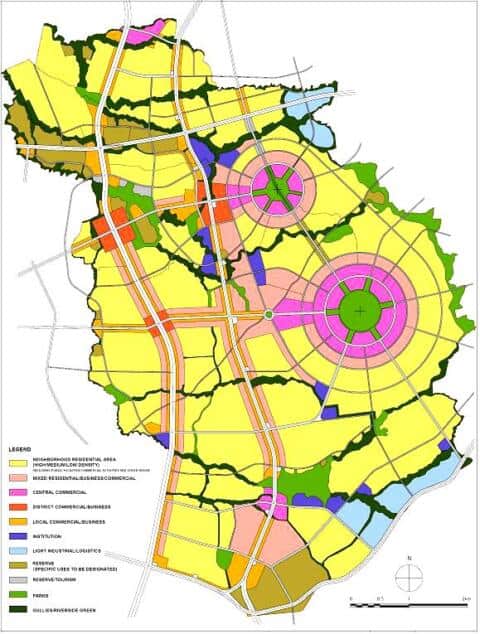
The team of Azad Architects in the proposal for Phase-I of the Master Plan included four Afghan architects and planners from US and Canada, four Afghan National architects, engineers, planners from Kabul; two American urban planners with Ph.D. in urban planning from Harvard University and MIT; and two civil and transportation engineers with PhD from India and work experiences in India and the USA.
In August, 2012, DCDA announced the winner of the project to be Umar Munshi Associates of Karachi, Pakistan.
Najim Azadzoi, AIA
Principal
Azad Architects
The Salang Feasibility Study Presentation
by Najim Azadzoi, AIA
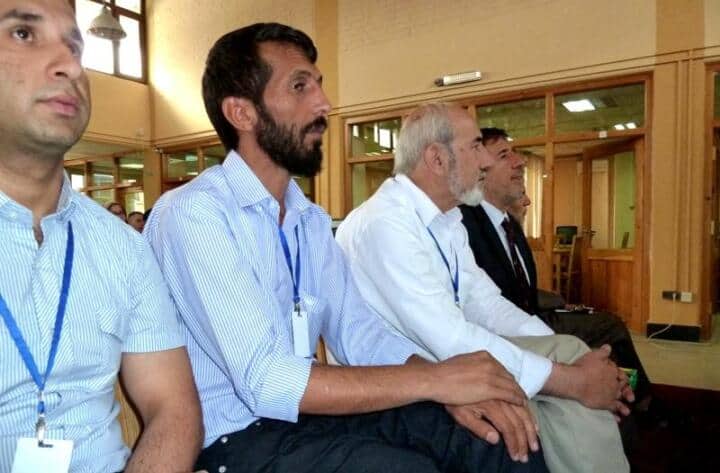
The USAID has awarded the contract of the Salang feasibility study to two USA engineering firms; Tetra Tech (TT) and Louis Berger Group (LBG). There was a presentation regarding the feasibility study in the Bernice Nachman Marlowe Library of the American University of Afghanistan, Kabul on August 9, 2012. The representatives of Society of Afghan Engineers (SAE) and the Society of Afghan Architects and Engineers (SAAE) were also present during the presentation.
The feasibility study of the Salang Tunnel consists of the survey of existing tunnel condition and its proposed repair and renovation; or other alternatives for the future routes to connect the northern and southern regions of Afghanistan. The representatives of TT and LBG provided their power point presentations regarding the feasibility study and alternatives.
Professor Abdul Hamid Layan; Dean of the Faculty of Engineering, Assistant Professor Mohammad Mirwais; Head of the Architecture Department, Lecturer Mustafa Edrias from the department of Electrical Engineering, and Mr. Mohammad Azim Alozai, a graduate of the faculty of Engineering and member of the SAAE attended this presentation and represented the Society of Afghan Architects and Engineers (SAAE) in Afghanistan. Mr. Najim Azadzoi, a former Assistant Professor of architecture at the Faculty of Engineering, represented the Society of Afghan Engineers (SAE) in the USA in this presentation. Also, Dr. Mohammad Saleh Keshawarz, P.E., a board member of the SAE and currently the Water Team Leader at the Office of Economic Growth and Infrastructure (OEGI) at USAID in Kabul, Afghanistan, was present at this gathering.
Also, audience included students and faculty members of the American University of Afghanistan as well as numerous guests from the USAID, the United States State Department, and ISAF (International Security Assistance Force).
At the beginning, Mr. Chester Drake, P.E., of Tetra Tech and Team Leader of the project briefly introduced Tetra Tech and the Louis Berger group. He indicated that these firms are the two largest US design and construction management companies that have been working on large scale reconstruction projects funded by USAID in Afghanistan in the past ten years. Mr. Drake highlighted on the role of Civil Engineers in the world in providing professional services to connect cities by roads, highways, bridges, and tunnels.
Mr. Alan Karnovitz, Director of Technical Services for the Louis Berger Group delivered a lecture on “Introduction to Conducting Feasibility Studies”. Mr. Karnovitz described the overall technical approach to carrying out an infrastructure feasibility study while focusing on the key elements that comprise a successful evaluation. He showed how the engineering, economic, and environmental analyses must be well integrated to accurately determine if a project is not only technically feasible but economically and environmentally sustainable. He then discussed some of the challenges encountered in performing feasibility studies in post conflict countries such as Afghanistan, where data are often not available or not easily validated. Using the ongoing Salang Tunnel Rehabilitation Feasibility Study as a case study.
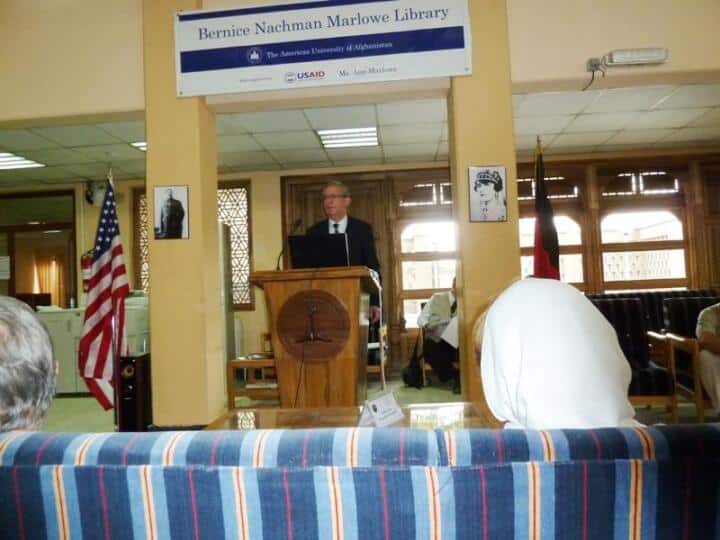
Mr. Karnovitz showed how the different study components are being carried out and more specifically how the engineering study outputs are being used to estimate the economic costs and benefits of each of the proposed alternatives. Using preliminary results of field studies, he also discussed some of the likely environmental and socioeconomic impacts that would result from implementing one of the several alternatives under consideration. He added that in a feasibility study, one can lead to several alternatives or to no alternative at all but to work with the existing condition and fix it. Finally, he reiterated some of the key challenges to performing a successful feasibility study and emphasized the importance of having both a well-defined project and set of alternatives at the study’s onset.
At the end of the presentations, a lively question and answer session was held with the audience and other members of the Feasibility Study Team, including the Team Leader, Mr. Chester Drake.
Mr. Najim Azadzoi, AIA, a representative of the Society of Afghan Engineers, thanked both Mr. Chester Drake of Tetra Tech and Mr. Alan Karnovitz of Louis Berger Group for inviting the SAE and SAAE members to this presentation. Mr. Azadzoi spoke briefly about the SAE and introduced all members of SAE and SAAE who were present at this gathering to USAID and to Tetra Tech and Louis Berger Group. He, then, emphasized on the benefits of bringing in the Afghan professional experience and talent to the design team of Tetra Tech and Louis Berger Group. Both Tetra Tech and the Louis Berger Group indicated that they are committed to include the Afghan national and international engineers in their design team and they are already working with the local Afghan engineering teams.
The presentation and discussions were adjourned at about 5:30 PM.
Mr. Najim Azadzoi is a member of the SAE since 1995. He is currently the principal at Azad Architects in Newton, Massachusetts, USA. Azad Architects is currently working on several large scale projects in Afghanistan funded by the World Bank, Asian Development Bank, and the USAID. He was formerly an Assistant Professor of Architecture at the Faculty of Engineering in Kabul University.
News Updates from the Faculty of Engineering of Kabul University
September 30, 2012
By: Assoc. Prof. Abdul Qayeum Karim, Deputy Dean
Faculty of Engineering, Kabul University
The following are news from Faculty of Engineering, Kabul University:
1. The Second Conference on Science and Engineering, Kabul, Afghanistan
The second conference on Science and Engineering was successfully held in the conference hall of the Institute of Communication and Information Technology (ICIT) in Kabul, Afghanistan on August 26-27, 2012. At the start of the conference, Assoc. Prof. Abdul Qayeum Karim, the Deputy Dean of the Faculty of Engineering of Kabul University, who chaired the first Afghan National Conference on Science and Engineering in 2011 in Kabul, congratulated organizers of the second conference on Science and Engineering for improvement in the organization and efficiency of the conference. He wished for continues successes of this and future conferences.
During this year, Prof. Mohammad Shafi Sharifi, professor of the Faculty of Engineering, Kabul University and President of ICTI chaired the conference. The conference was organized by Professor Sharifi, Chairman and the conference organizing committee members. The committee members were Asst. Prof. Fraidoon Alkozai, Asst. Prof. Farid Momand, Asst Prof. Abdul Halim Halim, and Prof. Abdul Qayeum Karim, staff members of the Faculty of Engineering; and Eng. Najibullah Tamim of the Ministry of Agriculture in close consultation with Dr. B. Baha of Britton University of UK, and Dr. M. O. Tokhi of Sheffield University of UK.
During the conference, papers were presented by Dean A.H. Layan and other staff members of the Faculty of Engineering; including; Dr. M. Omar Andar, Dr. Bashir Mohsen, and Asst. Prof. Abdullah Jan Habibzai.
Deputy Minister for Communication and Information Technology of Afghanistan, H.E. Hussam, Advisor to the same ministry, H.E. Ata Mohammad Yari, Prof. Sharifi and Prof. Abdul Qayeum Karim were the key speakers of the opening session of conference this year. The conference was hosted by the Afghan Society of Science and Engineering Education (AFSSEE) leaded by Asst. Prof. Farid Momand of the Engineering Faculty of Kabul University.
2. Medium of Instruction at the Faculty of Engineering of Kabul University
The second semester 2012 of the Faculty of Engineering of Kabul University started on 21st Assad 1391. A staff meeting was held related to the start of the second semester. Dean A. H. Layan and professors of the Faculty of engineering were present. Prof. Layan thanked all of professors for their continuous support and cooperation. He emphasized on further improvement in the quality of teaching, including the attendance of students and professors during their scheduled classes.
During the staff meeting, a number other Faculty of Engineering related issues were discussed. It was mentioned that President Karzai and H.E. Prof. Dr. Ubaidullah Ubaid, the Minister for Higher Education, have advised the Faculty of Engineering of Kabul University to change the medium of the instructions from native languages to English. Accordingly, Dean Lyan asked Prof. Abdul Qayeum Karim to work as director of the preparation committee to officially launch the start of teaching in English at the Faculty of Engineering classes, especially for the last year classes.
A ceremony was held in September 2012 to mark start of English as a medium of instructions in the Faculty of Engineering of Kabul University. Present were H.E. Dr. Ubaidullah Ubaid, Chancellor of the Kabul University; Prof. Habibullah Habib; and Dean Lyan. At the beginning of ceremony H.E. Dr. Ubaidullah Ubaid and Dean A. H. Layan briefed the media related to this event. After briefing, the participants observed the lectures of Prof. Nazifa Abedi, Prof. Sharifi, Asst. Prof. Fahim Momand and Asst. Prof. Abdullah Jan Habibzai who were offering their lectures to their 4th and 3rd year students in English.
3. MS Degree Program at the Faculty of Engineering of Kabul University
The committee preparing for the start of MS program in the Faculty of Engineering of Kabul University has been working on this issue for almost three months under supervision of Dr. Bashir Ahmad Mohsen, Assoc. Professor of the Faculty of Engineering. Other members of the committee are Dr. Bashir Ahmad Jawid, Dr. Mohammad Omar Andar, Dr. Hedayatullah Shams Yazdani of Architectural Engineering Department and Prof. A. H. Layan, Dean of the Faculty of Engineering. The committee is working on a feasible and useful strategy for the start of MS program at the Faculty of Engineering and upon completion the strategy it will be presented for comments. No doubt that Faculty of Engineering needs support and cooperation from all professionals within and outside Afghanistan to make these efforts a real success.
Higher Education of the Faculty Engineering Staff Members
Dr. Amin Gul Hanif, Dr. M. Omar Andar, and Dr. Bashir Ahmad Mohsen returned to the Faculty of Engineering of Kabul University after completion of their Ph.D. programs in their relevant fields of education, and started teaching their assigned classes. Prof. Said Maqbool, Instructor Homayoon Kheradi, Instructor Sofia, and Instructor Mustafa Ershad went to Germany, Japan, or US for their MS or PhD programs. Asst. Prof. Shaikh Ahmad Mateen is planning to work on his MS degree program in US and Instructor Adina on MS degree program in Japan in near future.
The Travel Reports and Engineering Activities of SAE Members in Afghanistan
The administration of the Society of Afghan Engineers is urging their members whenever they are traveling to Afghanistan, if possible, they should extend their travel programs to meet with their colleagues, share their technical experience, and present the required trainings in the areas of their expertise.
This year Mr. Manan Khalid and Mr. Amanullah Mommandi traveled to Afghanistan and in accordance with SAE’s policy, they extended their travel plan to be available for technical discussions, presentations, site visits, and meetings with their professional colleagues during their stay in Kabul. In the last issue of the newsletter Mr. Khalid provided the report of his travel to Afghanistan.
Mr. Mommandi has also offered several training sessions at the Ministry of Public Works and the Faculty of Engineering, Kabul University in the months of May-June 2012. Mr. Amanullah Mommandi is a member of the Board of Directors of the Society of Afghan Engineers and Hydraulics Program Manager of the Colorado Department of Transportation. His training and technical presentations were related to the operation of highways. The detailed report of his training program, meetings, and visits of construction project sites will be included in the next issue of the newsletter.
Afghan Professional Community News From Abroad
Volunteers are needed to serve in the following SAE Committees/Subcommittees
The leaders and counselors of a few committees/subcommittees have been approved by the Board of Directors. More volunteers are needed to serve in the following Committees/Subcommittees:
- Finance Committee
- Capacity Building and Academic Development Subcommittee
- Conference and Training Subcommittee
- Student Subcommittee
- Advisory Subcommittee
- Publications Subcommittee
- Website Development and Maintenance Subcommittee
- Roadway and Bridge Design and Specifications Subcommittee
- Materials Specifications and Test Methods Subcommittee
- Environmental Engineering Subcommittee
- Afghan Professional Regulations Subcommittee
Please contact the Chairpersons of the SAE President, Ghulam Mujtaba at Email: mujtabaghulam@bellsouth.net if you are interested to serve as an SAE Committee/Subcommittee leader.
Interview with Professor Zarjon Baha, Former Dean of the Faculty of Engineering of Kabul University
By: A. Manan Khalid, M.S., P.E., LEED AP
An interview was held with Professor Zarjon Baha, professor at Purdue University, member of the Society of Afghan Engineers; and former Dean of the Faculty of Engineering of Kabul University. The following are the interview questions/discussions (Q) and Professor Baha’s responses (R):
Q: Please briefly tell us about yourself, your birthplace, your schooling, your hobbies and activities?
R: My name is Zarjon Baha and I was born in Yousaf-Khail, Wardag, which is located about 60 miles southwest of Kabul, adjacent to the main road, connecting Kabul to Kandahar. At the time of my childhood the village was made of about 100 families and practically everyone was working in the agriculture sector, and most of the people had some land to grow crops for their livelihood. My uncle was chief of the village (Malak) and my father was practically the only person in the village, who could read and write, before government school came to our community. He was helping my uncle to take care of documents needed to run the village business. Before I went to school, my father’s right hand became paralyzed and he could not write any longer. The family made the decision that I must go to school to learn reading and writing so that I could help the village affairs that needed written documents. I was considered to be successful in taking customary and routine lessons from Imam (religious leader) in the Mosque (Jumat) before I went to school. The school was quite far and our village was the furthest village from the elementary school, Takya. At the time I went to school there were about 20 to 30 students from our village listed in the school. The majority of the students were not interested to attend the school. Their parents would prefer their children work in the farm to help them instead of going to school, which they thought was a waste of their time. From our village only one student had graduated from sixth grade when I entered the school and was then studying in Teacher Training High School called “Darul Mo-Allimine” in Kabul. I was the number three person from our village who graduated from Takya Elementary school. There were students who were in sixth grade when I enrolled in the school and they were still in sixth grade when I graduated from the sixth grade. My father knew the value of education and would not let me miss any days of school during my six years of elementary school. I remained to be the number one in my class throughout the six years and was the captain of my classes. The captain was responsible for the administration of the class when the teacher was not in the class and was respected by the rest of the students due to his academic qualification and the authority that was given to him by the school administration. At this time there was no further education beyond sixth grade in our area, and for that matter, in the whole country except Kabul, the capital of the country. For those who wanted to pursue further education beyond the elementary school, they had to go to Kabul to attend the 7th grade and beyond; otherwise the sixth grade was the end of education in the country. Very few people, and for sure no one in our village, could afford the lodging and boarding expenses to send their sons to Kabul for further education. In the meantime the government was giving one scholarship per elementary school so that the student would be given the chance to attend one of the few boarding schools in Kabul. This scholarship was normally given to the number one student in the graduating class. I was fortunate to receive this scholarship and was admitted to the Darul Mo-Allimine (Teacher Training high school) of Kabul where I studied for six years. Darul Mo-Allimine had two programs at that time. One was for five years, where at the end, the graduates would be assigned to a teaching job somewhere in the country. The other program was for six years, where its graduates would go to Kabul University and would attend one of the faculties that were training teachers for high schools. I was admitted to the six year program. I was fortunate to be admitted to the Faculty of Engineering as the first student from our high school and completed the four years of college there. Upon my graduation I had two offers; one, to remain in the Faculty of Engineering as a teacher and the other one was a scholarship from the Food and Agriculture Organization (FAO) of United Nations to study Irrigation Engineering at a USA University. It was a difficult decision, but I decided to remain in the Faculty of Engineering, which I have never regretted. The selection of graduates for a Faculty position was based on academic standing in the graduating class. I was number two in the graduating class and the Faculty of Engineering had decided to keep two graduates that year; I was one of the two to remain on the faculty. I was given a scholarship to study in the USA where I went to Washington University in St. Louis, Missouri, first and then to Purdue University where I got a Masters degree (M.S.) in Civil Engineering, (Structures), in 1966. Upon completion of my M.S. degree, I returned to Afghanistan and taught at the Faculty of Engineering for about three years and was given another scholarship to work on my Ph.D. I attended North Carolina State University at Raleigh, NC; where upon completion of my degree went back to the Faculty of Engineering at Kabul University to continue teaching there at the Department of Civil and Agriculture Engineering, 1973. Upon my return to Afghanistan, after my Ph.D. degree, I was elected as the Department head of Civil and Agricultural Engineering at the Faculty of Engineering, and in 1975, was appointed as the Dean of the Faculty of Engineering and served in that capacity until the communists took over the country in 1978.
Q: You have an impressive resume and scholastic background. What was the key to your educational success and professional accomplishments?
R: I was fortunate to work in the institutions that merit was awarded and I continued to work hard to accomplish what was expected of me in that position.
Q: Please tell us that in how many institutes and where you have worked in Afghanistan and abroad?
R: I have worked a total of 20 years in the Faculty of Engineering of Kabul University, including 7 years of study time in the USA for getting my M.S. and Ph.D. degrees. I worked as a research specialist at the University of Virginia at Charlottesville, VA, in the summer of 1982. I also worked as the Resident Program Coordinator of Malaysian Polytechnics Staff Training project from 1995 to 2000, where we trained about 900 teachers for Malaysian Polytechnics. This was a World Bank project which was managed by the Midwest Universities Consortium for International Activities (MUCIA) and Purdue University was the leading institution for this project. About 100 consultants, mainly from USA and then UK, Canada, and Australia, worked in this project. My job was to manage the project and achieve its objectives as was stated in our contract. It was a $20 million project for which Malaysia paid. I had four local staff members, a secretary, a driver, a financial officer and an administrative officer. My job was to facilitate the works of our consultants whose responsibilities varied from one month for short term consultants, and at least one semester to a couple years as academic/teaching consultants. I was working with local administration to smooth out, if there were problems in the daily routines of the project. Toward the end of the project where my administrative responsibility was reduced, I taught a course in Mechanics of Materials which I enjoyed very much, knowing students firsthand and their problems. I have been working at Purdue University for the last 30 years as a teacher at the Department of Building Construction Management, except during the five years of my work in Malaysia through the International Programs of our university. I started as a visiting professor in 1982, became a tenure track associate professor in 1984, and became a full professor in 1990. As a professor, I have worked at different capacities that are normal duties of each academician at a university, such as working in different committees at the department, college and university levels, including Senate of the University. I have served for a few years as the Associate Department Head at the department.
Q: During the time that you were the Dean of Faculty of Engineering, the University decided to increase the enrolment of students at the Faculty of Engineering from 200 students to 1000 freshmen per year. That was certainly a great development and improvement. What was the reason for this increased number of enrolment and how did you manage and plan for the teaching the students and continuation of the program, especially the availability of classrooms, textbooks, and laboratory facilities?
R: This was a big challenge and with the help of our outstanding faculty, students and staff, and the university administration, we were able to manage this extraordinary increase in our students’ enrolment. I have participated in several cabinet Economic High Council meetings that were made of several ministers, chaired by the deputy prime minister, who was also the minister of finance. In this council, the new five year development plan for the country was discussed and it was obvious that more technical manpower was needed to implement the new development plan of the country. At one of these meetings I had a hot debate with His Excellency Deputy Prime Minister, Sayed Abdul-lillah. I told the council that we were producing very competent technical professionals at the Faculty of Engineering that were able to secure good jobs in the international market. If we could not provide them with the minimum requirements of living conditions, they may choose to leave the country for a better opportunity. His Excellency Sayed Abdul-lillah stated “we have spent money on these graduates that we could have hired foreign technical personnel to do their work and they have responsibility to work for the country”. I stated that our graduates have a moral responsibility but not a legal responsibility to work for the country. However, when they do not have shelter, food, and medicine for their children the moral responsibility goes out the window. I remember one day before the Q communist took over, we met in a function and His Excellency Abdul-lillah introduced me to his friend and said “he and I had some quarrels in the past”, I told him “not quarrels, but disagreements on some issues”.
I was asked by the Economic High Council to develop an expansion plan for the Faculty of Engineering at Kabul University to meet the need of the government’s Five Year Development Plan. We used PERT (Program Evaluation and Review Technique) Diagram, maybe for the first time for the cabinet meeting in the country, to present the expansion plan for the faculty. Our plan, to produce the needed graduates called for the first year to admit 1066 students and we admitted 1071 students due the university entrance exam cut off points. The normal admission number for the school was 200 to 250 students per year. It was assumed that the USAID would help and I had to plan for the first year’s expense of this expansion. Our budget for the first year freshmen intake was $520,000.00 and the government accepted this allocation. I was told that this amount of foreign currency was the largest amount of foreign currency ever given to Kabul University at one time. We spent every dollar of that allocation without any problem. We ordered few things by air and saved a lot of foreign currency budget through acquiring most of the freshmen books locally with local funds. In this process Rajab Ali Karim, former Dean of Faculty of Engineering and M. Halim Wardag, former president of Ministry of Education press deserves special recognition for their efforts. The saving was used to order books for upper classes that were found to be very beneficial arrangements.
When I was in Washington D.C. in 1977, I met with the head of the Peace Corps at the USA State Department and requested to send us volunteers to fill the sudden expansion need for the extra teaching staff. As a result of this visit, we had about 30 Peace Corps volunteers to help in the teaching load. The Kabul University administration and other faculties in the system were willing to help with whatever we needed for classrooms and teaching staff. We had to use our labs for more hours in the day than normally used before. In general there was the feeling that this freshmen class was well taken care of, knowing the large number to be handled at this time. I remember when the USA Secretary of State, Henry Kissinger, came to Afghanistan in 1977; at the top of the agenda from the Afghanistan side was to help the Faculty of Engineering. At the conclusion of his visit, it was announced that the USA will help the Faculty of Engineering. We prepared a development plan for about $7,000,000 of USAID help for the Faculty of Engineering. As a matter of fact, the Friday, one day before the communist takeover of Afghanistan in 1978, the project proposal was to be hand carried to Washington D. C. for its final approval. We were expecting that within a couple of months someone like the Chancellor of Kabul University or another appropriate person from Afghanistan would travel to the USA to sign this agreement. One of the items in this plan was to establish a computer center for our students’ needs. The 30 Peace Corps volunteers were to teach mainly the basic science courses and English that was needed for the first and second year students.
Q: Besides Afghanistan and United states, have you taught in the engineering colleges of other countries? How do you compare those schools with the Faculty of Engineering?
R: When I was in Malaysia and my administrative load was reduced due to the smaller number of the consultants in the project toward the end, I did teach engineering students there. When I came first to the USA and gave my first test in the class, the average of the test results of the class was about 40%. The whole class was shocked to have such a difficult test. I was thinking I had given the test on the same standard that I was used to in Afghanistan but found out that the level here could not meet the standard that I was used to in Afghanistan. In Afghanistan we were treating student harshly and it was the game of sink or swim. Many of our students were sinking and I can give you a specific example that I remember from the largest freshmen class in the history of the Faculty of Engineering in 1977: From the 1071 student we admitted in 1977, about 800 went to the five-year program of engineering and architects and the rest went to the four- year program of VTE (Vocational and Technical Education) where the graduates of VTE were intended to be teachers in technical high schools in the country. I do not remember the results of the first semester but was told that in the second semester of the five-year program, only 185 students passed without missing any credits at the freshmen level. There were some more students in pipeline that would have gone to sophomore year, but they had to re-take some credits that they had not completed successfully at freshmen level. No institutions of higher learning will accept so much loss in the first year of the college. In our Faculty there was no question raised as to why so much failure in the class had happened. Professors were free to make their judgment as to who can pass the specific course they were teaching.
Q: The Society of Afghan Engineers is very pleased for continued cooperation that you have provided. We are proud and pleased for your accomplishments and your success, especially your work as professor of the Purdue University. Your work as the professor at a prestigious university is the demonstration and record of your proven success for an Afghan expatriate. Can you tell us about your background and history that led to your work as the professor of a university in the United States?
R: I have obtained my M.S. degree from Purdue University and my program advisor, George McNelly, was the dean of the College of Technology at that time. When I was in India, I contacted several of my friends that I would be looking for a job upon my arrival to the USA. Dean McNelly offered me a visiting professor position while I was still in India and was waiting for the process of visa to come to the USA. It took about 5 months to come to the USA where I went to Charlottesville, Virginia and lived there for two months with my friend Walter Pilkey who was professor at the University of Virginia. In August of 1982 I moved to West Lafayette and started teaching as visiting professor. After one year the department head asked me if I could stay one more year and I agreed. After two years of teaching there, the department head asked me if could stay in the department as tenure track faculty. Upon my agreement, the department head got special permission from the president of the university to offer me the position without advertising in the public media. I was given tenure track position as an associate professor in 1984 and became tenured in 1988. I became full professor in 1990 and thus have been serving as full professor since then.
Q: What type of affiliation do you have with the Society of Afghan Engineers?
R: I have been a member of the Society of Afghan Engineers for many years. There is a possibility that I may have skipped paying my membership fee sometimes if I have not been reminded. I have been nominated and requested to take more of an active role in the society, but I have preferred that the young professional should take the leadership. I certainly am grateful to those who have nominated or requested me to take a more active role in the operation and administration of this society. I would like to express my sincere gratitude for the efforts and the leadership of so many who has brought this society to this level of excellence.
Q: How do you evaluate the SAE eNewsletter? What type of constructive suggestions do you have for its improvement?
R: I read with great interest and keen desire each SAE eNewsletter and value it as an excellent publication for Afghan professionals and those who are interested in the professional issues of Afghanistan. Mr. Ghulam Mujtaba Khan and his team deserve special credit and recognition for the outstanding work they have done during the last two years for SAE eNewsletter. Every SAE eNewsletter has been improved and covers interesting and useful information for those concerned about the technical and engineering issues that Afghan nation is faced with. I would like to take this opportunity to congratulate them all for their success and hard work they have put to achieve this level of excellence.
Q: How have you contributed to professional assistance of the Afghan community in Afghanistan and in the United States?
R: We had convened a workshop at Purdue University on February 11-13, 2002 to discuss the issues related to the rebuilding of Afghanistan. Some of the well known Afghan expatriates were invited to lay the foundation for future steps as to how this country could be rebuilt. There were a total of about 40 participants from Purdue University, USA State Department, and Afghan expatriates. The Afghan Expatriates who attended the workshop were:
- Dr. Sherief A. Fayez, Minister of Higher Education of Afghanistan
- Mr. Joma M. Mohamadi, Former Minister of Water and power
- Mr. A. Tawab Assifi, Former Minister of Mines and Industries
- Mr. Mir Akbar Raza, Former Minister of Agriculture and Water Resources
- Mr. Abdul A. Ferough, Former Deputy Minister of Planning
- Dr. Juma Gul Bandawal, Former Director of Planning, Minister of Education
- Dr. Soorgul Wardag, Former Professor of Faculty of Engineering, Kabul University
- Dr. Nazim Anwar, Former professor of Faculty of Agriculture, Kabul University
- Dr. Zia Ahmad Yamayee,
- Former Professor of Faculty of Engineering, Kabul University
- Professor Rafi Samizay, Former Professor of Faculty of Engineering, Kabul University
- Dr. Shad M. Sargand, Professor of Ohio University, Former Student of Faculty of Engineering, Kabul University
- Zarjon Baha, Former Dean of Faculty of Engineering, Kabul University
(Most of the Afghans listed above had been active in their profession here in the USA, and for saving space, their titles are not included).
There were some other Afghan expatriates who were invited to attend this workshop, but could not attend due to their previous commitments.
A picture of some of the participants in this workshop is included for your information.
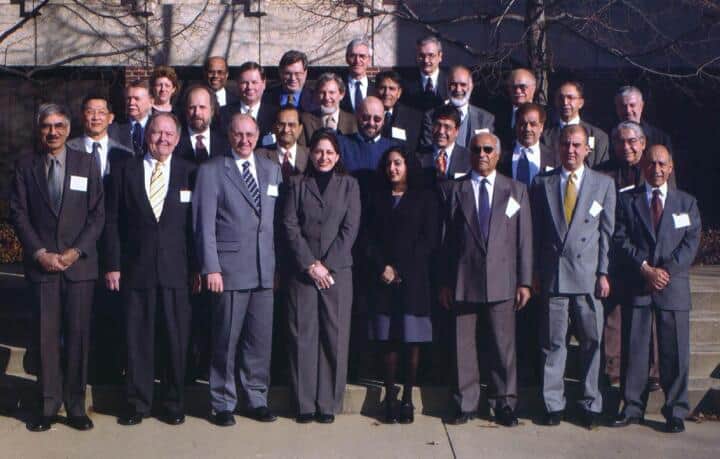
The participants were organized into five groups, focusing on Agriculture, Engineering, Technology, Infrastructure, and Education. At the conclusion of this workshop, a Memorandum of Understanding was signed by Dr. Martin C. Jischke, Purdue University President, and Dr. Sherief A. Fayez, the Minister of Higher Education of Afghanistan, to re-establish the cooperation of Purdue University with the institutions of higher learning in Afghanistan. As a result of this workshop, Purdue University remained interested to help the higher education institutions in Afghanistan.
The first project that I thought was very important for Afghanistan was Distance Learning which we found out that due to the lack of infrastructure it was not feasible at the time. The second project was to develop an appropriate system of technical education where a white paper was developed and presented to the authorities in Afghanistan and other relevant organizations. In both of these projects Afghans were brought to be exposed to the systems here in the USA and through workshops in Afghanistan.
More important development has been in the Agricultural education, where a series of projects were awarded to Purdue University to modernize the Agriculture Education in the country by bringing Afghans for short term training as well as M.S. and Ph.D. degrees.
Attended the “Afghanistan Tomorrow through Education”, TUAT-UNESCO Joint International Symposium held at Tokyo University of Agriculture and Technology (TUAT), Tokyo, Japan, March 1-5, 2004. In this symposium I made a presentation and took part in panel discussion on the issues of Higher Education in Afghanistan and the projects Purdue University had been pursuing in this regard.
Attended the Conference “The Fundamental for an Education Strategy in Afghanistan” held in Technical University of Berlin, Berlin, Germany, June 20-22, 2003. In this conference there were several Universities Chancellors from Afghanistan who discussed specific issues about their respective universities. Both sides, the donors and the receivers, points were presented and the discussion was centered on how the donors would make commitments to resolve the urgent needs of these institutions of higher learning in Afghanistan.
Prepared a draft on the important guidelines for establishing “Regional Technical Schools” (Secondary, Postsecondary & Adult) in Afghanistan. This paper was prepared by Profs. Dyrenfurth, Kline and Baha of Purdue University on a request made by the President of Siemens Afghanistan in January, 2007.
Attended the “Afghan Higher Education Partnership Conference” sponsored by Ball State University with the cooperation of the State Departments of USA and Canada, January 25-26, 2011, Indianapolis, Indiana. This conference was attended by several Afghan university Chancellors and the Ministry of Education administration. Relevant issues were looked from the donor and receiver perspective and an attempt was made to reach a solution that will help the objectives of each party.
Q: How many times have you returned to Afghanistan and let us know if any of those travels were business related.
R: I have traveled to Afghanistan four times. The first trip was with two other professors from Purdue University and the purpose of the trip was a fact finding mission. It was a shocking phenomenon to see how terribly the university was destroyed in all aspects of academia. The scars of bullets were the only visible signs on every standing wall of the university. There was no single thing that would resemble with institutions of higher learning. I saw a single bulb of say 60 watts in the long hallway of Faculty of Engineering so that you could not see your own feet while walking in that hall. Nothing was left in the Engineering labs except the huge machines in Strength of Materials lab that were broken because they were too heavy to be moved away for scrap metals.
We met with chancellor and several deans of the different colleges of Kabul University to tell us what they were thinking about reviving their institutions. We got two projects for Afghanistan, one was Distance Learning, and the other was Technical Education projects. Due to the shortage of faculty at all levels, and even those who were still there, had not been updated in their respective fields of study for such a long time, I thought that Distance Learning could resolve this dilemma. However, when our team went there, internet connection was an issue that would take time to establish, and thus, our dream of distance learning for Afghanistan could not be realized. We had worked on the funding and the only possible source of funding was the World Bank and we realized the authorities in the country will not give such a high priority to spend about $6 million for such a project. USAID was approached several times and we had a meeting with the relevant authorities and found out that they were not interested to help higher education at this time.
Thus we settled to send about 100 computers and established four computer labs, one at the Faculty of Engineering, one at the Faculty of Agriculture, one at the Kabul Polytechnics, and one at the University of Education. We completed the installations and provided the necessary support to make these laboratories ready to be used by students and staff of these institutions. We had a workshop in Kabul to train the trainer for this project and brought a few people to Purdue University for further training so that they would be instrumental to make these computer labs active for their institutions.
The second project we initiated for Afghanistan was Technical Education for the country. When I was at Kabul Intercontinental Hotel, I saw people from India who was hired to do the painting the inside of the hotel. I thought that Afghans should be trained in all areas of technology to take care of their need in the near future. We provided workshops for all concerned parties in the country to stress the importance of technical education and then brought few Afghans from the relevant institutions to learn firsthand the different forms of technical education here in the State of Indiana. We took them to Technical High Schools, to Apprenticeship Program which is conducted by the Labor Union, to community colleges, and showed them the technical education at the university level. We wrote a white paper to lay the foundation of Technical Education for Afghanistan. In this paper the establishment of five centers was recommended, one in Kabul, one in Mazar-i-Sharif, one in Herat, one in Kandahar, and one in Jalalabad. Each center would be responsible to train technologists that were needed in their respective areas, and thus the graduates would stay close to their families while serving their community.
For promoting these two projects, I have traveled with a team of professors from Purdue University in 2002, 2003, 2004, and 2006. Two of our team members went in 2005, to make sure those computer labs were operational and to help if there was any problem there.
Q: How do you describe your personal experience and observations of Afghanistan?
R: I hope the situation has changed since my last visit. What I saw during my visits, there was no feeling of ownership of the projects or institutions. Afghan authorizes in general were not as enthusiastic as I hoped to initiate new projects or make sure that those projects that are initiated will succeed. The other issue, in later years, was the security issue that was of concern to the visiting teams while they were there to implement their projects. At my earlier visits, security was not an issue and our team was free to move around without any concern to complete their projects.
Q: What type of advice you may have for young Afghans who plan to pursue their graduate study programs in the United States? How can they get scholarships for their higher education?
R: At the university level, there is very limited scholarship opportunity for students. At undergraduate level, these scholarships are very competitive and only outstanding students could receive one. Such scholarship would be difficult for an Afghan to acquire. However, there is always the possibility to get an assistantship at the graduate student level when one applies for an M.S., M.A., or Ph.D. At this time we have one Afghan at our university who got an assistantship for a Doctor Degree in English, and another one was offered to get assistantship for an M.S. degree, but received a fulltime scholarship from Fulbright and is a graduate student in our department. To get an assistantship, English language proficiency is a must and the student must be competent in his/her area of study. An assistantship is given for international students on a competitive basis and knowing a professor to accept one or get a recommendation from one will certainly help in the process. However, there are programs through USAID, Fulbright, and other organizations that bring Afghan students at the high school and university levels at this time.
Q: How could Afghan professionals in this country serve their native country?
R: SAE can help to facilitate the usefulness of Afghan professionals for the sake of Afghanistan. There has to be a forum to determine the need of Afghanistan in different sectors of the profession and then look for the Afghan professional here in the USA to match those needs. There are possibilities for some young Afghans who do not have family yet, to go for a short period of time and work on a specific project. There is also the possibility for young Afghans with family who would like to take their children to teach them language and culture of Afghanistan, and go for a short visit of six month to a year. The job of SAE or its counterpart in Afghanistan must be to work on two issues, one is a proper matching of the project with the expertise of the young professional, and the second is the professional should be provided with adequate housing and transportation facility to be successful in their endeavors.
There is the third group of professionals that are likely to be a very attractive alternative. These are the retired professors and professionals with good enough health to accomplish professional and educational service for the country. This group of professionals may not need any compensation, but will definitely need accommodation and transportation from the host institution. A small investment in the area of accommodation and transportation for expatriate will be a very profitable endeavor. I was talking to one of my friends, who were working periodically in Afghanistan, and when I calculated his expense for the project, it was around $600,000 per year. Now the same type of person among the Afghan Expatriates could work for Afghanistan free with only accommodation and transportation facilities. SAE has to find a counterpart in Afghanistan who will take the ownership of such an endeavor and this will be a very profitable adventure for both sides.
Q: What type of advice you offer for Afghan professionals living outside of their country who want to serve their motherland without leaving their current jobs and families?
R: The family and professional structure of many young Afghans here is such that it will be difficult for them to leave for any reasonable time for Afghanistan. However they, could do some work for Afghanistan if the proper arrangement is made. They can accomplish a lot via distance learning workshops and
internet access to the specific projects in Afghanistan. The Afghan expatriates could also work with Afghan counterparts on projects such as developing building codes and specification for a project. In today’s facilities of internet, distance is not an issue and SAE could look into these alternatives for future projects.
Q: Do you have any further comments or anything that I should have asked you that I didn’t and you’d really like to talk about in an interview that is going to be read by a group of Afghan professional academicians and practitioners?
R: The human resources in the USA are enormous and we should take advantage for a good cause of Afghanistan. SAE members should look into bringing other professionals that could be among their colleagues at work or through the professional associations to help the terrible shortage of professional manpower in Afghanistan. These professionals will be happy to be engaged in a productive endeavor if they are provided proper facilities here or in Afghanistan. The number of Afghan expatriates is limited and some of the young Afghans may not have the time to go that extra mile to help Afghanistan, but in the larger pool of professionals here in the USA, we may be able to find volunteers to help the cause of SAE.
Q: Would it be beneficial for the Faculty of Engineering or Kabul University to establish a Department of Construction Management similar to Department of Construction of the Purdue University, College of Technology?
R: If the USAID project for further development of Faculty of Engineering of Kabul University would have gone forward as expected in 1978, before the communist took over the country, I had three items that were in the planning stage. One was the computer center for the Faculty, second was to start a masters degree program in Civil Engineering, and the third was to start the Construction Management program as a new department. Construction Management as a university level education is a relatively new phenomenon in this country; it is only about 50 years old. But once it started, it has grown tremendously. Knowing the need of rebuilding Afghanistan, Construction Management will be a very worthwhile profession to be added at the university level education in Afghanistan. I have been helping Kabul Polytechnic University that has been trying to establish such a field of study at their institution. In construction Management, the Building is treated as a product that should be delivered to the society to meet its need and be as economical as possible. They are not designing the building, but constructing the building. Building here means every type of construction product such as roads, bridge, dam, commercial and residential buildings, or any other types of construction products.
Q: Thank you for taking the time to share your thoughts with us about yourself and your career services. In addition, the academic institutes in Afghanistan will benefit from your role as the professor and Associate Head of the Department of Construction Management. I wish you and other professional Afghans total success. Finally, what advice would you offer to the Society of Afghan Engineers regarding their roles related to the rebuilding of Afghan infrastructures?
R: Thank you very much for giving me the opportunity to share my thoughts with our SAE eNewsletter readers. I admire the mission of SAE for helping Afghanistan as the place where some of us were born, raised and enjoyed our lives there. For our young ones who may not have had the chance to visit Afghanistan, I hope they will think of Afghanistan as the land of their ancestors and remain interested to help that land. In order to accomplish the ambitious goals of the SAE, I recommend that SAE make every effort to get a grant to be able to achieve its objectives. This means that SAE objective could be how to utilize the human capital of the USA to build Afghanistan. With grants, SAE would be able to announce projects to be implemented, will be able to search for matching human resources, and provide the facilities that the cooperation will bear fruits. This is a very challenging task and will need funds and very devoted individuals on both sides to be successful. I hope those Afghan Expatriates and their colleagues who are retiring with good health will get interested in SAE to pursue this noble cause, serving the humanity without expecting any reward in return.
Membership News
In this section the news about the seminars participation of members, new membership, awards, promotions, retirement and loss of the Society members will be provided.
Membership Renewal 2012
The attached form includes application for the new members and membership renewal. The application forms may be viewed at SAE website. The members are requested to take a few minutes of their time to inform the Society by sending their updated contact information.
The completed application/renewal forms may be mailed to Mr. Jawad Ibrahim at P.O. Box 11520, Burke, Virginia 22009-1520
Achievements and Awards
The newsletter will inform their readers of winners of awards or any other successes of Afghan professionals and students, especially, their Society members. You can help the SAE eNewsletter editors by providing the news of the achievements, award winners, promotions, and any other success stories.
“Advise us of success stories or achievements of the Society members and any Afghan professionals and students.”
The Loss of Engineer Mohammad Aman, an SAE Member, former President of Helmand Construction Unit
Mr. Mohammad Aman, member of the Society of Afghan Engineers, passed away in Virginia on August 25, 2012. The Editorial Board of the SAE eNewsletter and other members of the Society of Afghan Engineers express their heartfelt condolences and deepest sympathy to Aman family, relatives, friends, and colleagues for the loss of Marhoom Engineer Mohammad Aman.
Many members have expressed their condolences and have mentioned about his services to development of Afghanistan’s engineering activities. Mr. Malik Mortaza, former SAE President has sent Mr. Aman’s photos and eulogy to the newsletter. He is currently working as the Vice President of the Afghanistan Operations of Technologists Inc. In his email to the Editor-in Chief SAE eNewsletter, Mr. Mortaza has mentioned the following statements about Mr. Aman:
“It was a great loss for all of us. …………..What a great man he was. I was fortunate to work for him from 1973 to 1977, then in Fairfax County from 1986 to 2002. He was well respected in Afghanistan by the government at the time, and the local community in Helmand and Kandahar. His management and engineering skills were unmatched within the professional community in Afghanistan. His contributions as president of Helmand & Arghandab Construction Unit, then of Helmand Construction Corporation for over 20 years in the development of Helmand and Arghandab projects, which helped the economy of the country and people’s livelihood in Helmand and Kandahar will be remembered for long…….. Malik Mortaza”.
Engineer Mohammad Aman’s Obituary
January 13, 1932 – August 25, 2012
By: Dr. Ahmad Khalid Aman and Mr. Solaiman Afzal
On August 25th, 2012 Engineer Mohammad Aman, former President of Helmand Construction Company in the 1970s, lost his long battle with a heart condition at home surrounded by his family in Fairfax, Virginia. He was buried according to Islamic tradition at Mount Comfort Cemetery in Alexandria, Virginia on August 27th.
His 50 years of dedication to the betterment of the field of civil engineering and his service to the Afghan community were commemorated by the Society of Afghan Engineers (SAE) through a floral wreath on his gravesite and eulogy by a fellow founding member and current member of the Board of Directors, Engineer Hashim Rayek.
He is survived by his wife Aziza Aman, his sons Mohammad Ehsan Aman and Ahmad Khalid Aman, and daughter Sofia Monawer.
Engineer Aman, son of Abdullah Ibrahimkhail, was born in January 1932 into a working class family in the suburbs of Kabul, Afghanistan. He attended Ahmad Shah Baba High School in Kandahar and then Habibia High School in Kabul, where he graduated at the top of his class in 1950.
Under an Afghan-US led educational program for outstanding high school students, he was then sent to the US to complete his college studies. He entered University of Southern California (USC) School of Engineering in 1950 and graduated with honors (Cum Laude) with a B.S. degree in Civil Engineering in 1954. His academic achievement and engineering skills were recognized by being bestowed the Freshman Award in 1950 and included on the prestigious “Who’s Who in American Colleges and Universities” 1953 edition that annually recognizes the most outstanding students in all 50 states and District of Columbia. He then continued his graduate work at Purdue University Graduate School of Engineering and completed his M.S. degree in Civil Engineering in 1956.
Engineer Aman’s professional career started early during his college years when he spent summers working for International Engineering Company in San Francisco in 1951, 1952 and 1953; Morrison-Knudsen in Washington State in 1954; and Indiana State Highway Department in Indianapolis in 1955. Upon completion of his studies in the US, Engineer Aman returned to Afghanistan in 1956 and became part of an elite group of engineers who were sent to Helmand valley in southern Afghanistan. The Helmand valley project was the biggest and most challenging irrigation development task for the Afghan government at the time. It also represented the single largest American infrastructure investment in Afghanistan prior to 2001. Due to the importance and high impact on overall Afghan prosperity, it was directly governed by Office of the Prime Minister (Sedarat).
In 1956, Engineer Aman started as a Design Engineer for the Afghan Construction Unit (ACU). His hard work, dedication, and professional excellence propelled Engineer Aman to the posts of Director of Engineering, Vice President, and finally the President of Helmand Construction Company (HCC), successor to ACU. From 1963 to 1977, Engineer Aman served as the president of HCC responsible for top-level management of the largest Afghan state-owned construction company that focused primarily on building roads, bridges, utilities, irrigation facilities, and land development. In the mid 1970s, Engineer Aman received Star Medal, the country’s highest technical and professional honor, directly from the office of the King of Afghanistan, Mohammad Zahir Shah.
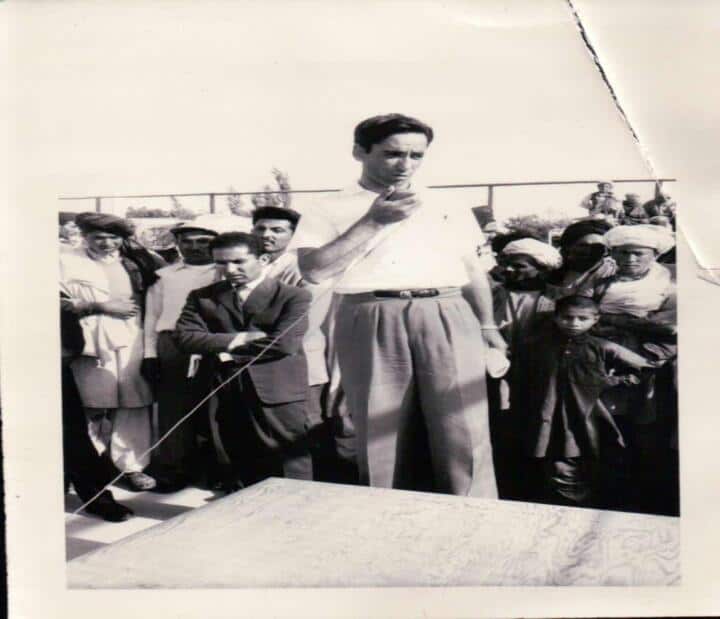
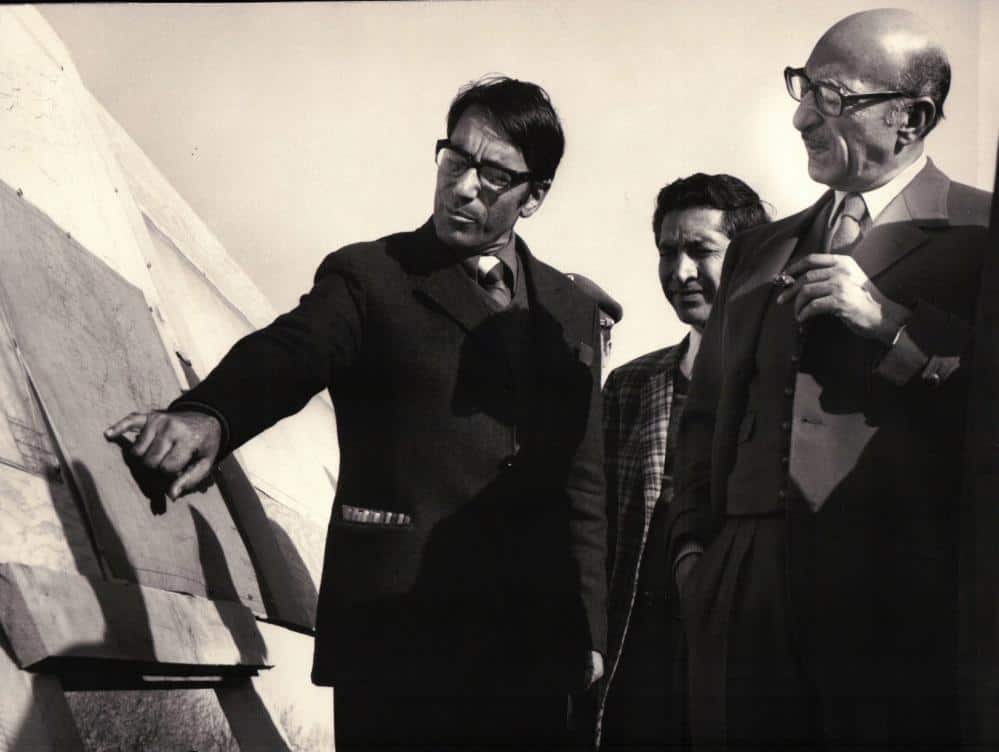
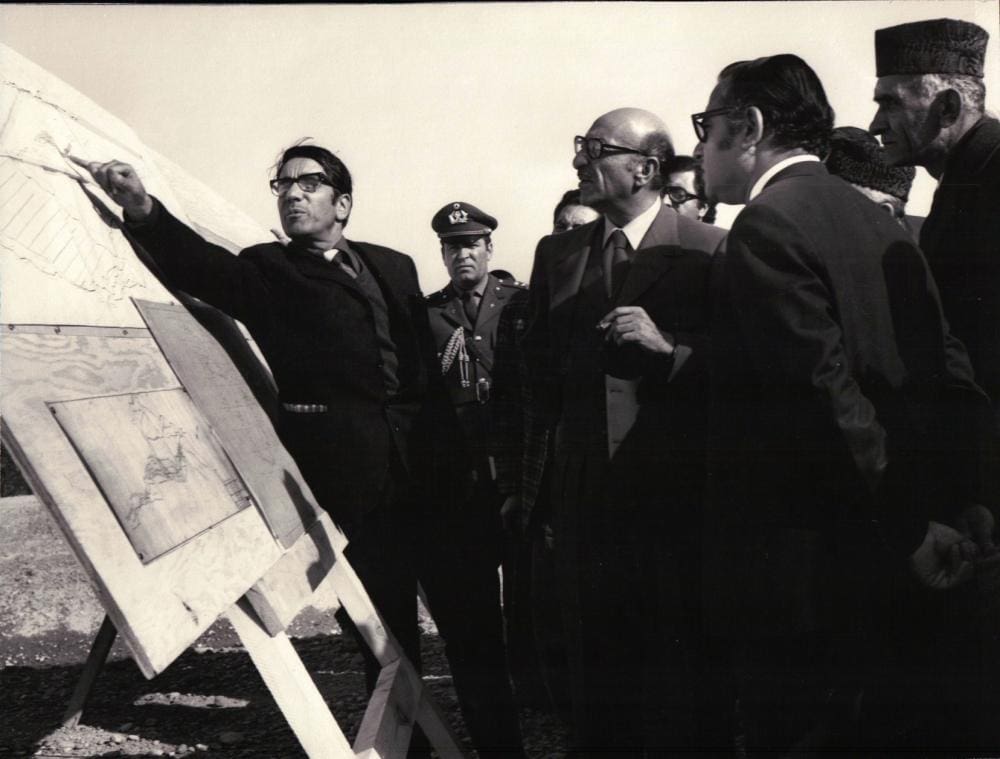
Below is a list of key infrastructure projects that he either led or worked on during his tenure at HCC:
- Helmand Province irrigation system
- Lashkargah City infrastructure extension
- Kajaki Dam maintenance
- Arghandob/Kandahar irrigation system and maintenance
- Dahla Dam maintenance
- Salma Dam planning, construction, and maintenance (Herat, Afghanistan)
- Nemrooz Project and Seestan water distribution
- Khanabad Project construction contract
- Lashkargah Mosque design and construction
- Lashkargah Cultural Center and Theater design and construction
- Bughra, Shamalan and Gerishk irrigation and maintenance
Engineer Aman was an integral part of a dedicated team of engineers and civil servants who turned a barren swathe of land into one of the most advanced cities in the country, as far as infrastructure and culture. Because of this the city of Lashkargah, the provincial capital of Helmand, earned the nickname “Little America” during the 1970s. It was the first planned city in Afghanistan with central sewage and water infrastructure, two-way divided streets, sports fields and recreational parks, and the only co-ed high school in the country. Engineer Aman along with other civil servants provided true community service in addition to their professional duties. For example, Engineer Aman taught 10th grade physics in Helmand high school.
When the communist regime took power in Afghanistan, Engineer Aman no longer was given the opportunity to work for a government agency due to professional and ideological differences. From 1978 to 1980, Engineer Aman stayed self-employed and served as a consultant for private construction and engineering services and small businesses using his vast experience in the field of civil engineering and project management. From 1980 to 1985, Engineer Aman worked as a senior program officer and professional consultant for United Nations Development Program (UNDP) and United Nations Children Fund (UNICEF) in Kabul, Afghanistan.
In 1985, Engineer Aman left Afghanistan and joined his family in Fairfax, Virginia, USA. In 1986, he joined the Department of Environmental Management of Fairfax County as a field engineer and subsequently served as a senior design review engineer until he retired in 2001. During his employment in Fairfax County, he received numerous awards for work excellence and professional integrity.
In 1993, Engineer Aman and a small number of veteran and young Afghan engineers founded the Society of Afghan Engineers (SAE) in the state of Virginia, with the sole intention of providing engineering and management services to the people and government of Afghanistan regardless of any political affiliation. Since then SAE has grown into a more than 500-member organization with its assistance in active development projects, capacity building, and other technical activities inside Afghanistan.
Engineer Aman’s professional life was balanced by his vast interest in arts, philosophy and physical activities. The same focus that he applied to his professional work was also given to his understanding of the Holy Koran and eastern classics, like poems by Bidel. He was an avid swimmer and tennis player, traits that he passed on to his sons Ehsan and Khalid who both became members of the Afghan National Tennis team in the late 1970s. He was also an accomplished Rabab (a traditional Afghan string instrument) player, taught in his youth directly by famed Ustad Mohammad Omar in Kabul.
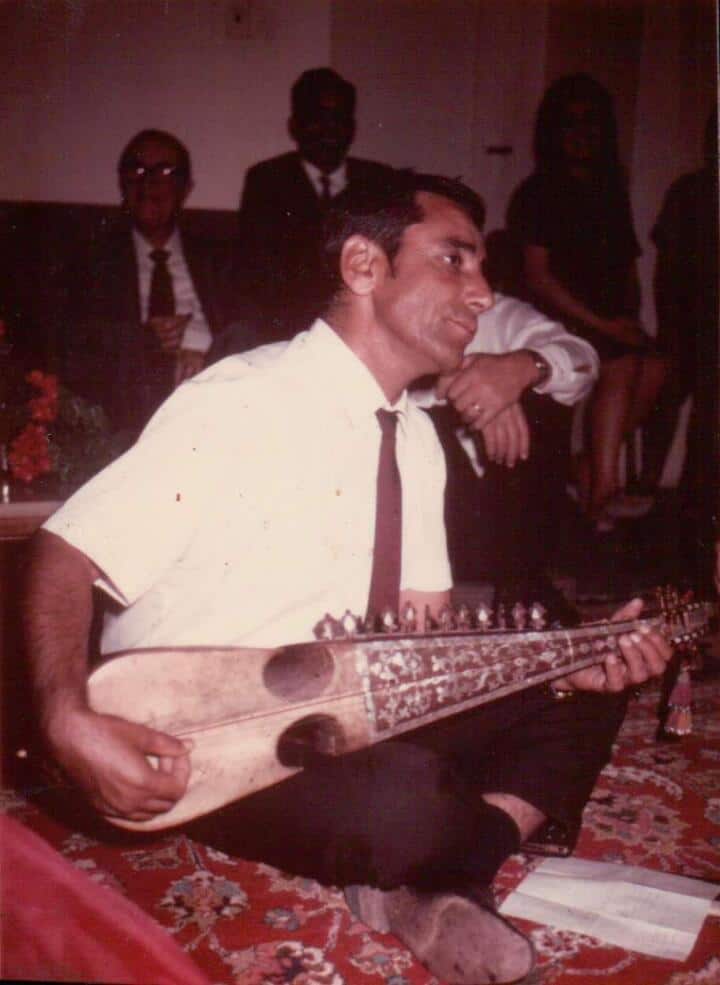
Engineer Aman playing Rabab in a social gathering in Lashkargah, Helmand in the late 1960s
He enjoyed listening to American jazz music and artists like Nat King Cole. He passed on his musical knowledge through tireless hours of training to his son Ehsan, who since then has become an icon of Afghan music, performing with international super stars like Natalie Cole, and writing and performing musical scores in Hollywood productions like Kite Runner and Black Tulip.
Seminar
Dr. Bahaudin Mujtaba, an SAE member and Management Professor at Huizenga School spoke at the seminar of Association of Southeast Asian Nations (ASEAN) in, Bangkok, Thailand on September 26, 2012. He was an invited speaker and panel member in a three-hour seminar in Bangkok, Thailand on the topic of “Preparation for ASEAN Community of Thailand: Public and Private Perspective Discussion”.
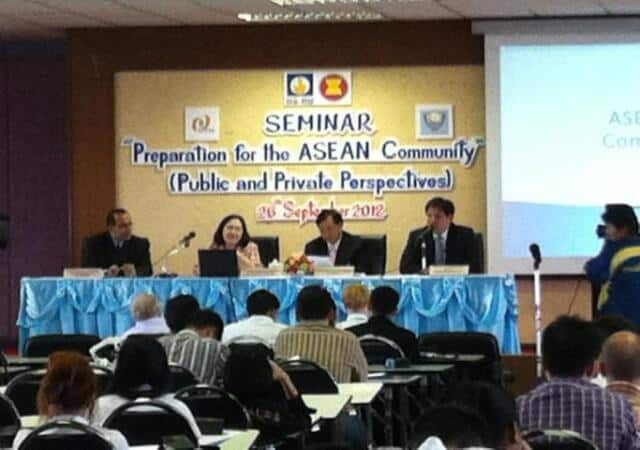
Dr. Bahudin Mujtaba on the left- Serving as a Panel Member
Dr. Mujtaba’s presentation was entitled: Operational Excellence, Inclusiveness, and Ethical Imperatives in the ASEAN Community.
Government leaders and educational administrators are trying to prepare Thai business leaders and researchers to be better prepared for 2015 which is the date when the ASEAN Community’s free trade agreement contract goes into effect. The goals of the leaders are to make Thai businesses more competitive so they can take advantage of the opportunities which open up with the ASEAN Community.
The Society Of Afghan Engineers Organization
SAE Executive Committee Members
- President: Ghulam Mujtaba
- Vice President: Atiq Panjshiri
- Treasurer: Jawad Ibrahim
- Secretary: Luis Durani
SAE Board Of Directors
- Chairman: M. Qasem Kadir
- Members: Yar M. Ebadi; Abdul Hamid (Farid) Kazi; Mohammad Saleh Keshawarz; Abdul Manan Khalid; Amanullah Mommandi; Mohammad Najib Poya; Abdul Saboor Rahim; and Mohammed Hashim Rayek
SAE Past Presidents
- Malik Mortaza; Sohaila Sanie Shekib; Mohammed Hashim Rayek, Mohammed Wali Shairzay; Abdul Hadi Rakin; M. Qasem Kadir; and Abdul Hadi Rakin
Chairpersons SAE Committees/Subcommittees
- Sohaila S. Shekib; M. Saber Sarwary; Samay Stanackzai; Ghulam Mujtaba; Nazeer Babakarkhial; Hasan Nouri; Najim Azadzoi; Atiq Panjshiri; Abdul Karim Yusufzai
SAE Manager Membership Committee
- Naim Shahab Email: naim.shahab@gmail.com
SAE ENewsletter Editorial Board
- Editor-In-Chief: Ghulam Mujtaba, M.S, CE, P.E., CPM E-Mail: mujtabaghulam@bellsouth.net
- Editorial Board Members:
A. Wahed Hassani, Ph.D., P.E. Email: awhassani@gmail.com
A. Manan Khalid, M.S., P.E., LEED AP E-Mail: manank10@gmail.com
Mohammad Mirwais Email: mirwaisarchitect@gmail.com
Daod Mohammad Email: dmohammad@suncor.com
Subscribe/Unsubscribe
The subscription to the SAE eNewsletter is free. If you are not receiving the SAE eNewsletter directly and would like to subscribe, please send a note to: mujtabaghulam@bellsouth.net with the subject “Subscribe: SAE eNewsletter”. To unsubscribe, send a note with the subject “Unsubscribe: SAE eNewsletter”.
Disclaimer
The author, reporter, or agency of each publication, project, news, and products is included in this newsletter. Additional contact information of the authors and their agencies are available with the Editorial Board of the newsletter and may be provided upon request. The Editorial Board of the Society of Afghan Engineers, Executive Committee, Board of Directors, or any of its members is not liable for the accuracy or contents of the information. The reports and information are included as provided by the authors and agencies without any changes in the substance of the documents. The information about the agency products or services is not the SAE endorsement.
The Society Of Afghan Engineers
https://www.afghanengineers.org/donate/
P. O. Box 11520 BURKE, Virginia 22009-1520 Telephone: 909-868-4212 Email: info@afghanengineers.org