SAE Newsletter – 2014-07 – Volume 4, Issue 3
Addresses the tragic Badakhshan landslide with a robust fundraising response and outlines the emergency operations and maintenance projects critical to regional recovery.
July 2014, Volume 4, Issue 3, Saratan 1393
Dear Colleagues,
This issue of the SAE eNewsletter (newsletter) features the report of sad news about Badakhshan landslide.
There is a progress report about SAE 2014 election. The Election Committee’s notice regarding the nomination of the SAE President and Board members are included.
There is an interview with Dr. Richard Gibson, former professor and Chief of Party of the Nebraska Team in Afghanistan.
We hope that you find this issue of the newsletter informative. Please contribute to your newsletter by sending us technical news, articles, comments, suggestions, questions, and opinions about SAE and this publication.
Very Truly Yours,
Ghulam Mujtaba
G. Mujtaba, MS-CE, P.E., CPM;
Editor-In-Chief, SAE eNewsletter
“This issue of the SAE eNewsletter (newsletter) features sad news about the Badakhshan landslide.”
Inside This Issue
- Greetings from SAE President
- Responses to Readers’ Comments
- Technical News from Afghanistan
- Badakhshan Landslide
- USAID Emergency Operation & Maintenance Project
- Afghan Professional Community News from Abroad
- The Society of Afghan Engineers 2014 Election
- Interview with Dr. Richard E. Gibson P.E., M. ASCE
- Membership News
- ASTM International Intensive Training Program
- Achievements and Awards
Greetings from the SAE President
Dear Members of the Society of Afghan Engineers:
This is the fourth year of the publication of the SAE eNewsletter. The dissemination of this publication has resulted in better level of communication between Afghan professionals all over the world. The Society has taken a forward step in bringing professional cooperation and alliance among Afghan communities. There has been an increased level of correspondence between the professionals of Society of Afghan Engineers (SAE) and Afghanistan based societies, including the Society of Afghan Architects and Engineers (SAAE) and Afghanistan Engineers’ Association (AEA).
The professionals of the Afghanistan Ministry of Public Works and SAE members have held a few teleconferences. These types of communications are needed between SAE and other Afghan governmental agencies. The SAE’s continuous participation in technical activities of Afghanistan may be in the form of professional advising; capacity building; and the preparation of the standards, test methods, building codes, specifications, manuals, and design guidelines. It is the responsibility of the Afghan governmental agencies and societies to initiate and implement these activities in Afghanistan. Only Afghans know the needs of their country and would be able to bring improvements in the areas of their expertise. It is not practical that we expect others to perform all of these functions for us.
The Afghan professionals working abroad are interested to share their professional knowledge, expertise, and experiences with their colleagues who are residing in Afghanistan. It is essential that Afghan Governmental Agency/SAE Liaison Committee should be formed to hold their face-to-face and virtual meetings.
This year is the election year for the positions of the SAE President and 9 members of the Board of Directors. I respectfully request all SAE Members within Afghanistan and abroad to actively participate in the election process by either running for an office, nominating eligible members; and by voting for the candidates of your choices. The current SAE President has decided not run for the second term. This will allow the younger members to be candidates for the position. Their participation will bring more improvement in the SAE developmental activities. Thanks to the Election Committee for volunteering to supervise the election. I am wishing them continued success in the accomplishment of this important task.
Very Truly Yours,
Ghulam Mujtaba.
Ghulam Mujtaba, MS-CE, P.E., CPM; M.ASCE
President, the Society of Afghan Engineers
Responses to Readers’ Comments
Comment from Dr. Z. Baha:
Grana Mujtaba Khana: Us-salamu-alaikum
Thank you for completing another great e-Newsletter letter for SAE and sharing it with us.
Have a great day
Zarjon
Editor’s Note: Dr. Zarjon Baha professor at Purdue University and former Dean of the Faculty of Engineering of Kabul University has sent an email to Editor-in-Chief.
Response:
Dear Dr. Sahib Salam:
Thanks for the email and your contributions to the developmental activities of the newsletter.
Best regards,
Editor-In-Chief
Comment from Sayed Amir Shah Zahori:
Salam Ustad Aziz Mujtaba Sahib,
I read the SAE e-Newsletter. It was wonderful and very informative.
I am happy for joining the SAE. I noticed many of my Afghanistan related wishes and ideas are touched in the Society’s bylaws and goals. I believe this is a great opportunity to learn from legend members of this organization; and thru SAE from other similar organizations.
I am hoping that we accomplish our goal of serving our beloved country in its reconstruction activities. I will discuss with you some of my ideas related to the SAE developmental activities in the future.
Thank you Sir,
Sayed Zahori
Editor’s Note: Mr. Zahor has recently joined the Society of Afghan Engineers and is currently serving as its Election Committee Chairman.
Response:
Dear Zahori Sahib Salam:
I am very pleased that you have received the SAE eNewsletter and enjoyed reading it. We are also happy that you have joined SAE and welcome you to the team.
Please send us your comments, suggestions, articles and news for the publication and information of our colleagues. I will be very pleased to discuss any ideas that you may have related to the developmental activities of the Society.
Best regards
Editor-In-Chief
Technical News from Afghanistan
This issue of the newsletter includes information about the following topics:
* Badakhshan landslide
* USAID Emergency Operation & Maintenance Project
Badakhshan Landslide
It is was very sad news that a devastating landslide turned Aab Bareek village of Argo District, Badakhshan Province of Afghanistan, into a mass grave. This happened following days of heavy rains on Friday afternoon of May 2, 2014. In this natural incident more than 2,500 people lost their lives. About 600 people from nearby village volunteered to rescue those already trapped in an earlier landslide. A mixture of rocks and mud began falling causing another landslide killing many of the volunteers too.
These double landslides first buried the village and then hundreds of rescuers. More than 1,500 livestock were also killed in the incident. There are about 4,000 survivors and evacuees who are in urgent need of food, water, medical support, counselors, and emergency shelter. The survivors, from about 700 families have been displaced by the landslides or evacuated from their villages as a precautionary measure against future slides. At this time there is need of shelter for those who are at risk of natural disasters.
On behalf of the Society of Afghan Engineers, the Editorial Board members of the SAE eNewsletter extends their condolences and express their grievances for the innocent lives lost in the landslide. We express our sympathies to all those families who have lost loved ones as results of these landslides. Our thoughts and prayers are with the victims, their families, and relatives who have experienced a shocking tragedy.
The Society of Afghan Engineers performed a fundraising to help the victims of this enormous disaster. The Society received a total of $18,716.76 from generous members, colleagues, and organizations.
After payment of the required transfer fee, the donations, in a total amount of $18,652.00, have been transferred to the Society of Afghan Architects and Engineers (SAAE) bank account by Mr. Atiq Panjshiri, SAE Vice President on June 19, 2014. On behalf of the Society of Afghan Engineers, the President sent an email on June 21, 2014 and thanked the contributors for their generous donations and help to the survivors and victims of Badakhshan landslide. In the email his letter and the list of contributors were attached. Dr. Z. Mojaddidy, SAAE President was copied in the email for his information and verification of the transfer of the fund. The President’s letter and the list of the contributors are also included in this newsletter.
The Afghanistan based engineering and architectural associations; SAAE and Afghanistan Engineers’ Association (AEA) have also decided to provide necessary help to the needy families.
June 21, 2014
Re: Donations for Badakhshan Landslide Victims
Dear Colleagues and Friends of the Society of Afghan Engineers:
On behalf of the Society of Afghan Engineers (SAE) I would like to take this opportunity to thank you for your generous donations. The details of donations are included in the attached file. Your contributions in the total amount of $18,652.00 were transferred to the bank account of the Society of Afghan Architects and Engineers (SAAE) in Afghanistan on June 19, 2014. The SAAE and Afghanistan Engineers’ Association (AEA) use the funds that they receive for the victims of Badakhshan natural disaster.
Your contributions will help the survivors of disasters who need aid during their distress in recovering from overwhelming damages. The Afghanistan based associations, SAAE and AEA, may also participate in the rebuilding activities of the devastated buildings, schools, roadways, bridges, and other infrastructures. These services are possible only because of your generous support and the support of the other colleagues who have contributed in these types of fundraising activities.
Once again, thank you very much for all your support and kind donations. Your selfless contribution reflects your commitment to bettering the lives of those less fortunate. We appreciate your thoughtfulness of helping the SAE in this fundraising.
Best regards,
Ghulam Mujtaba
Ghulam Mujtaba, M.S., CE, P.E, C.P.M, M. ASCE
President, the Society of Afghan Engineers
CC: SAE Board of Directors
SAE Executive Committee
Dr. Zabi Mojaddidy, the SAAE President
Afghan Engineers’ Association (AEA)
Attachment- List of Donors
A: Badakhshan Landslide Donation (Individuals)
| No. | Check No. | First Name | Last Name | Amount ($) | Remarks |
|---|---|---|---|---|---|
| 1 | 6033 | Amanullah | Mommandi | 200.00 | |
| 2 | 226 | Abdul M. | Khalid | 200.00 | |
| 3 | 2817 | Mohammad N. | Poya | 300.00 | |
| 4 | 1600 | Azim M. | Salehi | 500.00 | |
| 5 | 2523 | Hamayon M. | Ibrahim | 100.00 | |
| 6 | 6034 | Amanullah | Mommandi | 150.00 | |
| 7 | 2582 | Adbul Saboor & Rahima | Rahim | 500.00 | |
| 8 | 2584 | Mohammad S. | Omar | 410.00 | |
| 9 | 6916 | Zarjon | Baha | 100.00 | |
| 10 | 30 | Abdul Haq | Zia | 50.00 | |
| 11 | 357 | Farhad and Nilofar | Jamasi | 550.00 | Includes $50 from their daughters Laila and Sheilah |
| 12 | 1033 | Saif Rahman | Samady | 200.00 | |
| 13 | 1553 | Ghulam | Mujtaba | 1,000.00 | |
| 14 | 1555 | Nadia Haidari | Mujtaba | 100.00 | Paid by Ghulam Mujtaba |
| 15 | 945 | Safia | Ibrahimkhail | 100.00 | |
| 16 | 906846 | Mohammad | Keshawarz | 200.00 | |
| 17 | 400547 | M. Nadir | Sidiqi | 200.00 | |
| 18 | 9160 | Bashir M. | Kazimee | 100.00 | |
| 19 | 1113 | Yar M. | Ebadi | 150.00 | |
| 20 | 1141 | S. Wahid & Janis | Zewari | 100.00 | |
| 21 | 85176 | Stephen | Rossi | 500.00 | |
| 22 | 162 | Zia A. | Yamayee | 500.00 | |
| 23 | 427 | Sohaila | Shekib | 400.00 | |
| 24 | 128 | Abdul Hadi | Rakin | 300.00 | |
| 25 | 2674 | Mohammad Saber | Sarwary | 100.00 | |
| 26 | 156 | Atiq | Panjshiri | 300.00 | |
| 27 | Cash | Zabiullah | Hamidi | 90.76 | $100.00 AUD + $125 transfer fee |
| 28 | Cash | Zainab | Nouri | 300.00 | Cashier at Afghan Mini Market, VA |
| 29 | 1009 | Abdul & Sanum | Ahmadi | 1,000.00 | |
| 30 | 1556 | Anisa Mujtaba | Qadir | 150.00 | Paid by Ghulam Mujtaba |
| 31 | 9139 | Lisa | Mujtaba | 100.00 | |
| 32 | – | Qasem | Kadir | 300.00 | Paid for SAE web hosting fee |
| Total | 9,250.76 |
Note: Hafizullah Wardak sent $200.00 directly to Dr. Mojaddidy; not included in total.
B: Badakhshan Landslide Donation (Businesses and Charities)
| No. | Check No. | Entity | Amount ($) | Remarks |
|---|---|---|---|---|
| 33 | 2530 | A M Structural Design Inc. | 100.00 | Sent by Aminullah Mahmood |
| 34 | 3848 | Colorado Muslim Society | 3,616.00 | Sent by Amanullah Mommandi |
| 35 | 6020 | Islamic Center of SW FL Inc | 2,500.00 | Sent by Dr. A. Baqi Ahmadi |
| 36 | 3586 | Zakat & Research Foundation | 1,000.00 | |
| 37 | 2620 | Sierra Islamic Center | 300.00 | Paid by Dr. Saboor Rahim |
| 38 | 2589 | Alfarooq Islamic Center | 1,700.00 | Paid by Dr. Saboor Rahim |
| 39 | 2279 | Hydrau Tech Inc | 250.00 | Paid by Amanullah Mommandi |
| Total | 9,466.00 |
Grand Total (A + B): $18,716.76
USAID Emergency Operation & Maintenance Project
The Society of Afghan Engineers (SAE) received an email from Mr. Assefa Abebe, the Senior Acquisition and Assistance Specialist of USAID/Afghanistan on April 5, 2014 regarding Emergency Operation & Maintenance Project.
The email included an announcement document calling for the submission of proposals to compete for the implementation of USAID project called Emergency Operation and Maintenance Support Project. The deadline for submitting of the proposals was May 01, 2014 Kabul time.
The USAID email was disseminated to the SAE members; including, board of directors, executive committee members, corporation committee, local chapter coordinators, and company owners for their information.
Afghan Professional Community News from Abroad
The Afghan professional community news and other topics of interest from abroad are as follows:
The Society of Afghan Engineers 2014 Election
The Society of Afghan Engineers will elect their President and 9 members of the Board of Directors in 2014. The newly elected members will start their work on January 1, 2015 and continue until December 31, 2017. The election committee will supervise the election process. The results of the election will be announced by December 15, 2014.
Mr. Amir Shah Zahori serves as the Chairman of the Election Committee. Mr. Hamayon Ibrahim, Mr. Najib Kazimi, Dr. Nadir Sidiqi, and Ms. Aziza Tarin are Committee members. Their biographies were included in the April issue of the newsletter. The Election Committee has sent a letter to all members and has asked them to be a candidate for one of the positions or nominate other qualified interested members. The nomination period expired on July 31, 2014.
The following is Mr. Zahori’s letter related to the election.
Society of Afghan Engineers 2014 Election
This year the members of the Society of Afghan Engineers (SAE) will elect their president and the nine members of the Board of Directors for the 2014 service term.
In accordance with Sections 4-3, 5-3 and 6 of the SAE bylaws, a president and nine board members will be elected from the society members. The Election Committee will receive nominations for President and Board Members for the upcoming term as stated in the SAE bylaws and manual. Please note that per Section 3-4(3) of the bylaws, only regular members are allowed as candidates or nominees for these elected positions. Also, please confirm that the potential nominee agrees to be a candidate prior to nominating that person.
All members are cordially invited and strongly encouraged to participate in this year’s election by nominating others or self as candidates for SAE President or Board Members. Please submit the following for all nominees.
President- (1 Position)
* A short biography of the nominee
* A short essay describing the nominee’s vision for the future of SAE.
Board Members- (9 Positions)
* A brief biography of the nominee
Please review the position description and responsibilities as stated in the SAE bylaws and manual before submitting nominations or agreeing to be a candidate.
The Election Committee will create and distribute a voting ballot after the receipt of nominations. The deadline for the receipt of nominations is July 31, 2014.
Sincerely,
Sayed Amir Zahori
Chairman, Election Committee
The Society of Afghan Engineers
Election Committee Members:
* Sayed A. Zahori, Chairman
* Hamayon Ibrahim, Member
* Najib Kazimi, Member
* Aziza Tarin, Member
* Dr. Nadir Sediqi, Member
Interview with Dr. Richard E. Gibson P.E., M. ASCE
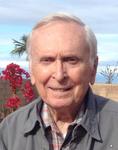
Former Professor of the University of Nebraska at Omaha; former Chief of Party, Team Leader and visiting Professor at the Faculty of Engineering, Kabul University.
By: Abdul Wahed Hassani, Ph.D., P.E., M. ASCE
Dr. Gibson has had an outstanding career in the United States. Based on his outstanding background and successful career, he was selected to lead a team of Nebraska professionals at Kabul University from 1974-1978. After his return from Afghanistan, Dr. Gibson served in various positions in the US, Pakistan, Somalia, Indonesia, Sri Lanka, and other countries. He has written numerous professional reports and project proposals for developing countries with sponsorship by USAID and other agencies.
He received his B.S. degree from the University of Kansas, M.S. degree from the University of Illinois and Ph.D. from University of Colorado. Dr. Gibson has had a lengthy carrier both as a professional engineer and as a professor.
Dr. Gibson also contributed in various capacities to the education of Afghan Refugees in Pakistan. He was instrumental in establishing the first engineering education with the help of International Rescue Committee (IRC) for Afghan Refugees in Pakistan. This was at the time that the Faculty of Engineering at Kabul University was closed in Afghanistan.
Dr. Gibson participated in various consortium meetings which were also attended by representatives from Stevens Institute of Technology, University of Cincinnati, University of Nebraska at Omaha, Colorado State University at Fort Collins and University of Wyoming. The purpose of these consortium meetings was to secure funding for the IRC’s engineering programs for Afghan refugees through USAID.
The author has known Dr. Gibson since 1974, first as his student and later as his colleague at the Faculty of Engineering, Kabul University and at the Engineering programs of International Rescue Committee (IRC) in Peshawar, Pakistan. Dr. Gibson is known for his dedication and love for his countrymen and the international community all over the world. Therefore, for this issue of the newsletter, the author requested an interview with Dr. Gibson which he gracefully accepted.
Q: It is a pleasure and an honor to get the opportunity to interview a friend, and a professor. Please briefly tell us about yourself, and your schooling, hobbies and activities.
R: I began my university studies in Architecture at the University of Nebraska, and transferred to Architectural Engineering at the University of Kansas, where several of my courses were in Civil Engineering. While attending Kansas and briefly after graduating in 1952, I worked at the firm of Black and Veatch in Kansas City, where I found my true calling in civil and structural engineering.
I was called to active duty in the US Air Force as an officer during the latter stages of the Korean War, where I worked in Oklahoma in airbase maintenance. The Air Force then sent me to the University of Illinois to obtain an MS in structural dynamics, focusing on nuclear blast effects on structures.
After gaining practical experience in civil and structural engineering in the Air Force and at private engineering companies, I was fortunate to have a chance to continue my studies in structural dynamics at the University of Colorado, obtaining my PhD in 1969. By that time, academic interest in structural dynamics had shifted from nuclear blast effects to earthquake effects on buildings. I studied the lateral and torsional motions on asymmetrical buildings, developing computer-based models of analysis.
My wife and I enjoyed many years of camping and fishing with our five children. I enjoyed flying light aircraft, both recreationally and for business travel. I played a lot of tennis and golf, but not enough to become very good at either. Upon retirement, I operated a cattle farm in Missouri for a number of years. Horses, cattle and farm machinery were lifelong interests.
Q: What positions were you working prior to being appointed as chief of party and team leader at Kabul University?
R: While still in the military, I served as an advisor to the Nationalist Chinese Air Force on new airfield construction in Taiwan, and later as a headquarters staff officer in Texas working on military housing projects. Upon leaving the Air Force in 1958, I began as a bridge designer for consulting engineering firms in Kansas City and in Omaha, where I had management responsibility for a wide variety of infrastructure projects, including airfield design and construction management, surveys and design of interstate highway projects, fast-track design and construction of housing developments related to missile sites in South Dakota.
In 1964 I started teaching civil engineering at the University of Omaha, which later became the University of Nebraska at Omaha. Initially our program was small, and had not been accredited by the engineering profession due to lack to resources. Our small staff had to carry large teaching loads, covering a number of different courses. Many of our students were employed by engineering firms, government agencies and utility and construction companies, so most of our classes were in the evening. Offerings were at both undergraduate and master’s levels. Because of an acute need for engineering education in the local area, the department grew rapidly. By 1974 we had 10 faculty members, and the program was fully accredited. The department later merged with the civil engineering department at the University of Nebraska-Lincoln.
I served as civil engineering chairman of the Omaha program from 1970 to 1974.
Q: When you were at Kabul University, what types of positions did you hold?
R: My principle position was as Chief-of-Party of the Nebraska Team, working with the Kabul University (KU) central administration and Faculties of Engineering, Agriculture and Teacher Education. The Team worked, under a contract with the US Agency for International Development. It included nine tenured professors from the Omaha and Lincoln campuses, all posted long-term in Kabul. We also mobilized a number of short-term consultants from the Nebraska campuses (including the Nebraska Medical College) in business, teacher education and medical education. We received administrative and logistical support from the Center for Afghanistan Studies (CAS) at UNO. The CAS played key roles in recruiting consultants and placing Afghan faculty in visiting professorships on Nebraska and other US campuses.
My other positions at KU were related to my Chief-of-Party role. I served as a counterpart to the KU President, the Dean of Engineering and the Director of CECSAR. I reported to the Dean of International Studies on the UNO campus and to the Education Officer at USAID/Kabul and I taught courses in engineering mechanics and structural dynamics. I was responsible for monthly reports covering the activities and progress of all our project components, engineering, agriculture, teacher education and medical education.
Q: What were the areas of your teaching and research work? How do you describe your teaching career and how did your students think of you as a teacher?
R: During my time at UNO I taught many of the basic undergraduate courses in engineering mechanics, as well as reinforced concrete design, foundation engineering and advanced surveying. At the graduate level I taught finite element analysis, structural dynamics and numerical methods. My research work was limited to earthquake analysis (a continuation of my PhD research) and in applications of finite element analyses. While teaching, I did a considerable amount of consulting work in bridge evaluation, bridge design and expert witness work, much in the manner of Center for Engineering Consulting Services and Applied Research’s (CECSAR’s) consulting at KU. I went into teaching with the purpose of retooling my engineering knowledge after almost a decade away from the classroom. I regarded myself as an engineer first, but found that teaching as a second career was very rewarding. Student evaluations of my teaching were always positive. I hope the students were conscientious and frank when they completed the evaluation forms. I do believe that most of them valued my experience as a practicing engineer.
Q: You have had a very impressive career. It is my understanding that there were partnership programs of United States Universities with Kabul University and you played an important role in the establishment of those programs. Please briefly describe about the main goals of the programs and their main components.
R: The partnership programs with various US universities that you speak of were in existence before Nebraska came on the scene. Originally, neither I nor anyone from Nebraska was involved. Prior to 1973, the KU Agriculture Faculty was assisted by Wyoming University, Engineering by Wyoming initially and later by a consortium of US universities, Education by Teacher’s College of New York and Central Administration by Indiana University (possibly there were others that I don’t recall). Prior to Nebraska’s limited assistance to them, the Medical Faculty hadn’t received any help since the 1950s, when France was involved. As I understand, USAID was unwilling to continue funding separate university teams at KU, so they invited proposals for one team to cover engineering, agriculture, central administration and teacher education. UNO submitted the winning proposal in 1973, but the project was delayed for a year by a change in the Afghan government.
So Nebraska was made responsible for covering the work of the previous teams with far fewer personnel and other resources, such as scholarships. Not everybody was pleased with this situation, but we were very graciously received, and cooperation resulted toward achieving many of the project objectives.
Q: I understand that your team was involved in the Kabul University’s Research Center and at the Center for Engineering Services and Applied Research (CECSAR) at the Faculty of Engineering. Can you tell us how were these research centers working and their importance in promoting the knowledge, experience and effectiveness for serving the projects in Afghanistan?
R: The KU Research Center was assisted by the Education Administration specialist on the Nebraska Team. They did some useful work, especially a project commissioned by USAID/Kabul. The Center was up and running at the end of our project. I see research in this area as very important and necessary to provide feedback to educators (especially at the primary and secondary levels), as to what does and does not work well. Results from other countries often cannot be adapted, as approaches to learning are often culturally sensitive.
The idea of establishing CECSAR was a good one. It is one of the very few ways that engineering faculty can gain the practical experience that will make them better teachers. And of course, faculty members often have special expertise that can benefit clients in the ministries and industries. Progress was made while we were at KU, and the organization was functioning well under good leadership. One could have wished that more faculty were involved in more projects, but that will come, in time. Clients have to be made aware that CECSAR’s services are available.
Q: You were involved in educational programs of Afghan Refugees in Pakistan. Can you tell us of your level of involvement and the effectiveness of those programs?
R: I served as UNO’s interim Team Leader for a period of six months in 1988, at the beginning of a program in primary, secondary, adult education and mine awareness, carried out mainly inside Afghanistan, but also in the refugee camps of Pakistan. Working from Peshawar, we prepared textbooks and other materials and trained teachers for cross-border shipment to mujahedeen commanders. IRC assisted with the printing of textbooks. Cooperation of the Afghan political parties was essential to any success, so we worked closely with them.
USAID funded the project through 1992 and they conducted several evaluations of its effectiveness. They were sufficiently satisfied to keep funding the project at considerable expense. Much of this project was carried out under extremely complex wartime conditions. I am confident that the adult literacy phase, conducted mostly in Pakistan was effective. The mine awareness component, conducted inside Afghanistan was effective in reducing deaths and injuries, especially of children.
I returned to Pakistan once or twice a year throughout the project to assist with its implementation. I also assisted with the cross-border agriculture and heavy machinery projects.
Q: How do you describe your personal experience and observations of Afghanistan at that time?
R: I was very pleased for the opportunity to return to Pakistan and renew my acquaintances with Afghans after so many years away. Each time I went over, in the late 1980s and early 1990s, it seemed as if I were returning home again. I wasn’t able to cross the border into Afghanistan, but working with Afghans in Peshawar, observing their dedication to the cause and enjoying their hospitality was certainly a pleasure.
Q: You have been a professor, a professional Engineer and successful consultant, please provide us a few examples of the projects that you have completed, especially the projects that you have been involved as the principal designer and project manager.
R: Three projects of this kind were mentioned earlier in this interview. First is the design and construction management of facilities at Eppley Airfield in Omaha, to support the introduction of commercial jet aircraft in the early 1960s. Working for a local consulting engineering firm, I was responsible for design, contract documents and construction management of runway extensions, taxiway widening, apron expansion, drainage, runway lighting and utilities and parking for a new terminal building. The terminal was the responsibility of another firm, requiring close coordination with them. I had to meet often with and satisfy officials of the Airport Authority, the Federal Aviation Agency, and State Aeronautics Commission.
Second is the Oklahoma interstate design work mentioned earlier. I was responsible for roadway design as well managing surveying crews to locate property boundaries, topographic features and all other data needed for design over 11 and 7 mile lengths of new IS Highway 40 in eastern Oklahoma. Survey work was performed by our crews and design work, including route selection and interchanges, was done in our Omaha office. Project management required extensive travel and telephone contact between the job sites and the Omaha office.
The third project mentioned earlier concerned housing sites in South Dakota. The Boeing Company contracted with my firm to provide housing for its personnel who were to install underground missiles for the Air Force at seven different locations in the Rapid City area. Although the engineering was simple, involving only grading, streets, drainage and utilities, it was challenging work, as it was to be done on a fast-track basis. For each site, Boeing would call us from Seattle with separate orders to identify a location near the proposed missile location, perform a land survey, purchase the land, perform and submit a design to Seattle for approval, obtain necessary local government approvals, advertise for construction bids, award a contract and start construction. We would then wait for instructions to start work on the next site. The process for each site was to be completed in a matter of a few weeks.
Q: What do you think about the application of these types of projects in Afghanistan?
R: All kinds of engineering projects will eventually be needed for the development of Afghanistan, and engineering education in and for Afghanistan should provide graduates in many engineering disciplines. However, one must recognize that the provision of basic infrastructure, (roads, bridges, irrigation and drainage systems, water supply and waste disposal), the things that civil engineers do, will continue to be in early demand, as they are needed to support most other modern human activities.
Q: You have an impressive resume, what was the key to your educational success and professional accomplishments?
R: Many engineers have accomplished more than I have, plenty of whom I have personally known. I think my modest success has been due to my love of the engineering profession, and my pride in being known as an engineer.
Q: Please tell us about your experience of rural development projects in various countries.
R: In 1979 I accepted employment with The New TransCentury Foundation of Washington, DC, to carry out a USAID-funded contract to assist the government of Indonesia in generating employment of villagers through construction of rural infrastructure. In order to maximize employment, labor-intensive methods were used exclusively. A co-equal purpose of the project was to improve local economies through the provision of rural infrastructure. In order to assure positive benefits of the work, it was necessary to develop numerous standards for project selection, design and evaluation, and to train personnel in their use. Over a period of five years, we built a large organization and were able to employ many thousands of villagers.
I led a team of nine American and three Dutch consultants in this work. I and two others were stationed in the capital, Jakarta, while the others were posted throughout the islands of Indonesia. My training officer and I traveled frequently to visit the others and to conduct training. All of our training, as well as day-to-day communications with Indonesians were in the Indonesian language.
TransCentury sent me to Somalia in 1984 to set up a project to create employment for Ethiopian refugees living in camps along the Somali-Ethiopian border. This project also was intended, through provision of new infrastructure, to improve the local economy. Having to work throughout a vast area of Northwest Somalia, we organized travelling work crews, each consisting of about 100 refugee men, six camels with drivers, cooks and others. We sent pickup trucks out to support them with hand tools, fuel, rice, and cash, while the camels travelled locally to gather fresh food and meat. Most of our work was road building (using labor-intensive methods), badly needed to provide access to the refugee camps for food, water and medical supplies. There was much sickness and death in these camps—cholera was an ongoing problem. When it rained, the dirt trails that we replaced were impassible. UNHCR contracted with us to speed up road construction. We also built a major flood control ditch, through the center of our host city—Hargesia. This project consisted of lining a major (normally dry) ravine with gabions (wire cages containing rocks).
The project grew rapidly over a period of only three years. 100 or so direct-hire local employees were required to set up financial and logistical controls. We employed 50 to 60 camel supported teams). We had to leave after almost three years because of a civil war that was happening all around us and interfering with our project.
From 1988 to 1993, I was a private international consultant, working in several countries on various short-term assignments: Pakistan (UNO-Cross-Border Education); Pakistan and US (IRC-Engineering Education for Afghanistan); Sri Lanka (PACT and World Bank-Village Women’s Credit Project); Pakistan (VITA-Cross Border Agriculture); Pakistan (USAID-Construction Machinery Requirements); Indonesia(DAI-Watershed Development); China (World Bank-Training of Highway Engineers); Tajikistan (UNO-Public Administration Proposal); US (UNO-various Education Proposals).
Q: Are there specific projects that you recommend to be implemented for rural development of Afghanistan?
R: Labor intensive projects for employment of large numbers of poor people are sometimes useful, but not successful in all countries. They must be compatible with the culture. In Afghanistan, it is possible that such projects would be more readily accepted near refugee camps than in settled agricultural areas. I expect that some labor intensive projects have been tried in Afghanistan by now.
Pilot labor-intensive projects can be useful for finding out what does and does not work. Projects should be carefully selected to insure that economic benefits result, other than just the wages paid workers. The improvement of a rural road is often feasible using manual labor alone, and usually brings benefits to rural areas through an increase in economic activity arising from better movement of goods and services.
Q: What type of advice do you have for young Afghans and professionals who plan to pursue their education or work in the United States? How could they be of better help to Afghanistan?
R: Afghanistan will benefit most from engineers with practical experience, in addition to their academic degrees. Ideally, this experience should cover at least four years of work under the guidance of other experienced engineers, and should lead to examination and certification. The safety and well-being of the Afghan public requires that only qualified individuals be allowed to practice engineering. The SAE could play an important role in bringing about a system for licensure of Engineers in Afghanistan.
Q: Do you have any further comments or anything that I should have asked you, but, I didn’t, and you’d really like to talk about in an interview that is going to be read by a group of Afghan professional, academicians, and practitioners?
R: Only that I wish continued success for my fellow engineers in the Afghan community. The many Afghan engineers whom I know have made me very proud of their many accomplishments and the manner in which they continue, with their SAE activities, to show their concern for the future of Afghanistan and its people.
Membership News
ASTM International Intensive Training Program
Mr. Ghulam Mujtaba, the SAE President was invited by the ASTM (American Society for Testing and Materials) International to have presentation during their international intensive training program.
The ASTM International Intensive Training Program was held from June 16-27, 2014. The Program has been designed to focus on ASTM International standards in the area of transportation infrastructure, specifically ASTM Technical Committees D04 on Road and Paving Materials; C09 on Concrete and Concrete Aggregates. In accordance with ASTM Memorandum of Understanding (MOU) the experts from many countries, including Afghanistan had been invited to attend this intensive training.
The intensive program included information about the development process of ASTM International standards and their implementations by industry and government. Another focus of the program was on ASTM’s statistical quality assurance programs that enable laboratories to assess their performance in conducting test methods within their own laboratories when their data are compared against other laboratories.
The program was scheduled to provide training and field trips to visit different technical institutes. Different experts were scheduled to provide the training of each session. The attendees also participated in a few ASTM June Committee meetings. The administrative overview of the program, including global cooperation, and MoU Program were presented by Mr. Jim Olshefsky, Director, External Relations of ASTM International.
During the June 2014 program there were participants from the following countries:
* Kingdom of Saudi Arabia
* Qatar
* United Arab Emirates
* South Korea
Mr. Mujtaba’s presentation was scheduled from 1:30-2:30 PM on June 16, 2014. He joined the group by virtual meeting through WEBEX. Prior to his presentation he sent the outline of his presentation on June 9, 2014. ASTM acknowledged the receipt of his presentation. Also, he received comments related to his presentation on June 16, 2014.
The topic of his presentation was: Review of Transportation Infrastructure Standards and their Application in the Middle East by Ghulam Mujtaba, Florida Department of Transportation.
After the presentations there were questions and answer sessions. Mr. Mujtaba responded to the questions and also provided overview of the activities of the Society of Afghan Engineers in Afghanistan and abroad.
Mr. Jim Olshefsky has sent the following email on June 9, 2014, addressed to Mr. Ghulam Mujtaba with copy to a few Florida Department of Transportation (FDOT) officials, related to the outline of his presentation:
Dear Ghulam:
Excellent work on this outline! Thank you very much for your working to compile this body of knowledge, I know it will be quite informative for the incoming trainees. Looking forward to working with you next week.
All the best,
Jim Olshefsky
ASTM International
After his presentation Mr. Olshefsky has sent, on June 16, 2014, the following note to Mr. Ghulam Mujtaba with copy to FDOT officials:
Dear Ghulam:
Many thanks for the time you spent with our visitors by teleconference this afternoon. Your presentation was excellent and gave our visiting experts a good appreciation for the operations of a large state Department of Transportation. ASTM really appreciates your valuable input in our standardization process and your willingness to teach others about it.
Kind regards,
Jim Olshefsky
ASTM International
Achievements and Awards
Congratulations to Mr. Luis Durani for his appointment as Hydraulic/Flow Assurance Engineer with Oil and Gas Industry
Mr. Luis Durani is serving as the Secretary of the Society of Afghan Engineers. For the last 6.5 years he was working as a nuclear engineer in the nuclear industry (1.5 years with Bechtel at Yucca Mountain and 5 years with AREVA in VA).
He has recently decided to work with oil and gas industry in Houston and has joined a consultancy firm as a hydraulic/flow assurance engineer. His scholastic background and nuclear engineering experience in thermal hydraulic will make him an asset to the oil and gas industry.
Mr. Durani has two Masters Degrees. His first MS degree is in nuclear engineering and the second one is business administration. He has taken a few masters degree courses with Virginia Tech in international affairs. Upon completion of the 3 more online courses and his thesis work, he will receive third Masters Degree in business administration.
Congratulations to Mr. Sayed Amir Shah Zahori his Promotion as Assistant Engineer
Mr. Sayed Amir Shah Zahori serves as the SAE Chairman of the Election Committee and working with City of Redwood City, California. Mr. Zahori has received his MS degree in Civil/ Hydraulic major from Kabul Polytechnic University. After graduation, he has worked in different civil engineering and construction projects.
In the United Sates, Mr. Zahori has worked in civil engineering and construction jobs in laboratories with private companies, engineering consulting firms, and government (Caltrans- district 4 Castro Valley Office) for 5 years. He has been working in Engineering and Construction Department of the city of Redwood City in California for about 10 years. He has been promoted recently to the new position as Assistant Engineer II with Redwood City.
Congratulations to Professor Hasan Nouri for his Support of Arthritis Foundation
Mr. Hasan Nouri, an SAE member and former professor of Kabul University, has registered to help Pacific Region of the Arthritis Foundation in its fundraising efforts. He will do the bicycle riding from San Francisco to Los Angeles for a distance of 550 miles for the third year in support of the Arthritis Foundation. This year the bicycle riding will be in September.
Anybody interested to support Mr. Nouri in this fundraising can send their tax deductible donations to Arthritis Foundation, Pacific Region.
The newsletter Editorial Board members congratulate Professor Nouri in providing help to a nonprofit organization and wishing him continued success in the upcoming September event.
The Society of Afghan Engineers Organization
SAE Executive Committee Members:
* President: Ghulam Mujtaba
* Vice President: Atiq Panjshiri
* Treasurer: Jawad Ibrahim
* Secretary: Luis Durani
SAE Board of Directors:
* Chairman: M. Qasem Kadir
* Members: Zarjon Baha; Yar M. Ebadi; Mohammad Saleh Keshawarz; Abdul Manan Khalid; Amanullah Mommandi; Mohammad Najib Poya; and Abdul Saboor Rahim
SAE Past Presidents:
* Malik Mortaza; Sohaila Sanie Shekib; Ahmad Wali Shairzay; Mohammed Hashim Rayek; Abdul Hadi Rakin; M. Qasem Kadir; and Abdul Hadi Rakin
Chairpersons SAE Committees/Subcommittees:
* Sohaila S. Shekib; M. Saber Sarwary; Samay Stanackzai; Ghulam Mujtaba; Nazeer Babakarkhial; Hasan Nouri; Najim Azadzoi; Atiq Panjshiri; Abdul Karim Yusufzai; A. S. Rahim; Shad M. Sargand
SAE Local Chapter Coordinators:
* Najim Azadzoi – Massachusetts
* M. Qasem Kadir – Southern California
* A. Manan Khalid – New York and New Jersey
* Mohammad Mirwais – Kabul
* Amanullah Mommandi – Colorado
* M. Qaseem Naimi – Toronto, Canada
* Atiq Panjshiri – Virginia and Washington DC
SAE Manager Membership Committee:
* Naim Shahab
SAE eNewsletter Editorial Board:
* Editor-In-Chief: Ghulam Mujtaba, M.S, CE, P.E., CPM
* Editorial Board Members: A. Wahed Hassani, Ph.D., P.E.; A. Manan Khalid, M.S., P.E., LEED AP
* SAE eNewsletter Regional Representatives: Mohammad Mirwais; Daod Mohammad
Disclaimer: The author, reporter, or agency of each publication, project, news, and products is included in this newsletter. Additional contact information of the authors and their agencies are available with the Editorial Board of the newsletter and may be provided upon request. The Editorial Board of the Society of Afghan Engineers, Executive Committee, Board of Directors, or any of its members is not liable for the accuracy or contents of the information. The reports and information are included as provided by the authors and agencies without any changes in the substance of the documents. The information about the agency products or services is not the SAE endorsement.