SAE Newsletter – 2023-04 – Volume 13, Issue 2
Explores the foundational design of modern digital electronic systems, provides ongoing analysis of Kabul’s aquifers, and announces the transition in the eNewsletter’s editorial leadership.
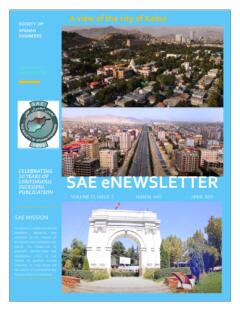
SAE Newsletter – April 2023, Volume 13, Issue 2, Hamal 1402
A view of the city of Kabul
Society of Afghan Engineers Quarterly eNewsletter
Celebrating 10 Years of Continuous Successful Publication SAE eNewsletter
SAE Mission
To present a forum for Afghan engineers, architects and scientists in the sharing of experiences and knowledge and foster the promotion of scientific, architectural and engineering ethics in our quests to enhance Afghan capacities in these fields for the service of Afghanistan and the well being of the people.
Contents
- Editor’s Note
- Message From the President of SAE
- Message from the Chairman of the SAE Board of Directors
- SAE Executive Action No. 33, March 14, 2023
- SAE Executive Report No. 28, March 6, 2023
- SAE Executive Action No. 29, March 7, 2023
- SAE Executive Action No. 30, February 9, 2023
- Design of Modern Digital Electronic Systems
- Kabul City Ground Water Aquifer Storage and Recovery
- Life of the Late Professor Abdullah Breshna
- Membership News
- Opportunities at Planate Management
- Comments and Suggestions
- The SAE Membership Renewal
- Membership Applications
Note From the Editor-in-Chief, SAE eNewsletter
Thank You to The Readers of SAE
It has been a privilege and honor being the Editor-in-Chief of the eNewsletter, of the Society of Afghan Engineers (SAE), a member of the Editorial Board, and a two terms member of the Board of Directors, always working toward noble objectives of the SAE to help our beloved homeland Afghanistan and to serve the Afghan Engineering community. The Society of Afghan Engineers is a non-profit organization, being an SAE member, the role as Board Director and eNewsletter Editor-in-Chief, and committee assignments are volunteer responsibilities.
In addition to my regular full-time job, and SAE membership responsibilities, I have been working on writing engineering textbooks with (Mohtarem Dr. Zarjan Baha), for the students at Afghan Universities. Our first textbook was published in three volumes in 2021 and 2022, in Kabul (https://ecampus-afghanistan.org/), it is being used as a Structural Analysis textbook by the Universities inside Afghanistan. I must focus and spend more time on completing the second textbook, currently in progress, to make it ready for publication and distribution to the Afghan Universities on time.
With these additional commitments, I can no longer continue with the Editor-in-Chief responsibility, and I am resigning from the role of the Editor-in-Chief of the Society of Afghan Engineers eNewsletter. It is time that the younger generation carries this responsibility with vigor and brings innovations for improving the technical content of the eNewsletter. I also propose the eNewsletter should move to the SAE website, where it can be updated and maintained efficiently.
I am extremely thankful to Allah for providing me with this volunteer undertaking, an opportunity for helping our beloved homeland Afghanistan and serving the Afghan Engineering community. I would like to thank all those readers who provided their valuable feedback and comments. I also would like to thank those members who provided technical papers, their contribution is appreciated. Lastly, I want to thank the members of the Editorial Board for their hard work and support in making the newsletter ready for publication on time. The Society under the leadership of Mohtarem Najim Azadzoi and Mohtarem Manan Khalid has made SAE a world-known organization. Architects/Engineers in Afghanistan, China, Indonesia, Saudi Arabia, Arab Emirates, and several other nations around the globe now know and talk about the Society of Afghan Engineers of the USA.
We are at the start of the year 1402, and the holy month of Ramzan, I am humbly requesting the Afghan authority in charge in Afghanistan, to end the ban on schools and universities for Afghan girls. I am urging the authorities to permit education for girls’ students without any further delay. Closure of educational institutions for girls is unacceptable and it is not in according with the teaching of Islam.
I wish each one of you and your respected family a happy, healthy, and prosperous year 1402 and beyond. We ask Allah Almighty to prevail in peace, prosperity, and re-opening of high school and university level education for schoolgirls in our beloved homeland Afghanistan. I wish each one of you and your respected family a happy and healthy holy month of Ramzan.
Thank you again for your support.
With Warm Regards,
Hafizullah Wardak
Editor-in-Chief SAE eNewsletter
and Chairman – SAE eNewsletter Subcommittee
Message From the President of SAE
January 2023
Members of the Society of Afghan Engineers
Ramazan is a time to become closer to God. It is also a time for prayers and giving charities to those in need.
“Ramazan Mubarak”
We also observed the celebration of Nowruz 1402 on March 21, 2023. May this year bring new joy, new objectives and accomplishments and a lot of new motivations. Wishing you a happy and prosperous year.
“Nowruz Mubarak”
The Society is making progress toward its goals set up before the beginning of 2023:
- Membership of the Society continues to grow. We have new Afghan engineers and architects from the USA and Afghanistan who joined the Society. We have three new members; Dr. Hashmatullah Atmar from Kabul, Mr. Fayeq Fasisi from Virginia, and Mr. Abdul Bari Mammandi from Kabul. Several other former members rejoined the Society within these past few months. I welcome all of them and look forward to their contribution to the Society.
- The Bamiyan International Students Housing Competition team, headed by Professor Bashir Kazimee, completed the selection of finalists.
- The first-place winner is a woman student architect from the Liverpool University of China. The second-place winners are three women architecture students from the University of Sebelas Maret of Surakarta, Indonesia and, the third-place winners are one woman student and two men students from the Najjing Tech University of China. My congratulations go to all the winners and particularly to the women architecture students dominating the competition.
- The five Jurors, highly qualified architecture scholars and educators from around the world, were Dr. Daniela Ottmann an Associate Professor from Bond University in Australia, Lalith Lankatilleke from UN Habitat, and Dr. Samia Rab Kirchner an Associate Professor of Urban Design from Morgan State University in Baltimore, Maryland. Two of the Jurors were from the SAE, Professor Reinhard Goethert of MIT and Professor Rafi Samizay. The Jurors, after three zoom meetings and deliberations, selected the first, second, and third place winners. Also, the Jurors decided to award six other teams as Honorary winners to appreciate their quality of design and participation in the competition. I, on behalf of the Society, would like to thank all the Jurors for their volunteer work and times and excellent reviewing of 24 projects submitted.
- It is with much joy and happiness to find that one of the six Honorary winners is, a team of four young women architecture graduates from Kabul University. Congratulations to all four Afghan women architects.
- Certificates have been provided and the team is in the process of distributing the cash prizes.
SAE Election 2023 is underway. I nominated Mr. Atiq Panjshiri to chair the election committee, as per the Bylaws of the Society, and his nomination was accepted by the Board of Directors. Also, in accordance to the Bylaws of the Society, four members are needed to serve in the election committee. Dr. Saleh Keshawarz, Mr. Qaseem Naimi, Mr. Nazir Babacarkhial, and Mr. Fayeq Fasihi were nominated to the committee and their nominations were approved. I thank and wish the election committee members success and look forward to a clear and transparent election process as per the Bylaws of the Society.
The Society, in collaboration with Engineer Feda of Afghan Education for Better Tomorrow (AEBT), will jointly provide online training sessions on a variety of engineering topics to Universities in Afghanistan. AEBT signed an MOU with the Faculty of Engineering in Kabul University.
We also look forward to having a wonderful SAE General Assembly Meeting this year. Due to Covid-19 restrictions, the past two General Assemblies in 2021 and 2022 were held virtually. We hope this year we are able to arrange a face-to-face gathering of all members and SAE friends and colleagues in a place that will be designated later.
With Regards,
Najim M. Azadzoi, AIA
SAE President
Message From the Chairman, SAE Board of Directors
Dear Readers of the SAE eNewsletter
A Professional society (also called a professional body, professional organization or a professional association) is formed to organize professionals of a single or multiple fields to further a particular profession and to serve certain mission. Most are 501(c)(3) nonprofit organizations with their sole goal of service to a profession or a cause.
Nonprofit means that the entity is organized for a nonprofit purpose and has been recognized by the Internal Revenue Service (IRS) as being tax-exempt by virtue of its charitable programs. Such organizations are eligible to receive tax-deductible contributions provided that no part of the gathered funds are used for personal use by any private entity or by those involved in them.
A good example of such organization is the American Society of Civil Engineers (ASCE). According to their website, it was founded in 1852, which makes it the oldest society in America. It has about 150,000 members from 177 countries. Its membership fee is age based and for persons 29 years or older, the current membership fee is $255 per year. Due the large number of members and other funding opportunities, it can afford to abide by its mission.
As it is clear from the example above, societies thrive on their members. The more the members, the wider the service base and the more the budget and fundraising capabilities. Society of Afghan Engineers (SAE) being such an organization has not been able to attract and keep enough members. Limited membership affects its budget and poses other challenges too. Among other things, it creates a challenge for future elections. Limited membership shows lack of interest and clearly jeopardizes the future of our Society. With the noble mission of volunteer service to our country and people, it is incumbent for more of us to become active members.
Spring is in the air and so is the election for the next administration at the Society of Afghan Engineers. By the time of the publication of this issue, the election committee comprised of a chairman and four members will be in place. They will kick start the elections. However, as past is the witness, due to limited membership, their biggest challenge will be finding nominations for the future administration. It will be ideal if more of our young professionals get involved and take charge this time. With fresh minds and endless energy, they will keep the flames burning and will lead this Society into a bright future. The goal is to serve our country and our people.
Happy New Year!
Sincerely,
Abdul Manan Khalid, P.E., LEED (BD+C)
Chairman, SAE Board of Directors
SAE Executive Action No. 33, March 14, 2023
An Update on Bamiyan Housing: Distribution of the Awards and Certificates
Brief of the Bamiyan SAE International Student Design Competition – Final Phase
On behalf of the Bamiyan International Student Competition Committee, we are pleased to inform you that the jurors for the Bamiyan International Student Design Competition have completed their evaluation of the competition proposals from around the world and the winners are publicly announced.
We have received twenty-three entries from eleven universities around the world, including three Afghan universities. After careful deliberation and evaluation of the entries, based on the “criteria for evaluation,” the jury has selected the top three projects for the first, second and third prizes. In addition, they have recommended six projects for honorable mention. All the winners will receive a cash prize noted in the competition brief and SAE- Certificate of Achievement.
We want to express that both the competition organizer committee and the jury members were remarkably impressed with the quality, thoughtfulness, and effort that students devoted to their proposals. We want to congratulate all the winners, their selection was based on careful consideration, and quality of their proposals.
The award money is supported by the generous donations of the Kazimee Family charity Funds and Toba Roshan Education Funds. We want to extend our sincere gratitude to them for funding this important cause.
The following chart represent the top three winners and the six honorable mentions:
| Project Code | Grade | University, Student and Advisors Names | Award Amount |
|---|---|---|---|
| Top Winners | |||
| 6 B | 1st Place | University: Xi’an Jiaotong – Liverpool University: Department of Architecture. Student: Kaiqing Tan. Faculty advisor: Prof. Gergely Csikvari (China) | $2500 |
| 12A | 2nd Place | University: Universitas Sebelas Maret of Surakarta: Department of Architecture/Engineering. Student Team: 1. Trevi Marisa, 2. Adesti Ulfatun Nisa, 3. Yulita Devina. Faculty advisor: Dr. Eng. Kusumaningdyah Nurul Handayani (Indonesia) | $1,500 |
| 10A | 3rd Place | University: Nanjing Tech University: Dept. of Architecture and Urban Design, College of Architecture. Student Team: 1. Yuxing WU, 2. Yang ZHANG, 3. Tianyi CHEN. Faculty advisor: Prof. Dr. Longbin Zhu (China) | $1000 |
| Honorable Mentions | |||
| 4A | University: American University of Sharjah: Department of Architecture. Student Team: 1. Zainab Oghai Gawhari, 2. Razan Nabil Almajid, 3. Ahmad Khalil Ammar, 4. Ranya Aysha, 5. Rabab Al-Ali. Faculty advisor: Prof. George Newlands (UAE) | $300 | |
| 4C | University: American University of Sharjah: Department of Architecture. Student Team: 1. Nada Hani Barqawi, 2. Meera Tareq Lootah, 3. Mrinaalini Nagaraja, 4. Tala Alsakka-Amini, 5. Sabiha Ameen. Faculty advisor: Prof. George Newlands (UAE) | $300 | |
| 6A | University: Xi’an Jiaotong – Liverpool University: Department of Architecture. Student: 1. Shuyang Li. Faculty advisor: Prof. Gergely Csikvari (China) | $300 | |
| 1A | University: Kabul University Architecture Department. Student Team: 1. Hoda Amini, 2. Lima Hamza, 3. Diana Anwaeri, 4. Salma Sharif. Faculty advisor: Naweed Ahmad Hashemi (Afghanistan) | $300 | |
| 5A | University: University of Hartford: Department of Civil, Environmental, and Biomedical Engineering. Student: 1. Vivek Parek. Faculty advisor: Prof. Stephen Charles Smith (USA) | $300 | |
| 13C | University: Effat University: Collage of Architecture and Design. Student Team: 1. Sabeen Alharthi, 2. Lina S. Abouelnaga. Faculty advisors: Dr. Yassmein H. Abdalla & Ms. Majd Alnafie (Saudi Arabia) | $300 |
Jury members
1. Dr Daniela Ottmann: Associate Professor, Centre for Comparative Construction Research, Bond University, Australia.
2. Samia Rab Kirchner, PhD: Associate Professor of Urban Design and Interim Chair, Morgan State University, Baltimore, MD, USA
3. Joseph Ashmore: Senior Emergency Post Crisis Partnerships Specialist, International Organization for Migration, Washington DC., USA
4. Professor Rafi Samizay, AIA: Professor Emeritus, Washington State University, School of Architecture and Construction Management, USA.
5. Dr. Reinhard Goethert: MIT, School of Architecture, Cambridge, MA 02139, USA
Once again, on behalf of the Society of Afghan Engineers (SAE) and the Competition Organizer Committee, we want to extend our sincere gratitude to the respected jury members for their hard work and careful deliberation to review and select the winning projects for the Bamiyan International Student Design Competition.
Sincerity,
Bashir Kazimee, AIA
Professor Emeritus, Washington State University
Chairperson: SAE-Architecture and Planning Division
Competition Organizer Members:
* Najim Azadzoi, SAE President
* Professor Mehdi Sabet
* Professor Rafi Samizay
* Professor Reinhard Goetherd
* Donya Amiri, PE, TE
* Professor Bashir Kazimee (Chair)
Najim Azadzoi, AIA. SAE President.
SAE Executive Report No. 28, March 6, 2023
An Update on Bamiyan Housing
First Place Winner of the Award
Congratulations to Ms. Kaiqing Tan, the first-place winner. Ms. Kaiqing Tan of the Liverpool University, China is the first place winner of the Society of Afghan Engineers’ International Students Design Competition, “Rehousing the Cave Dwellers of Bamiyan”. Cash Prize: $2,500 plus a Certificate.
Second Place Winner of the Award
Congratulations to the second-place winner. Architecture Students from Indonesia are thanking the Society of Afghan Engineers and celebrating their second-place winner of the Award.
Third Place Winner of the Award
Congratulations to the third-place winner. On behalf of The Society of Afghan Engineers (SAE) and the Subcommittee of Architecture and Urban Planning of the Society, I would like to congratulate Yuxing WU, Yang ZHANG, and Tianyi CHEN from the University of Nanjing Tech, Department of Architecture and Urban Design, College of Architecture in China for winning the 3rd place award of the Bamiyan International Student Competition 2023.
Twenty-three (23) entries from eleven universities around the world, including three universities from Afghanistan participated in this competition. Five internationally known Jurors completed the evaluation of the proposals from around the world and the winners were announced publicly.
Society of Afghan Engineers
Najim Azadzoi, AIA, President
SAE Executive Action No. 29, February 7, 2023
Atiq Panjshiri, Chairperson of the Election Committee 2023
Nomination of Mr. Atiq Panjshiri for the position of Chairperson of the SAE Election Committee, 2023 was unanimously approved by the Board of Directors on February 4, 2023. The voting was cast through emails.
Profile of Mr. Atiq Panjshiri
ATIQ PANJSHIRI is Manager at Division of Land Development at Montgomery County Government, Maryland. He was Born and raised in Kabul, Afghanistan. Mr. Panjshiri has been living in the United States since 1981. He obtained his B.S. in Civil Engineering from the University of Maryland in 1988. Mr. Panjshiri is one of the founding members of the Society of Afghan Engineers and has served the Society as President (2014-2020), Vice President, Treasurer and Board member. He is the Founding President of the Afghan American Chamber of Commerce (AACC). He is the CEO and partner of United Insurance and Financial Services, Inc., which provides insurance, financial services, and corporate accounting services for clients in the Washington D.C. metropolitan area. In 1998, he co-founded the Afghan Sports Federation (ASF) and has served as Executive Vice President.
In 2002, he was instrumental in the establishment of the Afghan American Chamber of Commerce (AACC). In the same year, he was elected as the founding President of AACC and has served the organization as its Founding President and CEO from its inception until 2008.
Bachelor of Civil Engineering / 1988, University of Maryland, College Park, Maryland. College of Engineering / 1978 – 1980, Kabul – Afghanistan.
I congratulate Mr. Panjshiri and wish him a successful completion of the SAE election process in 2023.
Najim Azadzoi, SAE President
SAE Executive Action No. 30, February 9, 2023
SAE Election 2023: Formation of the SAE Election Committee 2023
As per SAE Bylaws Section 6, election of the new SAE administration shall take place every three years. An Election Committee shall be formed during the year 2023 and shall be dissolved upon the completion of the election process.
The Election Committee consists of a Chairperson and four members. A Chairperson has been elected and Mr. Atiq Panjshiri will Chair the election Committee.
The four members are appointed by the Board of Directors through seeking nomination from Members. Every Member of the Society has the right to recommend two Members to serve in the Election Committee. The Board of Directors will consider the recommendations received from the Membership with due references and will select four members.
Members of the Board of Directors and Executive Committee are not eligible for appointment to the Election Committee. Members of the Election Committee will not be nominated as members of the Board of Directors and President. Also, they will not be nominated for the Executive positions of the Executive Committee.
Najim Azadzoi, SAE President
Technical Paper: Design of Modern Digital Electronic Systems
Bahawodin Baha, University of Brighton, UK.
Abstract
Electronic systems have greatly affected the lives of nearly every individual across the globe over the last few decades, the widespread availability and use of cell phones and the internet are just few obvious examples. Despite incredible growth, the education of this important development has not been very strong in certain parts of the world. The objective of this paper is to highlight the recent development specifically programmable logic devices and their utilisation by the designers to develop modern electronic systems, especially Electronic Design for Automation (EDA) systems. Hence, recommendation will be made for the integration of such technology in engineering education of the less developing countries.
Key words: Digital Electronics, FPGA, ASIC, VHDL, Quartus
1. Introduction
Electronic devices and systems have experienced exponential growth over the last four decades, examples of such growth are the development of various generations of communication systems, computers and its networks, the Internet, and more recently smart electronic systems such as smartphones, self-driving cars, Internet of Things (IoT), Machine Learning (ML), robotics and Artificial Intelligence (AI).
Initially, vacuum tubes or valves were the main electronic devices which were utilized to design and build electronic systems. By the invention of transistors in 1947, valves were gradually replaced by semiconductor devices, i.e., diodes and different types of transistors. A further milestone in the semiconductor revolution was the integration of transistors in semiconductors Integrated Circuits (ICs) also known as chips.
Analogue electronic devices and systems were popular before the emergence of more dominant digital logic devices that gradually replaced most conventional analogue electronic systems, especially computers, communication, and other modern electronic systems. In this brief article, digital devices and their applications are reviewed, and the recent developments has been discussed in more details.
2. Recent Development in Digital Technologies
Bi-Junction-Transistors (BJT) and Field-Effect-Transistors (FET) have been used to design and fabricate most digital logic devices. Therefore, two types of standard logic devices have been designed and fabricated since 1970s [1]. These two types are called Transistor-Transistor-Logic (TTL) and Complementary Metal-Oxide-Semiconductor (CMOS) devices, which are shown in Figure-1. Traditional combinational and sequential logic devices, memory and microprocessors, microcontroller use either TTL or CMOS technologies. However, because of the recent improvement in semiconductor industry those digital devices which can provide just single function at much slower speed, other classes of digital devices including programmable devices such as Field Programmable Gate Array (FPGAs), Application Specific Integrated Circuits (ASIC) and full custom design were introduced as shown in Figure-1, these devices have many advantages including high speed, lower volume, low cost than using traditional TTL and CMOS digital devices.
Figure 1: Different classes of digital devices and system design
Electronic design engineers encounter many challenges to design electronic devices and systems that will satisfy the present needs in the world so that the systems are faster, cost effective, lighter, smaller, smarter that can satisfy the customer requirements. One of the solutions to achieve these objectives is to utilise programmable devices such as FPGAs, which is briefly discussed in this document.
3. Field Programmable Gate Array (FPGA) Design
FPGA are general purpose programmable digital devices or ICs where most of the functionality inside the device can be changed and programmed by the designers and then integrated within electronic systems [1].
Many well-known semiconductor manufacturers have introduced their FPGA devices and related software platforms which will enable the designers to programme and integrate such devices in their electronic systems. Almost 90% of electronic system designers use the FPGAs from two of the world well known FPGA manufacturers, i.e., ALTERA now part of Intel and XILINX, part of Advanced Micro Devices (AMD). Some companies use Diamond FGPGA from Lattice semiconductors.
Electronic systems using FPGA spanning from communication systems to high-speed data centres, self-driving vehicles, aircraft navigation, smart energy grids, medical ultrasounds, robotics, drones, cloud applications and sophisticated high-speed computers– just to name a few.
Traditional computer control systems on single board were designed using Central Processing Unit (CPU), many input/Output (I/O) devices, Flash and static memory, Digital Signal processing (DSP) and FPGA on the same board as shown in Figure 2.
Figure 2: Traditional computer control system
However, because of the advances in semiconductor devices the designers can include CPU, I/O devices and DSP into a single FPGA device as shown in Figure 3.
Figure 3: CPU and I/O units moved to FPGA
As a result of such integration in FPGA, the size and cost of the Printed Circuit Board (PCB) and power consumption of the PCB will be significantly reduced as shown in Figure 4.
Figure 4: Smaller board size
The resources within the architecture of FPGA includes the following building blocks as shown in Figure 5:
a. Logic Elements (LE), Look-up tables (LUTs) and registers
b. Embedded memory
c. Phase Locked loops (PLL)
d. Hard processor System (HPS) usually Arm multi-core processor.
e. User selectable I/O elements
f. Embedded multiplier (DSP)
g. Configuration registers and configurable routing
Figure 5: FPGA architecture
4. The Design process of FPGA
To design a digital system employing FPGAs, either Quartus platform from Intel [2] or Vivado platform from Xilinx AMD [3] can be used. Then the designer can choose either behavioral or structural design methods. Hardware Description Language (HDL) or Very High-Speed Integrated Circuit Description Language (VHDL) software language will be used in behavioral type of design while the circuit diagrams of the proposed digital system will be used in structural design. These steps of design include design entry, design synthesis, and design verification (including functional verification and timing verification and takes places at different points during the design flow), design implementation, and device programming.
VHDL or its companion language Verilog HDL are hardware description languages are used to describe digital logic circuit which is to be implemented in physical integrated circuits such as FPGAs and PLD devices.
Simple examples of both methods using the screen shots from Quartus are shown in Figures 6 and 7 respectively. Both Quartus and Vivado systems have reach library, where the designer can select various components from the library and modify and integrate those elements in their design.
Figure 6: example of behavioral design method using VHDL code.
Figure 7: Example of structural design method using schematic of the digital circuit.
Once the system is designed in Quartus software using VHDL shown in Figure 6 or in the form of circuit diagram as shown in Figure 7, then Quartus software will be compiled and processed as shown in Figure 8:
Figure 8: design process of FPGA
VHDL code or the circuit diagram created in Quartus or Vivado environments will be compiled and synthesized, then it will generate the equivalent binary code for the proposed system and then transferred to FPGA device via Flash memory as shown in Figure 8.
The developed code from VHDL or the circuit diagram will be synthesized and transferred to the relevant part of FPGA device as shown in Figure 9.
Figure 9: process of FPGA
The developed code will be tested with the aid of FPGA development boards shown in Figure 10 or 11. Alternatively, the development system can be verified with the help of input and output waveforms using Quartus or Vivado software as shown in Figure 12.
Figure 10: DE2-115 FPGA development system from Altera (INTEL)
Figure 11: Digilent Basys-3 FPGA development system from XILINX (AMD)
Simple digital systems will be tested with the aid of switches and Light Emitting Diodes (LEDs) which are integrated in the boards shown in figure 10 and 11. Alternatively, the proposed can be analyzed with the aid waveforms shown in Figure 12, supplied by Quartus or Vivado.
Figure 12: example of test results
The programmed FPGA devices will then be integrated in the new digital system, which will be working according to specification. An example of a digital system design using VHDL program has been successfully demonstrated in this paper and similar process can be used to design more complex digital systems. Both Quartus and Vivado platforms have rich libraries of already sub-systems which can be integrated by the designers in their own designs.
5. Conclusions
Traditional microcomputers and other digital systems were designed using TTL and CMOS devices in the past, the devices in such systems cannot be reprogrammed or modified in anyway. The results have been high number of electronic components on the Printed Circuit Board (PCB) which consumed more power and very uneconomical. Furthermore, a small error in the design of such electronic systems require new modification of the system hardware and the redesigning the PCB design which is lengthy and costly process. These problems can be rectified by the introduction of programmable devices where the system is designed by software and then the developed software is blown up in programmable devices such as FPGA. The programmed FPGA device is then integrated in the system which will be functioning according to the design specification. Any possible in the error in the design can easily be addressed by modifying the software and storing the modified software back in the FPGA device.
Other advantages of applying FPGA in modern electronic systems are as follows:
* Flexibility and acceleration, software can be modified very quickly.
* Integration, many parts of the system can be integrated in FPGAs.
* The total cost of the system will be significantly reduced.
One of the important applications of such FPGA based systems is Electronic Design for Automation (EDA) which is used in self driving vehicles, IoT, 5G networks, satellite communications and consumer electronics.
Despite this amazing growth of electronic systems, the education of this important development has not been very strong in Afghanistan. Hence, it is strongly recommended that courses related to electronic engineering at universities in the country is revised and the new development in this subject are included in the new curriculum.
References
1. Kleitz. W. Digital electronics with VHDL, Pearson Prentice Hall, New Jersey, Columbus, Ohio. 2013.
2. Intel® Quartus® Prime Lite Edition Design Software Version, 2020.
3. Vivado for students – for educational purpose, 2021.
Biography of Dr Bahawodin Baha, (BSc – Afghanistan, MSc and PhD- UK)
Dr. Bahawodin Baha is a principal lecturer (associate professor) at University of Brighton in England since 1989 where he has been teaching and conducting research in electronic engineering. He published many papers on the analysis and design of electronic systems at international conferences and well-known international journals. His has recently been conducting research in Field Programmable Gate Arrays (FPGAs), Machine Learning, Artificial Intelligence (AI), Internet of Things (IoT), high frequency semiconductor devices and wireless communication systems.
Kabul City Groundwater Aquifer Storage and Recovery
A Proposed Diversion Dam Across Logar River at Sang-i-Naweshta to Augment a Kabul City Aquifer Storage and Recovery (ASR) Program (Part 4)
Amanullah Mommandi, M.S., P.E.
Figure 1. Site of proposed dam at Tang-I-Gharu
Abstract
This article is a continuation of a series of articles published in the SAE Newsletter proposing a Groundwater Aquifer Storage and Recovery (ASR) Program for Kabul City. In this article, the author proposes a new dam across Kabul River at Tang-i-Gharu to augment an ASR project. In addition, the proposed dam will retain sediments that cause damage to the Mahipar power plant and will create a new recreation area near the city.
Introduction
Over the last several decades, increasing water use coupled with decreasing recharge has resulted in the steep decline in the groundwater levels of Kabul city, triggering an ongoing water crisis. The drop in the groundwater table can be attributed to several factors including rapid population growth, excessive pumping of groundwater for commercial uses, and drought.
A promising strategy that can address the depletion of Kabul City groundwater is Aquifer Storage and Recovery (ASR), as detailed by the author in the April 2022 issue of the SAE eNewsletter. To briefly recap, ASR is the direct injection of surface water into an aquifer for later recovery and use. The injection and extraction of water are typically done through wells. In order to implement an ASR program, the construction of several dams across tributaries of the Kabul River around Kabul city is necessary to provide adequate water supply.
A New Storage Dam on the Kabul River at Tang-I-Gharu
The proposed storage dam across Kabul River at Tang-I-Gharu will provide a source of water to be injected into depleted Kabul city aquifers. See figure 2 for a schematic of the approximate location and a visualization of the resulting reservoir.
Figure 2. Location of proposed dam across Kabul River at the mouth of Tang-I-Gharu
For the construction of any dam over a river, several factors need to be considered including the geology and topography of a location. Importantly, long-term streamflow data is necessary to determine feasibility. A stream gauge station installed by the Afghan Water and Soil Authority at Tang-I-Gharu in the 1960s has provided stream depth data since then which is used by engineers to calculate stream flow rates.
Figure 3. Stream Gauge Station at Tang-I-Gharu
Table 1 summarizes the mean monthly streamflow rates at Tang-I-Gharu Station from 1962-1980 and 2006-2020. From January to June of each year, there is adequate stream flow for water to be stored by the proposed dam that can then be used to recharge Kabul city aquifers through an ASR program.
Table 1. Tang-I-Gharu Station Monthly Mean Water Discharge, 1960-1980 & 2006-2020
| Month | Mean streamflow m3/s | Month | Mean streamflow m3/s |
|---|---|---|---|
| January | 16.47 | July | 2.00 |
| February | 17.73 | August | 1.24 |
| March | 26.11 | September | 0.86 |
| April | 43.80 | October | 2.32 |
| May | 23.20 | November | 8.57 |
| June | 5.04 | December | 13.94 |
| Average Annual Runoff Volume | 425.36 Mm3 |
Benefits and Advantages of a New Storage Dam at Tang-I-Gharu:
The primary benefit of the diversion dam will be to provide water for the Kabul City Aquifer Storage and Recovery Program (ASR). This program is a necessity considering the rapid growth of existing residential areas such as Pul-I-Charkhi and Ahmad Shah Baba Meena, and future planned residential and commercial growth to the northeast and southeast of the city.
Figure 4. Kabul City Urban Design Framework
Additional benefits of the proposed dam include:
* Extending the operational life of the nearby Mahipar Hydroelectric Power plant by retaining abrasive bedload sediments.
* Allowing the plan to operate for more months every year through the use of stored water.
* The retention of the sediment by the proposed dam will also extend the useful life of Naghlu reservoir.
* Increase local sand mining potential.
Precautions and Disadvantages of a New Storage Dam at Tang-I-Gharu:
- The water surface elevation of the new reservoir must be at least two meters lower than the main Kabul city drainage outfall.
- Existing residents and businesses located near the proposed dam site and in the floodplain of the proposed reservoir will have to be displaced.
Life of The Late Professor Abdullah Breshna
By Dr. Said Sharif Hossainy
Abdullah Breshna, from 1933 to 2021
Abdullah Breshna, was born in a famous artistic family in Kabul City, Afghanistan on January 7, 1933. He graduated as a top student from Amani (Nejat) High School. After graduation from Nijat High School, he received Government Scholarship to pursue his Architectural Engineering degree abroad. He received his Eng. Arch. Diploma from Karlsruhe University in Germany. After his graduation from Karlsruhe University, he served as Professor Egon Eiermann’s assistant at the same university until 1961. He also worked in the private sector on projects such as the Kaiser Wilhelm Memorial Building in Berlin and the German Embassy in Washington, DC, USA.
Mr. Breshna returned to Kabul in 1961 and began his professional career at the Ministry of Public Works. In 1966, for the first time, renovation of Dar-ul-aman Palace started. Architect Breshna became in charge of the renovation. He was also in charge of the restoration of a few other historical monuments in Afghanistan, including, Chehelsotun Palace, Bagh-e-Bala Palace and the National Archives.
Architect Breshna is the founder and a pioneer of the modern architectural style in Afghanistan. Breshna emphasized that the climate of Afghanistan should always be considered in the design. Indeed, he introduced modern urban planning in Afghanistan. In Kabul, the development of Wazir Akbar Khan, Khair Khaneh Mina, and Seyed Noor Mohammad Shah Mina were under the supervision Professor Breshna.
Mr. Breshna and Engineer Nasir Saberi were the founders of the first non-governmental architectural and engineering company called ABAD in Kabul. ABAD was active from 1966 to 1979 and designed several government buildings and mosques; commercial buildings, including Majnoon Shah Mosque in front of the Ministry of Foreign Affairs, Ministry of Planning, Park hotel and more than 100 modern residential houses.
In 1980, he and his family reluctantly left his beloved country and settled in Germany as refugees. He was a guest professor in German Universities for more than 15 years. He taught in Stuttgart, Karlsruhe and Kassel Universities with a special focus on architecture for Third World Countries.
On August 14, 2021, Professor Breshna joined the mercy of God in the city of Karlsruhe, Germany, and was buried in the Muslim cemetery in Karlsruhe.
Membership News
SAE is pleased to announce that many professional engineers and architects in the United States, Canada and Afghanistan have shown their interests becoming SAE team members since January 2021.
Brief biography of: Hashmatullah Atmar
Hashmatullah Atmar son of Shamsulhaq Atmar, born on 24 May 1963 in Bulan village, Qarghae Distract of Laghman province, Afghanistan. He completed his Primary and high school studies at Habibia high School in Kabul. Mr. Atmar studied bachelor and Master degree at architecture faculty of Azerbaijan Civil Engineering Institute from 1982 to 1988 and gained PhD degree from the same university from 2005 to 2007. Started work with PAMA (Central Planning Project Institute) and lecturer of Engineering Faculty at Kabul University. Mr. Atmar is currently working as Controller of architectural projects for Directorate of Design of Construction Affairs.
Eng. Abdul Bari Momand
Education: 2014 Graduated from Shaikh Zayed University Civil Engineering Department, Khost Afghanistan.
Work Experience: Ministry of Urban Development and Land (MUDL) from 2017 to 2022 as Land Technical Engineer. Abid Rahimi Construction Company (ARCC) as Site Engineer.
SAE Membership Payments
Society of Afghan Engineers (SAE) Membership Fees-2023 (USD)
| No | Last Name | First Name | 2021 Total | 2022 Total | 2023 Fee | 2023 Don. | 2023 Total |
|---|---|---|---|---|---|---|---|
| 1 | Abdulrahimzai | Mushtaq | 60 | 0 | |||
| 2 | Afshar | Reza M. | 100 | 150 | 0 | ||
| 3 | Ahmady | Ahmad Jawid | 60 | 0 | |||
| 4 | Amiri | Donya | 100 | 60 | 40 | 100 | |
| 5 | Atayee | Tamim | 60 | 100 | 60 | 38 | 98 |
| 6 | Azadzoi | Najim | 200 | 200 | 60 | 40 | 100 |
| 7 | Babacarkhial | Abdul Nazeer | 60 | 130 | 60 | 0 | 60 |
| 45 | Baha | Abraham | 120 | 0 | 60 | 60 | 120 |
| 8 | Baha | Zarjan | 120 | 120 | 0 | ||
| 9 | Baidariwal | Fazal | 60 | 60 | 60 | 0 | 60 |
| 10 | Baluch | Hashem | 60 | 60 | 60 | 0 | 60 |
| 11 | Corcoran | Edward | 60 | 152.75 | 60 | 60 | |
| 12 | Durani | Ahmad Shah | 57.31 | 0 | |||
| 13 | Farooqi | Najibullah | 200 | 160 | 60 | 100 | 160 |
| 14 | Feda | Ghulam | 0 | 60 | 40 | 100 | |
| 14 | Hassani | Abdul Waheed | 60 | 60 | 60 | 40 | 100 |
| 15 | Hossainy | Said Sharif | 100 | 100 | 60 | 60 | 120 |
| 16 | Ibrahim | M. Hamayon | 60 | 60 | 60 | 38 | 98 |
| 17 | Kazimee | Bashir | 100 | 100 | 0 | ||
| 18 | Keshawarz | Saleh | 60 | 60 | 120 | 120 | |
| 19 | Khalid | Manan | 100 | 60 | 60 | 40 | 100 |
| 20 | Ludin | Rafat | 150 | 134 | 60 | 0 | 60 |
| 21 | Mahmood | Amin | 100 | 210 | 60 | 40 | 100 |
| 22 | Masumi | Jalal | 100 | 190 | 60 | 0 | 60 |
| 23 | Mommandi | Amanullah | 60 | 100 | 60 | 40 | 100 |
| 24 | Mujtaba | Ghulam | 200 | 200 | 120 | 80 | 200 |
| 25 | Mujtaba | Bahaudin | 100 | 100 | 0 | ||
| 26 | Omarzad | Mustafa | 60 | 40 | 0 | ||
| 27 | Panjshiri | Atiq | 60 | 60 | 60 | 60 | |
| 28 | Rakin | Hadi | 60 | 60 | 240 | 240 | |
| 29 | Roshan | Tooba | 60 | 500 | 0 | ||
| 30 | Rossi | Steve | 260 | 500 | 60 | 200 | 260 |
| 31 | Sabet | Mehdi | 60 | 60 | 0 | ||
| 32 | Saleh | Gul Afghan | 100 | 100 | 120 | 120 | |
| 33 | Samizay | Mahmoud | 100 | 100 | 0 | ||
| 34 | Samizay | Rafi | 0 | 60 | 60 | 60 | |
| 35 | Sarfraz | Zabiullah | 0 | 60 | 0 | ||
| 36 | Sidiqi | Nadir | 60 | 60 | 60 | 60 | 120 |
| 37 | Wais | Aria | 100 | 0 | |||
| 38 | Wardak | Hafizullah | 60 | 60 | 60 | 0 | 60 |
| 39 | Wardak | Hassan Wazma | 60 | 60 | 0 | ||
| 40 | Yamayee | Zia | 260 | 260 | 60 | 300 | 360 |
| 41 | Zaca | Zabiullah | 100 | 100 | 0 | ||
| 61 | Goethert | Reinhard | 60 | 60 |
SAE Members In Afghanistan (exempt from membership payment)
1. Zhakfar Zabihullah
2. Kamran Matiullah
3. Momand Mohammad Ishaq
4. Momand Mohammad Fazil
5. Zahid Hasibullah
6. Saberi Safi
7. Asim Arif
8. Naimi Kazim
9. Hamdard Sahar
10. Howaida Ahmad Walid
11. Maihan Regina
12. Alizoi Mohammad Azim
13. Hussaini Muzhda Sahadat
14. Sattari Mashhood
15. Qadery Qadria Shewa
16. Nazarian Tayebeh
17. Ezzat Abdul Mobin
Engineering Job opportunities With Planate
Planate Management Group (PMG)
The following positions are available at Planate Management Group:
* Senior Project Engineer (Remote within USA)
* Medical Equipment Planner (Palo Alto, CA)
* Structural Design Manager (Palo Alto, CA)
* Senior Interior Designer (Palo Alto, CA)
* Electrical Engineer (Palo Alto, CA)
* Mechanical Engineer (Palo Alto, CA)
* Liaison Officer (Koror, Palau)
* Engineering Technician (Camp Lemonnier, Djibouti)
* Finance and Accounting Manager (Remote within USA)
Please visit our career site https://planate.com/careers/ to view other job requirements.
Comments and Suggestions
The Editorial Board of the SAE eNewsletter welcomes comments and suggestions from the respected Society members and readers of the Newsletter.
Comments Received on January 2023 issue of SAE:
Kazimee, Bashir A (Sun, Jan 1, 11:46 AM):
Dear Wardk Saahib: Thank you for your wonderful note and the SAE-Newsletter, I admire your hard work and the time you put on this issue. However, I noticed my article “an update on the Bamiyan competition,” is not fully published. I see an important section about our Jurors, their biography and photos are totally missing.
Sharif Hossainy (Mon, Jan 2, 4:08 PM):
Dear Ustad Mohtaram Eng., Hafizullah Wardak… Thanks for publishing my article. Thank you and Editorial subcommittee, Ustad Mohtaram Eng. Manan Khalid’s and Ustad Mohtaram Dr. Hassani’s. for kind efforts and volunteering.
Habib Rahmat Mayar (Mon, Jan 2, 9:03 PM):
Dear Wardak sahib, Thanks for the News letter of 2023. I and rest of Afghanistan’s people agree with you, but main issue is that “How to change or help to change this very bad situation in the country” should be shared with Afghan and USA intellectuals in your publication.
Nadir Sidiqi (Jan 2, 2023, 7:08 PM):
Muhtaram Eng. Sahib Wardak, Assalam Alyaikum, Happy New Year to you and your respected family. Every time I receive the SAE e-Newsletter, it carries a wealth of knowledge and experiences, and I am enjoying reading it.
The 2023 SAE Membership Renewal
Dear Members of the Society:
The Management of the Society of Afghan Engineers (SAE) would like to remind all members that 2023 membership renewal and Annual fee of $60 are due. Your membership fee collectively would enable us to pay for some basic needed services of the Society such as Website security monitoring, updating, and maintenance.
SAE eNewsletter Regional Representatives
The positions of the SAE eNewsletter Regional Representatives are open. Please let us know if you are interested to volunteer for one of these positions.
The Society of Afghan Engineers Organization
- SAE Executive Committee Members: President: Najim Azadzoi, Vice President: Hamayon Ibrahim, Treasurer: Mahmoud Samizay, Secretary: TBA, Manager: TBA
- SAE Board of Directors-Officers: Chairman: A. Manan Khalid, M.S., P.E., LEED AP, Vice-Chairman: Jalal Masumi; Executive Director: Gul Afghan Saleh
- Members SAE Board of Directors: Wahed Hassani, Sharif Hossainy, Manan Khalid, Jalal Masumi, Amanullah Mommandi, Hadi Rakin, Gul Afghan Saleh, Masood Sattari, and Zabi Zaca
- SAE Past Presidents: Atiq Panjshiri, Ghulam Mujtaba, Abdul Hadi Rakin, M. Quasem Kadir, Mohammed Hashim Rayek, Ahmad Wali Shairzay, Sohaila Sanie Shekib, and Malik Mortaza
- SAE Chairpersons of Committees/Subcommittees:
- Hafizullah Wardak, Chairman – SAE eNewsletter Subcommittee
- Wali Shairzay, Chairperson – Capacity Building and Academic Development
- Bashir Kazimee, Chairperson – Architecture and City Planning
- Rafaat Ludin, Chairperson – SAE/AGA Liaison
- Amin Mahmood, P.E., Chairperson – SAE Student Subcommittee
- Mohammad Jan Mehrzai, Chairperson – SAE Corporation Committee
- Donya Amiri, Chairperson – SAE Membership Committee
- Hadi Rakin, Chairperson – Water Resource Subcommittee
- SAE Local Chapter Coordinators: A. Hamid Layan – Kabul; M. Qaseem Naimi – Toronto; Najim Azadzoi – Massachusetts; Mohammad Najib Poya – Northern California; Amanullah Mommandi – Colorado; Atiq Panjshiri – Virginia and Washington DC
- SAE eNewsletter Subcommittee: Hafizullah Wardak (Chairman), A. Wahed Hassani, A. Manan Khalid, Abdul Hamid Layan.
- SAE eNewsletter Editorial Board: Hafizullah Wardak (Editor-in-Chief), A. Wahed Hassani, A. Manan Khalid.
Disclaimer: The author, reporter, or agency of each publication, project, news, and products is included in this newsletter. The Editorial Board of the Society of Afghan Engineers, Executive Committee, Board of Directors, or any of its members are not liable for the accuracy or contents of the information. The reports and information are included as provided by the authors and agencies without any changes in the substance of the documents.