SAE Newsletter – 2025-12 – Volume 16, Issue 4
Uncovers the history of the world’s oldest oil paintings in the Bamiyan caves and details the successful deployment of AEBT-SAE collaborative online engineering classes.
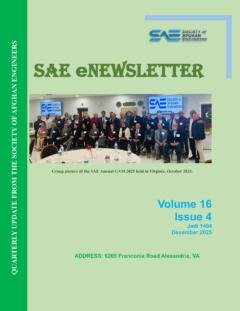
SAE Newsletter – December 2025, Volume 16, Issue 4, Jadi 1404
Group picture of the SAE Annual GAM 2025 held in Virginia, October 2025.
Volume 16
Issue 4
Jadi 1404
December 2025
Quarterly Update from the Society of Afghan Engineers
Table of Contents
- Message from the Editor-In-Chief
- President’s Greetings
- Message from the Chairperson of the Board of Directors
- News From Kabul
- Report on AEBT–SAE Online Classes October–December (2025)
- Afghan Architecture Studio Classes for students in Afghanistan
- Arch. Tooba Roshan’s Page
- Book Review by Omar Mohammad
- New Book by Hafizullah Wardak
- Bamiyan: The Last Statues and the World’s Oldest Oil Paintings, by Ghulam Feda
- Climate Change and Its Impact on Water Resources in Afghanistan, [Part-II of II]: Supplemental Materials by Dr. Gul Afghan Saleh
- Readers’ Comments and Responses
- The Society of Afghan Engineers Office Holders
Editor-In-Chief Message
I am pleased to present the quarterly update on the activities of the Society of Afghan Engineers (SAE) through Volume 16, Issue 4 of the SAE eNewsletter. This issue marks the beginning of the New Year 2026 correspond with the month of Jadi 1404 in the Hijri Shamsi calendar. The editorial board extends its warmest wishes for a Happy New Year and hopes all our members enjoy a year filled with joy, prosperity, productivity, and good health.
I like to begin my page with a brief note highlighting important activities or news from our society. This October, the 2nd Reunion of Afghan Engineers and Architects Alumni was held in Virginia, bringing together nearly 170 participants. The event was designed to foster celebration, professional camaraderie, and a genuine sense of connectedness as members and colleagues reunited, shared memories, and exchanged professional experiences. The reunion proved to be exceptionally successful, and the enthusiasm throughout the gathering reflected a spirit of friendship, joy, and warmth among all who attended. I would like to extend my sincere congratulations to the leadership and members who organized this event, along with my deep appreciation for their hard work and dedication.
This issue highlights recent events at SAE and other activities crucial to the professional growth of our members. Featured topics include messages and updates on members from Mr. Jalal Masumi, President of SAE, and Eng. Abdul Manan Khalid, Chairman of the Board of Directors. Additionally, we have invited esteemed authors and contributors to share their knowledge and expertise. I hope our readers find their insights valuable and thought-provoking.
As always, we have featured Architect Tooba Roshan’s poster page, showcasing her vibrant and expressive visual compositions. Her work offers layers of curiosity, meaning, and personal intent. We hope our readers enjoy it.
We have featured two book reviews in this issue. The first is of my own book, “Place, Meaning, and Form in the Architecture and Urban Structure of Eastern Islamic Cities,” co-authored with Rahmani, which caught the attention of Mr. Osman Mohammad, a Master of Design graduate student at UC Berkeley’s College of Environmental Design, when he discovered it on the university library shelves for his research. Since he was fascinated with its content, I asked him to write a review of the book, who graciously eccepted and wrote an impressive reflection of the book.
The next book, “NEW BOOK: Completion of the Pashto Translation of Engineering Mechanics: Dynamics by R.C. Hibbeler,” by Eng. Hafizullah Wardak and Dr. Zarjon Baha, which is on its way to publication. The authors are enthusiastic about its potential value for engineering education in Afghanistan. We extend our warm congratulations and appreciation to both of them.
Eng. Ghulam Feda’s article on “Bamiyan: The Lost Statues and the World’s Oldest Oil Painting,” addresses the newly discoveries of the artistic treasures of Bamiyan which is remarkably noted as the world’s oldest known oil paintings, hidden within the caves of the valley of Bamiyan. These paintings predate the European Renaissance by nearly a thousand years, reshaping our understanding of global art history and technological innovation.
We have added Part-II of II of the article by Dr. Saleh on “Climate Change and Its Impact on Water Resources in Afghanistan: Supplemental Materials,” which features useful supplemental literature references in support of his article.
Finally, I would like to express my sincere appreciation to Dr. Gul Afghan Saleh, Eng. Amanullah Mommandi, and Eng. Abdul Manan Khalid for their dedication and hard work as members of the Editorial Board. I am also deeply thankful to Eng. Jalal Masumi, the President of the society, and Ustad Ghulam Mujtaba, for their unwavering support, which has played a pivotal role in the continued success of this publication.
A final note: I would like dear readers to note that this Issue of SAE Newsletter covers higher than usual volume, and, accordingly, this Bulletin carries considerably more pages.
Sincerely,
Bashir A. Kazimee, AIA
Editor-in-Chief
President’s Message
Dear Fellow SAE Members & Colleagues
It is rewarding that I again have an opportunity to connect with you via this last Issue in 2025 of SAE Newsletter. With 2026 upon us as you read these lines, please accept my warm wishes for a Happy New Year. I humbly and sincerely pray that it turns a prosperous year for all people throughout the world, and especially the women and men in our ancestral land, Afghanistan.
SAE activities during this last quarter of 2025 deserve brief mention, summarized below:
(1) Delivering Online Education
Collaborative efforts by Society (SAE) and Afghan Education for a Better Tomorrow (AEBT) continued, and a series of online academic and professional classes for engineering and architecture students in Afghanistan were delivered. These sessions prepared and delivered by experienced SAE engineers and subject-matter experts with the aim to strengthen technical knowledge and provide practical learning opportunities in key engineering disciplines. Topics included:
- Foundational Understanding of Construction Management Roles – Dr. Gul Afghan Saleh
- Fundamental and Advanced Concepts of Structural Analysis – Eng. Hafiz Wardak
- Digital Design and Computer Architecture – Eng. Ghulam Feda
- Rockfall and Rockslide Mitigation Seminar – Eng. Amanullah Mommandi
- Precast Concrete – Eng. Amin Mahmood
- Architectural Precast Concrete – Eng. Amin Mahmood
(2) Architects & Engineers Alumni Re-union
This reunion event was held as a festive gathering of Afghan architects and engineers on Saturday October 11th in Chantilly, Northern Virginia. Participants included the alumni members as well as their loved ones and/or guests. Many of the alumni were SAE members but some were not. They came from New York, Florida, California, Texas, Virginia, Marland, New Jersey inside the U.S., and the UK, the Netherlands, and Canada. The gathering, organized with SAE support, was entirely funded by those who attended it through paying a registration fee. Participants seemed to enjoy the reunion opportunity held in an atmosphere of joy and fellowship. One hundred and ten (110) individuals participated in the event that lasted about 7 hours.
(3) GAM 25
SAE 2025 general assembly meeting (GAM 25 for short) was convened on October 12th from 2:30 pm to 6:00 pm in Northern Virginia. For the benefits of the members who could not attend in person, the meeting proceedings were also transmitted digitally using livestreaming service. Thirty-seven (37) active members and nine (9) prospective members were physically in attendance.
Figures 1 & 2: Photo of members from SAE 2025 general assembly
Figure 3: Photo of members from SAE 2025 general assembly
After recitation of verses from the Holy Quran, formally opening the meeting, per agenda, SAE Vice President (Tooba Roshan) ran it as follows:
- Society President (Jalal Masumi) presented a “Year in Review” report involving SAE performance.
- Board Member Hadi Rakin delivered a presentation addressing Economic Development and Transportation Infrastructure Needs in Afghanistan.
- Board Chairman Manan Khalid delivered a presentation addressing Impending Water Crisis of Kabul.
- Board Member Ghulam Mohammad Feda delivered a presentation addressing Renewal Energy Potential of Afghanistan.
- Engineer Reza Afshar delivered a presentation addressing construction of the Islamic Crescent Center (where the meeting was being held) as an engineering project, from concept to utilization.
- Engineer Jalal Masumi and Engineer Nick Chow (ex-colleague) delivered a presentation addressing the $2.5 billion Woodrow Wilson Bridge mega project.
- Board Vice Chairman Ghulam Mujtaba was recognized for outstanding service to the Society as a senior member.
Figure 4: Photo of members from SAE 2025 general assembly. From Left to right: Hashim Baluch, Jalal Masumi, Manan Khalid, Ghulam Mujtaba, and Tooba Roshan.
- Breaks to hold late afternoon prayers and to consume refreshments, were observed.
- At the end, Q & A from the floor audience was addressed by the presenters.
- The meeting was adjourned about 6:00 pm as Board Chairman wrapped it up with positive remarks and commendations for the support team and the audience participation.
Outstanding highlight of the meeting was the keen interest shown by prospective members who chose to fill out membership application forms following GAM 25. Especially noteworthy was Engineer Latif Mahjoor’s interest to join SAE as a new member, pledging and then delivering $1,000 donation in addition to the $120 annual membership fee. The Society management hereby again express gratefulness for his unmatched generosity.
- Enthusiastic interest by several new-comers to SAE sparked corresponding SAE management reaction, leading to an exploratory zoom meeting on November 22nd.
- The November 22nd meeting provided impetus to foster wider and more active engagement of fresh energy in the organization.
- The three technical presentations in the GAM event (Kabul Water Crisis, Afghanistan Transportation and National Economy, Afghanistan’s Renewable Energy Potential) proved worthy topics to be pursued as future SAE engagement projects.
In the aftermath of the earthquake in late September that inflicted heavy casualties (loss of life and property), Engineer Amin Mahmood took a bold, patriotic, humanitarian initiative to visit the devastated localities – using his personal funds – and deliver a professional response. He designed and then constructed a prototype emergency shelter unit. His effort and initiative were received with great enthusiastic commendation and appreciation, giving rise to pursue building low-cost shelters as a potential future project. Engineer Mahmood’s efforts described above may well be considered beyond outstanding. But he humbly noted it as “call of duty”. SAE wishes him best of luck in pursuit of his professional career to serve humanity and fellow countrymen, inside and outside Afghanistan. As related noteworthy information, funds raised as donation was $8,240. Engineer Mahmood matched $8,240 correspondingly. Thus, the total funds dedicated and used to build additional units came to be $16,480. This amount is estimated to fund construction of 10-12 shelter units as prices change.
Figures 5, 6 & 7: photos showing interior and exterior of Kunar emergency shelters using funds raised by Afghanistan Relief Alliance (ARA)
(4) Futuristic View
While looking into future with hope for better tomorrow, we all should work as a collective in 2026 to bring new administration into SAE by actively taking part in the election process. I hope that new faces and new energy take charge of the organization helm and navigate the course of sailing SAE to a destiny with more successful and rewarding achievements.
Sincerely,
Jalal Masumi
SAE President
Message from the Chairperson of the Board of Directors
Mission Statement and Acknowledgment of Service
The mission of our noble Society is to provide a forum for Afghan engineers, architects, and scientists to share experiences and knowledge in pursuit of fostering scientific, architectural, and engineering competency, with the goal of enhancing Afghan capacities in these fields and serving Afghanistan and its people. In alignment with this mission—and in response to the challenging conditions on the ground in Afghanistan—the Society has pursued various initiatives to fulfill its responsibilities.
Since 2024, and in accordance with its short- and long-term strategic plans, the Society, in collaboration with AEBT, has been actively engaged in delivering online education to students and professionals in Afghanistan. The success of this program is a direct result of the dedication and hard work of Mr. Ghulam Feda, as well as the commitment, patriotism, and selfless service of our honorable instructors. I therefore wish to dedicate this message specifically to those members who have voluntarily devoted countless hours of their personal and family time to this noble effort.
In no particular order, they are:
Dr. Saboor Rahim, Ustad Bashir Kazimee, Arch. Tooba Roshan, Arch. Najim Azadzoi, Eng. Ghulam Feda, Ustad Hafiz Wardak, Eng. Amanullah Mommandi, Dr. Gul Afghan Saleh, Ustad Mehdi Sabet, Ustad Rafi Samizay, Arch. Homayoon Ibrahim and Ustad Amin Mahmood.
I would also like to acknowledge the valuable contributions of Dr. Mahmood Samizay, Arch Aziz Ghani and Ms. Mehrangaze Danishwar – who continued to devote their time and efforts to this noble cause.
I have intentionally listed Ustad Amin Mahmood last, as his contributions have been truly above and beyond the call of duty. In addition to his educational efforts, he has made extraordinary personal sacrifices by traveling to Afghanistan and providing assistance to disaster-stricken communities through his engineering expertise and personal financial resources. Whether responding to floods, earthquakes, or other emergencies, he consistently goes wherever help is needed. Notably, he designed and constructed a bridge in Paktika Province using his own funds and, more recently, designed and financed fifteen emergency shelters for families in need in Kunar Province. His patriotism, courage, and humanitarian commitment are exceptional and deeply commendable. On behalf of the Board of Directors, I extend our sincere appreciation to all of these dedicated individuals and wish them continued health, strength, and success as they carry forward their noble mission.
Sincerely,
Abdul Manan Khalid, P.E., LEED (BD+C)
Chairman, SAE Board of Directors
News from Kabul
By Eng. Walid Howaida
SAE Representative in Afghanistan
On 7 October I coordinated a meeting with the leadership of TOLO TV which is the most popular Afghan TV.
I, together with Ustad Amin Mahmood, had a very productive one-hour meeting with TOLO TV. They agreed to broadcast Ustad Amin Mahmood’s lectures for 20 weeks. I also presented SAE’s capacity to offer lectures in various fields of engineering, which they warmly welcomed.
On 9 October, I handed over ten different books to Mr. Shinwari, the Senior Adviser to the Minister of Public Works. These books had been sent by Mommandi Sahib and Ustad Amin Mahmood, who brought them to Kabul. Mr. Shinwari expressed his appreciation.
Figure-1: Leftt-Mr. Shinwari Senior adviser to the minister of Public Works with Howaida. Figure-2: Right -Mr. Ataash the general director of Afghanistan Development Company with Ustad Amin Mahmood and Howaida.
On 12 October, I coordinated a meeting with Mr. Ataash, the Director General of the Afghanistan Development Company—the largest government entity responsible for implementing the Qushtepa Canal project. During this meeting, Ustad Amin Mahmood exchanged ideas with him and offered technical support, which was warmly welcomed by Mr. Ataash and his team.
On 13 October, I coordinated a meeting between Ustad Amin Mahmood and the Minister of Public Works. During the meeting, Ustad Amin Mahmood offered his technical expertise, which was received very warmly by the Minister.
On 19 October, a group of male and female engineers who have been attending Professor Amin Mahmood’s online lectures participated in a scientific excursion to Khan Steel Company. During this visit, they gained valuable new experience as the Khan Steel staff explained the entire production process and provided excellent hospitality to the visiting engineers.
On 6 November I participated and had a speech at the certificate distribution ceremony of those civil engineers who were attended project Management online lectures that was taught by Dr. Gul Afghan Saleh. The ceremony took place at the ASHYANA compound.
During November 2025 I also attended the SAE’s board meeting with new young members and some online lectures.
On 4 December I participated and had a speech at the certificate distribution ceremony of those civil engineers who were attended Structural Analysist online lectures that was taught by Ustad Hafiz Wardak. The ceremony took place at the ASHYANA compound.
Figure-3: Certificate distribution to Miss. Maryam Ahmadzai the only female who participated in the ceremony.
Figure-5: Eng. Amin Mahmood, Howaida, Male & female engineers and staff members from Khan Steel Company.
Figure-4: Male Engineers who participated in the ceremony
Report on AEBT–SAE Online Classes Conducted in October–December (2025)
By Ghulam Feda
(Disclaimer: The views and information expressed in this article are those of the AEBT. The SAE is not responsible for the accuracy of the data, references, or recommendations provided in this article.)
1. Introduction
Afghan Education for a Better Tomorrow (AEBT), in collaboration with the Society of Afghan Engineers (SAE), conducted a series of online academic and professional classes during October and November for male and female engineering and architecture students in Afghanistan. These classes were designed to address the severe disruption of higher education and to ensure continued access to quality technical learning for Afghan youth of both genders.
This initiative reflects the shared commitment of AEBT and SAE to inclusive education, capacity building, and the development of Afghanistan’s future technical workforce.
2. Program Overview
The online sessions were delivered by experienced Afghan engineers, professors, and subject-matter experts, primarily members of SAE, through accessible virtual platforms. The program ensured participation of both men and women students, promoting equal learning opportunities despite ongoing educational and social challenges.
The courses combined theoretical knowledge with practical applications, aligned with Afghanistan’s infrastructure, construction, and development needs.
3. Topics and Instructors
The following courses, seminars, and certification activities were conducted during the reporting period:
- Foundational Understanding of Construction Management Roles
Instructor: Dr. Gul Afghan Saleh - Distribution of Certificates for Construction Management
Date: November 6 - Fundamental and Advanced Concepts of Structural Analysis
Instructor: Ustad Eng. Hafiz Wardak - Distribution of Certificates for Structural Analysis
Date: December 4 - Digital Design and Computer Architecture
Instructor: Eng. Ghulam Feda - Rockfall and Rockslide Mitigation Seminar
Instructor: Eng. Amanullah Mommandi - Precast Concrete
Instructor: Eng. Amin Mahmood - Architectural Precast Concrete
Instructor: Eng. Amin Mahmood
4. Impact of the Program
The AEBT–SAE online classes produced significant academic and social impact:
- Inclusive Access: Enabled male and female students across Afghanistan to continue higher education despite limited access to physical universities.
- Capacity Building: Strengthened technical competencies in key engineering and architectural disciplines.
- Gender Equity in Education: Provided women students continued engagement in technical education, helping prevent long-term exclusion from the professional workforce.
- Professional Mentorship: Connected students with senior Afghan engineers and academics, fostering guidance and motivation.
- Applied Learning: Addressed real engineering challenges relevant to Afghanistan, including seismic safety, landslide mitigation, and modern construction methods.
5. The Critical Need for Education in Afghanistan
Higher education in Afghanistan, particularly for women and technical students, faces unprecedented challenges. Limited institutional access, economic hardship, and social restrictions have placed both men and women at risk of losing years of education and professional development.
Without sustained educational initiatives:
* Afghanistan will face a shortage of qualified engineers, architects, and technical professionals.
* Women’s participation in the workforce will decline further, deepening economic and social inequality.
* Long-term national recovery, infrastructure development, and disaster resilience will remain constrained.
Programs like the AEBT–SAE online classes serve as lifelines, preserving academic continuity and promoting inclusive human capital development.
6. Conclusion and Way Forward
The AEBT–SAE online education program conducted in October – December demonstrates the power of inclusive, diaspora-supported education to reach both men and women students in Afghanistan. The success of this initiative highlights the need to expand online learning, engage additional experts, and secure sustainable support.
Continued investment in education—especially inclusive technical education—is essential for Afghanistan’s future stability, resilience, and self-reliance.
Figure-1: Class of Construction Management taught by Dr. Gul Afghan Saleh
Figure-2: Class of Structural Analysis taught by Ustad Hafiz Wardak
Figure-3: Class of Precast Concrete taught by Eng. Amin Mahmood
Fig-4: Rockfall and Rockslides Mitigation taught by Eng. Mommandi
Figure-5: Computer Architecture taught by Eng. Ghulam Feda
Figure-6: Awarding of AEBT/SAE Certificates to Female Students by Eng. Howaida
Afghan Architecture Studio (AAS)
Online Architecture Program for Afghan Students in Afghanistan
(Disclaimer: The views and information expressed in this article are those of the AAS. The SAE is not responsible for the accuracy of the data, references, or recommendations provided in this article.)
After two successful semesters of teaching full architecture courses beginning in October 2024, a third semester of similar architecture courses commenced in October 2025. These courses are offered under the name Afghan Architecture Studio (AAS), which was founded by a group of volunteer Afghan architects and architecture educators.
For this term, approximately thirty-five (35) students registered. All participants are Afghan female architecture students or graduates. Most of the students are from Kabul University, Department of Architecture, and Kabul Polytechnic University, with a smaller number coming from Herat University and Mazar-e-Sharif University.
Organizing and coordinating these classes has been challenging due to the wide range of students’ educational levels and professional experience. Some participants have already graduated and seek to deepen their architectural knowledge and skills, while others have completed only their third, fourth, or fifth year of study. The faculty members, who are all volunteers, strive to design course content that is meaningful and beneficial for students across this diverse spectrum.
This semester, which began in November 2025, will continue until March 2026. Given the varied academic backgrounds of the students, they were divided into two groups:
- Group A consists of fifteen (15) students who have completed their bachelor’s degrees in architecture and are interested in advanced architectural theory and design. For Group A, Prof. Sabet has developed a dedicated course syllabus. The primary design assignment for this group is the conceptual and architectural design of a War Trauma Center for Children in Kabul.
This project proposes a medium-scale trauma center for 60 children in Kabul, structured around interconnected housing, training, caretaker, and cultivation spaces. The design prioritizes safety, psychological healing, and social interaction, using climate-responsive strategies and simple materials to create a sustainable and supportive environment. - Group B includes more than twenty (20) students who have completed their second, third, or fourth year of architectural studies. Architect Hamayon Ibrahim has developed and implemented a course syllabus for Group B, designed to introduce students to fundamental architectural drawing skills and design techniques. The course curriculum includes instruction in orthographic drawing, as well as two-dimensional (2D) and three-dimensional (3D) design presentation techniques. Enrollment for the course exceeds twenty students. The course commenced on November 19, and to date, three lectures have been successfully delivered. Supplementary instructional materials and learning resources are provided to students through an organized WhatsApp group to support continuous learning and engagement.
Figure-1: Group A assignment -War Trauma Center for Children in Kabul – above screenshot of class meeting, from left to right: Najim Azadzoi, Mehdi Sabet, Rafi Samizay, and Hamayon Ibrahim.
Figure-2: Group B assignments – Fundamental of Architectural Drawings.
Students are given assignments to practice drawing orthographic shapes in 2-D and 3-D and exercises architecture graphics and letters. End of the first month assignment included each student to measure their own house and draw floor plans, elevations and sections of the building in scale. The students presented their projects on Wednesday, December 17. Next assignment will teach students the elements of a house design which includes the design of bathrooms, kitchens, living room, bedrooms, and other indoor and outdoor activity areas. Final project will be a complete design of a 3-bedroom house in Kabul.
Deptartment of Arch. Kabul University:
Dr. Seraj Sharifzai, head of architecture department from Kabul university, approached AAS and requested to help review the 5th year architecture student’s final thesis projects. We agreed to review the students’ work and provide our feedback as ‘advisors’. A group of five (5) students and their instructor, Mr. Sami Balkhi, were introduced to us. The five (5) students are working to redesign and develop the former American University of Afghanistan (AUA) Master and campus, now known as the Islamic University of Afghanistan.
Figure-3: Kabul University students to redesign the campus of Islamic University of Afghanistan Project
The AUA campus and master plan was designed and completed by Zarnegar architectural firm in Afghanistan in 2025. Prof. Rafi Samizay was the head of Zarnegar group. The master plan was then revised and redesigned under a USAID contract in 2010. The design group for the revision of the AUA master plan was led by architect Najim Azadzoi, AIA. Due to budget constraints, only a portion of the master plan was implemented. Since 2021, the university is taken over by the Ministry of higher education and three colleges are housed in the campus: a college of engineering, a college of agriculture and a college of religious studies. AAS has held four meetings with the 5th year architecture students and reviewed their preliminary site studies, research and verification of existing conditions of the site. Further meetings war scheduled to be held in the future.
Figure-4: The AUA Proposed campus Masterplan
AAS members lecture: Professor Rafi Samizay, AIA, a leading Afghan architect and educator presented a lecture on November 3rd, 2025, to all students. All female architecture students and male architecture students from the faculty of engineering attended this lecture. The topic was ‘The role of architects in the built environment’. The lecture was well received and the department of architecture at Kabul requested to further our lecture to all students and help the department with reviewing their school projects.
Housing Projects by students in Afghanistan: The department of agriculture at Kabul university requested to review and provide feedback of other 5th year students projects. Currently, six (6) other teams of 5th year architecture students are working to design traditional housing schemes throughout the country.
- A Village design in Panjshir
- A Neighborhood project in Maidan-Wardak
- New Futuristic Islamic Center in Ghazni
- A Neighbood design in Hairatan, Balkh
- A village design in Parun, Nuristan
- A village design in Sayed Abad Wardak
Figure-5: An image of student class presentation
Three of the above projects were reviewed in the past in November and December and the review of the 3 more projects are scheduled in late December and in January 2026.
Arch. Tooba Roshan’s page
[Poster Page Content]
Book Review
By: Omar Mohammad
Place, Meaning, and Form in the Architecture and Urban Structure of Eastern Islamic Cities / Bashir A. Kazimee and Ayad B. Rahmani
Lewiston, N.Y: Edwin Mellen Press, 2003. xi + 207 pp. Print.
Figure-1: Book by Bashir A. Kazimee and Ayad B. Rahmani / Lewiston, N.Y: Edwin Mellen Press.
In a volume comprising of six distinct sections, Bashir Kazimee and Ayad Rahmani guide the reader through an architectural, urban, and spiritual journey within the walls, courtyards, and streets that comprise the eastern Islamic city. Focusing on case studies located within urban environments of Iran, Afghanistan, and Pakistan, the manifestation of Islamic principles within the built environment of these spaces is analyzed through references to the Qur’an, Persian poetry, and both western and eastern modes of thought. Place, meaning, and form are presented no longer as static, human-creations, but as dynamic, divine interpretations of the human’s relationship to Divine characteristics.
The first three chapters of the book introduce the reader to the spiritual dimensions of “place”, rather than a physical orientation, but a “…spiritual one in which meanings, values, and a sense of the higher cause are kept alive and within one’s grasp of comprehension” (p. 21). Physical realities are rendered as spiritual ones by an analysis of orientation, unity, and interiority.
In chapter one, the wall is portrayed as a definitive means to orient the human physically in space, spiritually towards the divine, and internally towards their own origin. Throughout the book, the authors continuously invoke poems by the likes of Arab and Persian poets and scholars, along with multiple verses from the Qur’an, doing so in this chapter to re-contextualize the properties of the wall, including its doors and windows, into a man-made structure that possesses metaphysical properties. As the reader wanders through the Eastern Islamic city painted by Kazimee and Rahmani, the wall becomes the foundation which further elements such as the courtyard and the street are built upon.
In chapter two, the concept of unity, or tawhid, is introduced as the force that drives the synthesis of the cosmos into the intangible and tangible understanding of the human’s relationship to place and time. Light, color, geometry, numerology, and symmetry are categorized and analyzed, again through exegesis of poetry and scripture, to illuminate the reader upon hidden realities that are baked into the environment around us. The Masjid-i-Shah, located in Isfahan, Iran, is demonstrated as a prime example of these traits occurring in built form.
Chapter three presents the reader with the courtyard, an amalgamation of the wall discussed in the first chapter. While the courtyard captures an open space, its interiority is argued as a representation of a microcosm of the cosmos, representing not only earth and earthly realities, but dimensions of the heavens and the other world. By reference of a poem by Mawlana Rumi, just as within the interior of the courtyard the cosmos come to a defined center, the human looks within their own center, and finds themself (78). At its center point lies Paradise, an infinite vector that points to the heavens, allowing God’s presence to radiate within the space. The migration within the courtyard, which is discussed more fully in chapter 5, represents the human’s journey within this dimension, leading towards the dimensions of death and ultimately beyond. The architectural elements of the aiwan, the loggia, and the conditions they produce within the plan of the courtyard are illustrated as practical effects that produce these more-than-earthly realities.
After guiding the reader through an understanding of how place, orientation, unity, and interiority are defined within the context of the Islamic built environment, the second half of the book focuses on case studies through which these concepts are manifest in the typical everyday life of the urban Muslim. In chapter four, the street is presented as a “spiritual journey”, prefaced as the physical manifestation of the spiritual path of the straight and guided course, the al-sirat-al-mustaqim (103). Multiple street typologies that are particular to the Islamic city, depicted here in Iran, Afghanistan, and Pakistan, are provided through text and image to guide the reader through an understanding of how the Muslim moves in order to seek truth, find themselves, and find God, a process of purification that the authors relate metaphorically to the Islamic pilgrimage of Hajj (111). In this sense, the alleyway, the thoroughfare, the market street, and the bridge are all part of the journey on the al-sirat-al-mustaqim that all Muslims are constantly treading, even if its reality lays in the physical dimension.
Moving from the public/exterior street back into the private/interior courtyard, chapter five introduces the reader to the concept of “diurnal rotation” within the living tradition of Afghan courtyards. While on the street the Muslim moves through public space and time in a linear fashion, reaching their destination from location A to location B, the movement within the courtyard is cyclical and circular, reducing time, space, and place into memories, traditions, and histories.
The rotation of the Muslim within multiple typologies and case studies around Afghanistan are presented through images and drawings depicting the movement that occurs based on the position of the sun and the inhabitant’s daily journey, duties, and life within the courtyard. A rectangular courtyard in a village in Kandahar, the courtyard of a house in Herat, and the courtyard of a local mosque also in Herat produce an environment of internal migration, rotation, and flexibility that counteracts the western concept of “home” being a static space where “traveling” does not occur. In this chapter, the authors greatly illustrate how Islamic principles, those of both Shariah and Tariqah, have embedded themselves into the simple realities of everyday life, opening the reader’s eyes of both the mind and the heart to inner realities of Islamic architecture and design that today are slowly reaching extinction.
The final chapter touches upon these points, emphasizing the role of the vernacular in the making of Islamic places, architecture, and environments. “For the Muslim the vernacular is not first a visual virtue but a human one, and is best advanced in the manner of experience itself” (179). The act of being Muslim itself is an experiential one, one that is universal and can be applied to multiple cultures and realities as long as it is defined by a common set of traditions. The vernacular, in Islam, is not just the form that environments take, but it is in the actions, experiences, interactions, and life itself that the environment produces. This final chapter makes claims to that concept, and in so doing rather than proposing contemporary vernacular design case studies or proposals, it allows the reader to sit with oneself and ponder over the realities of the Islamic city today: its successes, its failures, and its embodiment, or lack of, the vernacular.
While acts of modernity directly, or often indirectly, destroy the traditions of the vernacular across both religion and architecture, the vernacular offers humanity an opportunity to look to tradition in order to build for the future.
This book, written twenty-two years ago at the time of writing, is an exemplary work into inspiring and encouraging designers, artists, architects, engineers, students, and scholars to study the way in which Islam has penetrated the cities of tradition. This knowledge must be embraced and applied to the design of the cities of the future. In modern design education there is a desire to return to knowledge of the vernacular, the spiritual, and the indigenous in ways that can make absolute change within the environment, the climate, and the socio- cultural landscape. Place, Meaning, and Form in the Architecture and Urban Structure of Eastern Islamic Cities by Bashir A. Kazimee and Ayad B. Rahmani is a piece of text that must be visited by Muslims and non-Muslims alike who are in search of a design and architecture discourse rooted in spirituality and tradition, a rare field to come across in today’s age.
Mr. Omer Mohammad biography
Omar Mohammad is an Afghan-American designer. His practice and research embed buildings, drawings, graphics, objects, and software with culture. He is currently a graduate student pursuing a Master of Design at the UC Berkeley College of Environmental Design. He received his BA in Design from UC Davis.
NEW BOOK: Completion of the Pashto Translation of Engineering Mechanics: Dynamics by R.C. Hibbeler
Hafizullah Wardak
The foundation of every technologically advanced nation lies in its ability to educate, empower, and equip its younger generation with technical and scientific knowledge. Engineering is not merely a profession — it is the practical expression of human intellect that transforms imagination into innovation and challenges into solutions. Every structure, bridge, canal, dam, and power plant begins as an idea in the mind of an engineer trained to think critically and act precisely.
In the 21st century, where technology shapes economies and defines sovereignty, transferring engineering knowledge to the next generation is a national imperative. When students can study advanced science and mathematics in their own language, barriers disappear and learning becomes deeper, faster, and more creative. Translating world-class engineering textbooks into Pashto democratizes access to this knowledge — enabling students across Afghanistan to understand, design, and innovate with confidence. It is a direct investment in the human infrastructure that sustains physical infrastructure.
These initiatives are not about translation alone; they are about mobilizing the younger generation to become the technical leaders of tomorrow — men and women capable of rebuilding and re-engineering their homeland with skill, vision, and integrity. Through education, Afghanistan can transform from a consumer of technology into a creator of technology.
Engineering Knowledge and National Development
Modern Afghanistan stands at a decisive moment where well-informed and highly trained engineers will determine the nation’s future trajectory. The large-scale infrastructure projects now underway demand professionals fluent in modern design, construction technology, and resource management.
The Qosh Tepa Canal Project
A striking example is the Qosh Tepa Canal, an under-construction irrigation megaproject in northern Afghanistan that diverts water from the Amu River to irrigate the arid northern plains.
- Purpose: To irrigate more than 550,000 hectares of desert land across Balkh, Jawzjan, and Faryab provinces — increasing Afghanistan’s arable land by nearly one-third.
- Water Source: The Amu River, which forms Afghanistan’s northern border with Tajikistan and flows into Uzbekistan and Turkmenistan.
- Status: Construction is progressing rapidly, with Phase I completed ahead of schedule.
- Estimated Completion: The full canal system is expected to become operational by 2028.
When completed, this canal will transform vast desert areas into fertile farmland, enhance food security, create employment, and strengthen national economic independence. Yet, such ambitious undertakings demand engineers proficient in hydrology, geotechnics, soil mechanics, and environmental engineering — precisely the kind of knowledge cultivated through advanced textbooks like Engineering Mechanics: Dynamics.
Hydropower and Energy Independence
Equally vital are the ongoing plans to construct hydropower dams on the Kunar River in eastern Afghanistan and the Kokcha River in the north. These projects are essential for generating clean electricity, reducing dependence on imported energy, and promoting rural electrification. Their success depends on engineers well-versed in fluid dynamics, structural analysis, and energy systems — all disciplines grounded in engineering mechanics.
Resource Exploration and Industrial Development
Afghanistan is endowed with vast mineral and rare-earth resources — copper, lithium, iron, gold, and other elements vital to modern technology. Harnessing these resources responsibly requires a new generation of educated engineers, geologists, and materials scientists who can ensure safe, efficient, and sustainable development.
Educating Afghan youth in engineering and applied sciences ensures that the country’s natural wealth benefits its own people. A nation with informed engineers and scientists no longer depends on external expertise; it develops its own industries, builds its own infrastructure, and sustains its own economy. When young Afghans are equipped with knowledge and opportunity, they become agents of progress at home rather than seekers of livelihood abroad.
Completion of Another Pashto Engineering Textbook
It is therefore with great pleasure and deep gratitude that we announce the completion of the Pashto translation of Engineering Mechanics: Dynamics (15th Edition, 2022) by R.C. Hibbeler — a globally respected textbook central to Civil and Mechanical Engineering education. The translation was undertaken by Hafizullah Wardak and Dr. Zarjon Baha, and will be distributed free of charge to universities, libraries, and engineering faculties throughout Afghanistan. It is also available online via the Textbooks of Afghan Universities (د افغانستان د پوهنتونونو درسي کتابونه) website.
Rationale for Selection
The selection of this book was guided by both academic merit and long-term educational strategy:
1. It is among the most authoritative and widely adopted engineering textbooks worldwide, valued for developing analytical thinking and problem-solving skills.
2. The principles of dynamics are fundamental to all branches of engineering and evolve slowly, ensuring lasting academic relevance.
Following the successful completion of our previous works made available to the Afghan engineering community in Pashto, this translation represents the third milestone in a continuing educational mission.
- First book: Structural Analysis in Pashto — authored and published in three volumes in 2020, distributed widely across universities and libraries, and now used as a standard teaching and reference text.
- Second book: Mechanics of Materials by R.C. Hibbeler — translated into Pashto and published in two volumes in 2023, with official translation rights obtained from Pearson Education after a two-year process.
- Third book: Engineering Mechanics – Dynamics — completed efficiently in under two years, demonstrating the team’s growing experience and commitment. Official translation rights obtained from Pearson Education for Engineering Mechanics series, Dynamics and Static, was a smooth process. The book is now freely accessible on the Afghan Universities Books website, and printing is being planned at our own expense for distribution free across the country.
- Fourth book (in progress): Engineering Mechanics – Statics, expected to be completed next year, which will complete the full Mechanics series in Pashto.
This sequence of projects represents a long-term vision to build a comprehensive library of engineering knowledge in Afghanistan’s national language Pashto, making world-class technical education accessible to every student, regardless of geography or background.
Purpose and Educational Scope
This Pashto edition provides a comprehensive and accessible presentation of engineering mechanics, focusing on motion, forces, energy, and vibration. It maintains all technical accuracy — including diagrams, equations, and examples — while enhancing linguistic clarity and comprehension for Afghan students. Its purpose is to empower instructors and learners to develop strong analytical foundations, fostering curiosity, innovation, and confidence in solving real-world engineering problems.
Relation to the Statics Volume
The Dynamics volume follows directly from the Statics chapters (1–11) in the Engineering Mechanics series. The Statics translation is scheduled for completion in 2026, ensuring that Afghan students will soon have access to the full Engineering Mechanics sequence in Pashto — a historic first in the nation’s academic landscape.
Structure and Chapter Overview
The Pashto edition of Dynamics comprises over 1,160 pages, covering Chapters 12–22: Kinematics, Kinetics, Energy Methods, Impulse and Momentum, Rigid-Body Motion, and Vibrations. Each chapter includes worked examples and end-of-section problems, with selected solutions provided at the end of the text.
Acknowledgments
We gratefully acknowledge Pearson Education for granting translation rights and extend deep appreciation to Dr. Soorgul Wardak, Professor at the University of California and former Kabul University faculty member, for his valuable academic input.
Special thanks to Dr. Yahya Wardak of Kinderhilfe-Afghanistan (Germany), whose organization has published more than 389 academic textbooks since 2010 in collaboration with Afghan universities. We also recognize Mr. Hekmatullah Aziz and the Kabul Publication Team for their dedication in producing and distributing this work, as well as the Ministry of Higher Education’s Publication Department for its continued support and coordination.
Final Reflection: Investing in Minds, Building the Nation
All of our published textbooks — past, present, and future — are provided free of charge to Afghan universities, libraries, and professional institutions as part of a long-term vision to rebuild the nation through education. Engineering knowledge is the engine that powers civilization. A nation that cultivates its own engineers builds its own roads, designs its own infrastructure, manages its own energy, and safeguards its own environment. Textbooks like Engineering Mechanics: Dynamics are not merely academic volumes; they are instruments of national transformation — bridging science and society and turning knowledge into nation-building.
When Afghan students gain access to high-quality technical materials in Pashto, they learn to think independently, question critically, and innovate creatively. They become the bridge between tradition and technology — capable of guiding Afghanistan toward self-reliance and prosperity. The new generation of engineers will be the architects of the Qosh Tepa Canal, the Kunar River hydropower dams, and the future industries that will extract and refine Afghanistan’s mineral wealth for the benefit of its people. By investing in knowledge, we invest in peace, stability, and progress. The youth we educate today will not seek opportunities abroad; they will build them at home. They will transform Afghanistan’s mountains, rivers, and deserts into sources of power, food, and livelihood. Through education and engineering, Afghanistan will rise again — stronger, wiser, and self-reliant.
Wishing everyone a happy, healthy and successful year 2026. Our dua is for a peaceful and prosperous Afghanistan.
Hafizullah Wardak
Dr. Zarjon Baha
Few sample pages of the book: Dynamics in Pashto Language
Figure 1. Example of the table of Content page
Figure 2. Page showing problem, and text of a new section
Figure 3. Page showing procedure for analysis, and an example with solution
Figure 4. Page showing example with solution
Figure 5. Page showing problems section
Biography of Eng. Hafizullah Wardak
Eng. Hafizullah Wardak was born in Mohammad Quli village, Jaghatu District, Wardak Province, Afghanistan. He is blessed with two sons, two daughters, and ten grandchildren.
He completed his early education in Wardak and Kabul, graduating from Habibia High School. As an AFS Scholar, he spent one year at Manheim Township High School in Lancaster, Pennsylvania (USA) before returning to Kabul. He earned his B.Sc. in Civil Engineering from the University of Hawaii through the East-West Center Scholarship, and his M.Sc. in Structural Engineering from Case Western Reserve University (Cleveland, Ohio).
He also completed all Ph.D. coursework in Structural Engineering at the University of Alabama in Huntsville.
After completing his master’s degree, Eng. Wardak served for six years as an Associate Professor (Pohanmal) at the Faculty of Engineering, Kabul University. In 1981, after the Russian invasion, he immigrated to the United States, where he worked with several leading engineering organizations:
- Pile Dynamics Inc. (Ohio) – Structural Engineer
- Sargent & Lundy (Chicago) – Structural Specialist Engineer, Nuclear Projects
- United Technologies (Alabama) –Solid Rocket of The Space Transportation System Structural Engineer
- The Boeing Company – Over 30 years as Technical Fellow in Structural Engineering, technical leader and contributing to the NASA International Space Station Program and multiple advanced/new aircraft development/new programs.
He holds a U.S. patent, has authored numerous technical papers, and has received awards and professional recognitions from Boeing, NASA, and United Technologies. In 2022, he was included in “Who’s Who Worldwide” for leadership and achievement in engineering.
Since retirement, Eng. Wardak has dedicated his efforts to advancing engineering education in Afghanistan, translating and publishing major engineering textbooks in Pashto for university use in Afghanistan, in collaboration with Dr. Zarjon Baha.
His published works include:
1. Structural Analysis – 3 Volumes (2020)
2. Mechanics of Materials – 2 Volumes (2023)
3. Engineering Mechanics: Dynamics – in the printing process (2025)
Through these initiatives, Eng. Wardak continues his lifelong mission to empower Afghan engineers and students with accessible, high-quality technical knowledge in their native language by offering online Structural Analysis classes to the Afghan Engineers, male and female.
Bamiyan: The Lost Statues and the World’s Oldest Oil Paintings
By Ghulam M. Feda
(Disclaimer: The views and information expressed in this article are those of the author. The SAE is not responsible for the accuracy of the data, references, or recommendations provided in this article.)
High in the rugged mountains of central Afghanistan lies Bamiyan, a valley that once served as the vibrant crossroads of civilizations along the ancient Silk Road. For centuries, Bamyan was home to towering statues of the Buddha, sanctuaries carved into the cliffs, and murals that astonished pilgrims and travelers alike. While the destruction of the giant Buddhas in 2001 captured global attention, the lesser-known treasure of Bamiyan is equally remarkable: the discovery of the world’s oldest known oil paintings, hidden within the caves of the valley. These works predate the European Renaissance by nearly a thousand years, reshaping our understanding of global art history and technological innovation [1].
Figure-1: Bamiyan Valley showing former locations of the Bamiyan Buddhas
Bamyan’s Historical Significance
Between the 4th and 8th centuries CE, Bamyian emerged as a thriving Buddhist center where monks, pilgrims, and merchants mingled. Its monumental Buddhas, carved directly into sandstone cliffs, symbolized both spiritual devotion and artistic grandeur. Surrounding these statues were more than 700 caves, many adorned with murals that depicted Buddhist cosmology, divine figures, and intricate geometric patterns. These murals provide invaluable insights into the cultural exchanges that shaped Central Asia at the time [2].
The Discovery of the World’s Oldest Oil Paintings
In 2008, a team of Japanese researchers led by Yoko Taniguchi analyzed fragments of murals from the Bamiyan caves. Using gas chromatography and mass spectrometry, they confirmed the presence of oil-based binders, making these works the earliest known examples of oil painting in the world [1]. This groundbreaking discovery challenged the Eurocentric view that oil painting originated during the European Renaissance of the 15th century, these discoveries redefined the history of world art, proving that sophisticated oil-painting techniques originated in Asia, not Europe [3].
Figure-2: Western Buddha, Niche, ceiling, east
Figure-3: A section of the earliest discovered oil paintings (~650 AD) depicting buddhist imagery in Bamiyan, Afghanistan.
Figure-4: Details of paintings in Bamiyan
Techniques and Materials
The Bamiyan artists used organic binders—likely walnut or poppy seed oil—combined with mineral pigments. They prepared the rock surface with a fine clay or plaster layer before applying the pigments in multiple layers. This technique allowed for rich hues and durability, even in the harsh mountain climate. The tools may have included fine brushes, reed pens, and spatulas, showing a sophisticated understanding of artistic processes centuries ahead of their time [1][4].
Pigments and Symbolism
Scientific analysis revealed the use of natural minerals such as cinnabar (red), malachite (green), lapis lazuli (blue), and ochre (yellow and brown). These colors carried symbolic meanings in Buddhist art: blue for transcendence, red for compassion, and gold for divine illumination. The brilliance of these murals spoke not only to aesthetic beauty but also to spiritual intention, guiding monks in meditation and pilgrims in reflection [5].
Bamiyan on the Silk Road
Bamiyan’s location on the Silk Road made it a melting pot of ideas and technologies. Artistic influences from India’s Ajanta caves, China’s Dunhuang murals, and Persian decorative motifs can be traced in Bamiyan’s murals. The use of oil binders may have been a local innovation, later influencing artistic practices across Asia. Bamiyan thus stood as a beacon of cross-cultural exchange long before Europe experienced its Renaissance [6].
Legacy and Modern Significance
Today, Bamiyan stands as both a site of tragedy and resilience. The destruction of the Buddhas in 2001 was a devastating cultural loss, but the discovery of oil paintings reaffirms the valley’s global significance. UNESCO and international teams continue to work on preserving fragments, while digital technology allows virtual reconstructions. For Afghans and the world, Bamiyan remains a symbol of the shared responsibility to safeguard humanity’s cultural heritage [7].
Conclusion
The oil paintings of Bamiyan represent more than a lost chapter of Afghan history—they are a reminder that innovation, creativity, and cultural brilliance have deep roots across civilizations. Long before the European Renaissance, Afghan artists were experimenting with techniques that would shape the future of global art. Bamyan thus invites us to rethink art history not as a linear story centered in Europe, but as a shared human heritage enriched by exchanges along the Silk Road [1][6].
References
[1] Yoko Taniguchi et al., ‘The earliest oil paintings in the world found in caves of the Bamiyan Valley, Afghanistan,’ Journal of Analytical Atomic Spectrometry, 2008.
[2] UNESCO, ‘The Cultural Landscape and Archaeological Remains of the Bamiyan Valley,’ World Heritage Centre, 2003.
[3] David Hockney, ‘Secret Knowledge: Rediscovering the Lost Techniques of the Old Masters,’ Thames & Hudson, 2001.
[4] J. Winter, ‘The Conservation of Wall Paintings,’ Getty Conservation Institute, 2006.
[5] Deborah Klimburg-Salter, ‘Bamiyan: Buddhist Cave Temples in Afghanistan,’ Kunsthistorisches Institut, University of Vienna, 1989.
[6] Richard Foltz, ‘Religions of the Silk Road: Premodern Patterns of Globalization,’ Palgrave Macmillan, 2010.
[7] UNESCO, ‘Action Plan for the Safeguarding of Bamiyan,’ 2003.
Pictures: [1],[2],[3],[4} Streamline Publishing, Inc and Wikimedia Commons
Eng. Ghulam M Feda’s Bio
Ghulam M Feda earned his master’s degree in electrical and computer engineering from the University of Cincinnati, along with a BSEE from Kabul University, Faculty of Engineering. With more than 35 years of engineering experience, he has primarily held leadership roles in industrial R&D projects, focusing on optimizing organizational efficiency. Notably, his significant contributions have been within Owens Illinois, a global glass technology company headquartered in Ohio. Furthermore, he has provided guidance by serving on advisory boards for various state colleges and universities. Presently, he stands as the visionary founder and president/CEO of Afghan Education for a Better Tomorrow, an organization spearheading the development and delivery of educational resources to the conflict-affected regions of Afghanistan.
Engineer Feda has been honored with a patent award in “Glass Technology” and a Congressional award for his work in implementing innovative energy efficiency projects. He also holds a certification as a Lean Six Sigma Black Belt (LSSBB). Mr. Feda is passionate about projects that utilize technology to transform education, especially tele-education, to foster deeper learning in underserved and under-resourced communities, particularly in regions with significant needs.
Apart from his professional pursuits, Mr. Feda is an avid traveler and has authored several articles on the architectural techniques of ancient civilizations, as well as topics related to Afghan history and culture. Besides, he has been a guest on several TV shows, where he shares his scientific and historical knowledge with others. Moreover, Engineer Feda is deeply involved with several other non-profit organizations. He holds an active membership with the Society of Afghan Engineers (SAE) and holds positions as a board member for both International Orphan Care and Immigrant Integration and Empowerment. Additionally, he is the visionary founder of the Afghanistan Relief Alliance, an organization dedicated to providing crucial relief supplies to the most vulnerable and poverty-stricken families in disaster-stricken areas of Afghanistan.
Climate Change and Its Impact on Water Resources in Afghanistan
Part-II of II: Supplemental Materials
By: Dr. Gul Afghan Saleh
(Disclaimer: The views and information expressed in this article are those of the author. The SAE is not responsible for the accuracy of the data, references, or recommendations provided in this article.)
Figure-1: Effect of climate on water resources of Afghanistan
Author’s Note: This study was originally developed for the Kabul International Conference on Water, where it underwent extensive peer consultation and technical review. Although the conference presentation was not approved due to administrative constraints, the research remains highly relevant to Afghanistan’s water and climate discourse. Thanks to The Society of Afghan Engineers (SAE) who now offered their Newsletter as a platform to share these findings with a broader professional audience.
Annex I: Summary of literature review findings from 26 references listed
| Ref No. | In-text citation of reference | Summaries and Key Findings from Studies Relevant to Research Questions |
|---|---|---|
| 1 | Alam (2021) | The research paper highlights the necessity for transboundary water treaties between Pakistan and Afghanistan, emphasizing that climate change worsens the challenges of managing shared water resources. It addresses impacts on surface water, groundwater, agriculture, and water management, and underscores the importance of collaborative strategies, benefit-sharing mechanisms, and effective management practices to mitigate climate change impacts and foster positive bilateral relations. |
| 31 | Sharma, Sonder, & Sika (2015) | The study predicts significant impacts of climate change on Afghanistan’s wheat production due to reduced rainfall and rising temperatures. It highlights groundwater over-extraction, necessitating climate-resilient wheat varieties, and improved water management practices. The study underscores the urgent need for adaptation and mitigation strategies to ensure food security and socio-economic stability in Afghanistan. |
| 23 | (Nabavi & Mohammadi, 2024) | The study suggests that while climate change affects Afghanistan’s water resources, issues like uneven distribution, inadequate storage, and mismanagement of transboundary waters are more significant. With only 33% of surface water utilized, it emphasizes the need for sustainable management practices, improved policies, and Integrated Water Resources Management to address the water crisis and prevent hydro-political tensions. |
| 36 | Turkish Journal of Computer and Mathematics Education (2024) | The review emphasizes the urgent need to address climate change impacts in Afghanistan, highlighting challenges like the lack of robust climate data, limited research, insufficient resources, and the need for innovative technologies. It underscores Afghanistan’s vulnerability and the necessity for effective strategies to safeguard biodiversity and ecosystems. Future efforts must focus on sustainable management practices, research, and policy development to mitigate these challenges. |
| 39 | World Bank (2018) | The assessment on Natural Resources Management (NRM) indirectly relates to water resource management in Afghanistan. Strengthening institutional capacity, legal frameworks, and technological capabilities can benefit surface and groundwater management. Strategies for rangeland and forest conservation can be adapted for water conservation. Improved NRM governance can mitigate the economic and social impacts of water scarcity and support disaster risk reduction through integrated watershed management. These recommendations address water resource challenges in the context of climate change. |
| 46 | (Amini, 2023) | The study highlights the critical role of education, especially women’s education, in enhancing climate resilience. Educated populations can improve water management practices, ensure sustainable groundwater usage, and adopt advanced climate monitoring technologies. Enhancing education levels, particularly in STEM fields, empowers communities to manage water resources effectively and develop disaster risk reduction strategies, mitigating climate change impacts in Afghanistan. |
| 5 | (Giri et al., 2023) | The study highlights the connection between climate change impacts on forests and water resources in Afghanistan. Forest degradation affects surface water availability and groundwater recharge. Sustainable forest management, including reforestation and community involvement, is crucial for preserving water resources, reducing disaster risks, and supporting agriculture. Implementing advanced climate prediction technologies and adaptive management plans can enhance water and forest resource management in Afghanistan. |
Figure-2: Groundwater Depletion in major Afghan cities
| Ref No. | In-text citation of reference | Summaries and Key Findings from Studies Relevant to Research Questions |
|---|---|---|
| 12 | Ghulami (2018) | This study on the Kabul Basin explores climate change’s effects on water resources and agriculture, noting a significant temperature rise over the past five decades without a clear precipitation trend. Key findings include the outperformance of APHRODITE datasets, consistent temperature increases, variable precipitation projections, and the J2000 hydrological model’s effectiveness. Future runoff variability, farmer adaptation measures, and potential winter wheat yield increases are highlighted. The study emphasizes the need for improved data quality, sustainable water management, and consideration of multiple climate scenarios for policy and research. |
| 30 | Sarwary et al. (2023) | The study reveals that climate change significantly impacts Afghanistan’s agriculture, especially wheat and barley yields, due to rising temperatures. Recommendations include establishing weather stations and developing climate-resilient crops, essential for managing water resources. The projected decrease in crop yields indicates increased pressure on water resources, emphasizing efficient use and conservation strategies. The study aligns with sustainable development goals (SDGs) and underscores the need for comprehensive, adaptive approaches to managing climate impacts on agriculture and water resources. |
| 3 | Amini (2023) | The study highlights increased evapotranspiration and frequent heat waves exacerbating Afghanistan’s severe water stress. Historical data shows a mean temperature rise of 1.8°C, with future projections indicating further increases. The growing season length (GSL) may extend by 20 days by 2050, offering agricultural opportunities, but effective water resource management is crucial. These findings underscore the urgent need for adaptive strategies to address climate change impacts on water resources and agriculture in Afghanistan. |
| 20 | (Mall et al., 2019) | The study identifies key priorities for integrating disaster risk reduction (DRR) and climate change adaptation (CCA) across South Asia, including establishing institutional linkages, knowledge sharing, regional response facilities, and monitoring mechanisms. These priorities align with improving Afghanistan’s climate resilience by enhancing water resource management, groundwater conservation, agricultural strategies, and disaster risk reduction. Addressing institutional, financial, and knowledge gaps through regional collaboration can significantly mitigate climate change impacts. |
| 16 | Kochhar & Knippenberg (2023) | The study on the 2018 drought in Afghanistan shows that drought-like conditions decreased monthly per capita consumption expenditures and increased poverty. It underscores the need for resilient water management systems, advanced climate prediction technologies, and climate-smart agricultural practices. Effective management and adaptive strategies are essential to mitigate adverse impacts on consumption, poverty, and overall water resource management, emphasizing resilience and shock-responsive social protection. |
| 11 | Gauster (2021) | The study underscores the urgent need for European Crisis Management (ECM) interventions to address climate change impacts in Afghanistan. Key recommendations include promoting regional hydro-diplomacy, supporting environmental protection programs, developing strategic water infrastructure, and implementing local water management solutions. Incorporating ecological risks into crisis management strategies can enhance resilience and stability. It emphasizes the importance of integrated, coordinated approaches to managing Afghanistan’s water resources. |
| 43 | Zaryab et al. (2023) | Rapid urbanization in Kabul has led to significant groundwater depletion due to heavy abstraction and reduced recharge caused by climate change. Contaminated groundwater and inadequate institutional frameworks worsen the water crisis. Effective management and tapping into safe surface and groundwater resources are crucial to address water scarcity. These findings highlight the need for sustainable water management strategies to ensure long-term stability and resilience against climate impacts. |
| 27 | Rehana et al. (2019) | The study analyzes precipitation and temperature trends across seven agro-climatic zones in Afghanistan from 1951 to 2007. It reveals a decrease in precipitation in northern regions and an increase in southern regions, with rising temperatures across all zones. These shifts highlight the need for adaptive strategies in water and agricultural sectors, as northern regions face drought risks, while southern regions experience increased evapotranspiration and water stress. The findings emphasize the importance of region-specific climate adaptation measures. |
| 21 | Mayar, Asady, & Nelson (2020) | The study on the Kabul River Basin shows significant climate change impacts, including altered river flows, increased floods, and deteriorated groundwater levels and quality. Advanced technologies like remote sensing and hydrological modeling are crucial for climate prediction and water management. Integrated water resource management and sustainable agricultural practices are essential for groundwater conservation. The study highlights the need for robust water and wastewater infrastructure, emphasizing the economic and social impacts of climate change and the importance of strategic interventions. These findings validate earlier research on addressing water resource challenges in Afghanistan. |
| 35 | (The World Bank, 2010) | The study on the Kabul River Basin shows that climate change has significantly altered surface water flows, increased floods and droughts, and deteriorated groundwater levels and quality. It emphasizes the need for advanced climate prediction technologies, integrated water resource management (IWRM) strategies, and improved water infrastructure. The study highlights the profound impact on agriculture and the necessity of incorporating climate change considerations into disaster risk reduction strategies to mitigate adverse impacts on vulnerable populations. |
| 10 | (Farrokhzadeh et al., 2020) | The article highlights severe water scarcity in Afghanistan due to climate change, impacting agriculture and ecosystems. Over-reliance on groundwater leads to depletion and declining quality. Advanced technologies like the Water Evaluation and Planning (WEAP) system and optimization strategies are essential for sustainable water management. Efficient water practices, drought-resistant crops, and integrated disaster risk reduction can mitigate impacts on agriculture and socio-economic stability. These insights emphasize the urgent need for advanced management strategies in Afghanistan. |
| 19 | Mani et al. (2018) | The book highlights significant climate-related pressures on Afghanistan’s water resources under “climate-sensitive” and “carbon-intensive” scenarios. Surface and groundwater resources face increased stress, impacting agriculture and socio-economic stability. Advanced technologies, improved water management, and adaptive strategies are essential. Recommendations include adopting drought-resistant crops, optimizing water allocation, and integrating predictive technologies for disaster risk reduction to build climate resilience in Afghanistan. |
| 6 | (Erdoğan & Cantürk, 2022) | The study examines the relationship between climate change, conflict, and migration, impacting Afghanistan’s water resources and socio-economic conditions. Key findings include significant impacts on surface and groundwater resources, exacerbated by climate-induced migration and conflict. Advanced technologies, integrated water management, and improved water and wastewater infrastructure are crucial. The study stresses the importance of considering climate change in disaster risk reduction strategies and highlights the complexity of climate-induced migration influenced by various factors. |
| 33 | Shukla et al. (n.d.) | The ENSO-based Outlook of Droughts and Agricultural Outcomes highlights the significant impacts of climate change and ENSO events on Afghanistan’s water resources and agriculture. Prolonged droughts and reduced river flows exacerbate water scarcity, affecting both surface and groundwater. Advanced technologies for climate prediction, improved water management, and drought-resistant crops are essential. Effective resource allocation and integrating climate considerations into disaster risk reduction strategies can mitigate economic and social impacts, enhancing resilience against climate variability. |
| 42 | Zaki (2023) | The study highlights Afghanistan’s vulnerability to climate change due to factors such as widespread poverty, an arid climate, and heavy reliance on agriculture. Despite minimal emissions, Afghanistan faces severe consequences of global climate shifts. The study emphasizes the need for coordinated international efforts and robust national strategies to build resilience in water resources, agriculture, and disaster risk reduction. Proactive and sustained cooperation is crucial to support Afghanistan in addressing these challenges. |
| 29 | Sabawoon (2022) | The document by Sabawoon highlights severe challenges in Kandahar’s agricultural sector due to climate change, conflict, and economic instability. Key issues include groundwater depletion, poor water management, and disrupted agricultural activities. Border closures and the collapse of the industrial park further exacerbate the situation. Despite a temporary reduction in conflict, climate change and export unpredictability pose long-term threats. The analysis underscores the need for sustainable water management and coordinated efforts to address these interconnected challenges. |
| 40 | World Bank (2021) | The “Climate Risk Country Profile: Afghanistan” highlights the severe impacts of climate change on water scarcity, agriculture, and socio-economic stability in Afghanistan. Rising temperatures, more frequent droughts, and potential glacier loss pose significant threats. The report emphasizes the need for advanced climate monitoring technologies, sustainable water management practices, and integrating climate considerations into disaster risk reduction strategies. The document underscores the urgency of building resilience to address these escalating challenges and safeguard Afghanistan’s future. |
Summary of Findings:
The analysis reveals significant climate change impacts on Afghanistan’s water resources, agriculture, and socio-economic stability. Key findings include substantial precipitation variability, stressing the need for adaptive water management strategies. Groundwater is under severe stress from reduced surface water and over-extraction, requiring effective conservation practices. Advanced technologies for climate prediction and monitoring are crucial. Climate change severely affects agriculture, emphasizing climate-resilient crops and efficient water practices. Improved water and wastewater infrastructure is essential. Socio-economic impacts include increased poverty and migration due to water scarcity. Integrated disaster risk reduction strategies are vital, highlighting the role of advanced technologies and community involvement. Coordinated efforts, international cooperation, and sustainable practices are imperative to building resilience against climate change in Afghanistan.
Table 2: Review findings, analysis, and integration of results and recommendations
| Ref No. | Answers to Research Questions Based on Review Findings of Each Reference | Summary of Integrated Findings from All Ten References |
|---|---|---|
| 4 | Azizi & Asaoka (2020) predict that climate change will significantly reduce snow cover area and river flows in the Panjshir River basin by the mid to late 21st century, impacting water availability for agriculture and hydropower. Seasonal shifts in snowmelt will change water distribution, requiring adaptive management strategies. These changes are part of broader trends in Afghanistan, where surface water and groundwater levels are decreasing. Advanced technologies like remote sensing are crucial for predicting these changes. Implementing groundwater conservation, efficient water management, and improved irrigation practices, along with integrating climate adaptation into disaster risk reduction, is essential to ensure socio-economic stability. | Climate change significantly impacts Afghanistan’s water resources, reducing snowpack, altering precipitation patterns, and decreasing river flows. Groundwater levels and quality are declining due to over-extraction and urbanization. Advanced technologies like remote sensing and GIS are crucial for climate prediction and effective water management. Groundwater conservation strategies, efficient water use, and improved water and wastewater management are essential. Climate change adversely affects agriculture, reducing crop yields and increasing water scarcity, food insecurity, and social tensions. Socio-economic impacts include reduced agricultural productivity, health risks, migration, and intensified water-related conflicts. Effective disaster risk reduction strategies, integrated management frameworks, and coordinated efforts are vital for building resilience and ensuring sustainable water management amidst climate change impacts. |
| 26 | Noori & Singh (2021) emphasize the critical role of groundwater for Kabul’s water supply, which is threatened by over-extraction and poor management. Contamination from industrial waste, agricultural runoff, and poor sanitation poses health risks. Climate change has further reduced snowfall and altered precipitation, decreasing river flows and groundwater levels. Recommendations include sustainable extraction practices, better waste management, regular water quality monitoring, and improved water and wastewater management strategies. Advanced technologies like remote sensing are crucial for climate prediction. Effective groundwater conservation, adopting drought-resistant crops, and integrating climate adaptation into disaster risk reduction are essential to build resilience and ensure socio-economic stability. | |
| 32 | Shokory, Schaefli, & Lane (2023) highlight that climate change is exacerbating water scarcity in Afghanistan, leading to reduced snowpack, glacier melt, and increased risks of floods and droughts, adversely affecting agriculture. The country has already seen a 1.8°C temperature rise since 1950, with projections indicating further increases, leading to massive droughts. Effective adaptation strategies are urgently needed to manage water resources sustainably. Advanced technologies like remote sensing are crucial for climate prediction. Groundwater conservation strategies, including efficient irrigation and water-saving practices, are essential. Agriculture is heavily impacted by water scarcity, affecting crop yields and livestock. Effective water and wastewater management systems are vital. Economic and social impacts include reduced agricultural productivity and increased conflicts over water resources. Integrated disaster risk reduction strategies are crucial for building resilience and ensuring a sustainable future. | |
| 43 | Zaryab et al. (2023b) reveal significant water-rock interactions in Kabul Plain’s groundwater, with isotopic analysis indicating precipitation as the primary recharge source. Groundwater quality varies, with deeper aquifers having better quality, while contamination from agricultural activities and urbanization impacts shallow aquifers more. Climate change, prolonged droughts, and reduced precipitation lead to declining groundwater levels and quality. Advanced isotopic and hydro geochemical analyses are vital for monitoring. Effective groundwater management, sustainable use practices, and addressing contamination are essential. Impacts on agriculture, economic and social stability, and disaster risk reduction underscore the need for comprehensive strategies to conserve groundwater and enhance resilience. | |
| 44 | Zaryab et al. (2023) reveals significant groundwater depletion in Kabul Plain due to over-extraction, with many shallow wells drying up. Rapid urbanization has also deteriorated water quality, and there is a lack of coordination among organizations and monitoring data. Climate change further impacts Kabul’s groundwater, exacerbating depletion and contamination. Effective groundwater conservation, improved data collection, and robust management frameworks are crucial. These strategies are essential for addressing implications on agriculture, economic stability, and disaster risk reduction, underscoring the need for comprehensive and sustainable practices to manage the ongoing water crisis. | |
| 7 | Favre & Kamal (2004) present the “Watershed Atlas of Afghanistan,” offering comprehensive hydrological data and watershed maps essential for natural resource management. Divided into five river basins and 41 watersheds, the atlas emphasizes efficient water use, community involvement, and collaboration with social groups for sustainable development. It includes 142 geo-referenced images for monitoring and underscores the importance of advanced mapping technologies for resource management. The atlas provides insights into groundwater conservation, agricultural impacts, and the need for improved water and wastewater management, highlighting the strategic importance of water resources for development and disaster risk reduction. | |
| 17 | Lashkaripour & Hussaini (2007) emphasize severe drinking water shortages in the Kabul River basin due to civil war and environmental degradation. This impacts both drinking and agricultural water availability. The study highlights the urgent need for water resource management, suggesting short-term, medium-term, and long-term strategies for domestic and agricultural water provision. Environmental degradation significantly impacts water resources, and agriculture, which supplies two-thirds of Afghanistan’s national income, is severely affected by water scarcity. Advanced technologies like remote sensing and GIS are crucial for effective water management. Strategies include controlling water extraction, promoting water-saving technologies, and protecting recharge areas. Effective water management is essential for sustainable services, economic stability, and social cohesion amidst climate change impacts. | |
| 18 | Mack, Akbari, & Ashoor (2010) project a 10% reduction in annual precipitation by 2057, exacerbating water stress in Afghanistan’s Kabul Basin. This study, which highlights significant recharge variability with higher rates near streams and irrigated areas, underscores the need for sustainable management practices. Data collection was challenged by war, requiring reliance on remotely sensed data. Climate change impacts groundwater due to decreased surface water and increased extraction. Advanced technologies like remote sensing are crucial. Strategies include Integrated Water Resources Management (IWRM) and Strategic Environmental Assessment (SEA). Water scarcity impacts agriculture, necessitating climate-resilient strategies and effective water management for disaster risk reduction, addressing economic and social risks. | |
| 13 | Habib, Anceno, & Fiddes (2013) identify gaps in Afghanistan’s water sector institutions and legislation, proposing the integration of Integrated Water Resources Management (IWRM) and Strategic Environmental Assessment (SEA) for strategic management. They emphasize the role of foreign assistance in rehabilitating water infrastructure and modernizing institutions. Projecting a 10% reduction in annual precipitation by 2057, the study relies on remotely sensed data and historical records, noting significant recharge variability. Water needs are expected to rise significantly, highlighting the urgency for sustainable practices. This underscores the need for climate-resilient water protection strategies and adopting global good practices to address increasing demand and climate change impacts effectively. | |
| 22 | The Ministry of Energy and Water (2016) Hydrological Year Book compiles comprehensive data on water availability and usage, indicating significant seasonal and annual variations. It highlights climate change impacts by altering precipitation patterns and river flows, causing groundwater depletion due to over-extraction. Key challenges include data gaps, infrastructure issues, and the need for improved monitoring systems. Advanced technologies like remote sensing and GIS are essential for effective water management. Strategies include efficient water use, rainwater harvesting, and protecting recharge zones. Climate change impacts agriculture by reducing crop yields and increasing pressure on water and wastewater management systems. Economic and social impacts are significant, leading to reduced agricultural output and intensified water-related conflicts. Integrating climate change into disaster risk reduction is crucial for resilience and stability. |
Integrated Summary of Research Findings from Table 1 and Table 2
Afghanistan’s surface water resources, especially in the Panjshir River basin, are under significant stress due to climate change, reduced snowpack, and altered precipitation patterns, threatening drinking water and agricultural irrigation. Groundwater in the Kabul Basin is also endangered by climate change, over-extraction, and urbanization, leading to declining levels and quality. Advanced technologies like remote sensing and satellite imagery are crucial for tracking changes and creating climate-resilient strategies, though deployment is hindered by data collection gaps. Groundwater conservation requires robust policies, efficient water use, and community involvement. Agriculture faces threats from reduced water availability, impacting productivity and food security. Climate change challenges water and wastewater management, requiring optimized use and enhanced infrastructure. Economic and social impacts include reduced agricultural productivity and increased conflicts over water scarcity. Effective disaster risk reduction strategies must integrate climate projections and improve data collection to address increased risks of water-related disasters. Comprehensive management frameworks like Integrated Water Resources Management (IWRM) and Strategic Environmental Assessment (SEA) are essential for resilience against climate change.
Dr. Gul Afghan Saleh’s Biography
Dr. Gul Afghan Saleh is a seasoned engineering and urban planning expert with over 30 years of distinguished experience in infrastructure development, construction management, and project leadership. A licensed Professional Engineer (PE), Project Management Professional (PMP), and Certified Construction Manager (CCM), he holds a Ph.D. in Urban Planning and Design.
Currently serving as Chief Inspector for Virginia American Water in Alexandria through Gannett Fleming TranSystems, Dr. Saleh has led major U.S. projects, including National Park Service restorations and the Transform I-66 Public-Private Partnership. Prior to relocating to the U.S. in 2014, he directed donor-funded infrastructure initiatives across Afghanistan for USAID, UNODC, and WFP, managing projects valued up to $300 million in the energy and water sectors.
Dr. Saleh is a passionate advocate for professional development, serving as President of ASCE’s Bull Run Branch and Board Member of its Virginia Section. He founded Gul Engineering PLLC and has held leadership roles in Afghan engineering societies. As a UN-certified trainer and mentor with UNITAR, he has guided professionals in Afghanistan and Iraq, leaving a lasting legacy of empowerment and excellence. His career reflects a deep commitment to sustainable development, ethical leadership, and global mentorship.
Readers’ Comments and Responses
The Editorial Board of the SAE e-Newsletter invites comments and suggestions from our Society members and readers. Your feedback and responses may be shared with all readers in future editions of the SAE eNewsletter.
Comment: Manan Khalid
Muhtaram Kazimee Sahib,
I was finally able to review the upcoming issue, which has already been thoroughly vetted by our colleagues. We are truly fortunate to have you as our Editor-in-Chief. Under your leadership, the publication has gained both weight and new life—elevating its presentation as well as its content. With you at the helm, I am confident the eNewsletter will harness advances in technology and emerge as a renewed flagship of our Society. Thank you for your time, effort, and dedication.
Regards,
Response: Bashir Kazimee
Dear Khalid Sahib:
Thank you so much for your kind and generous words. I deeply appreciated your support and encouragement. It is truly a collaborative effort, and I am grateful for the dedication and contributions of our colleagues that make this work possible.
I am happy to know that the direction of the publication is advancing well, and I look forward to continuing to build on this momentum together. Your words mean great deal, and I will do my best to ensure that our newsletter continues to reflect the values and aspirations of our Society.
Kind regards,
Comment: Fazel Ahmad
I sincerely appreciate the excellent, enlightening, and productive work of all of you. Wishing you good health, continued success, and many blessings. God bless you all.
Response: Bashir Kazimee
Thank you, Fazel Sahib for your encouraging note – I am happy that the newsletter is to your liking!
Comment: Reinhard Goethert
Another good newsletter!
Some have commented that newsletter file very big and download issues. Perhaps have an AI generated summary: a summary version and full version. Easy and quick to do: most programs have built in summary makers.
Response: Bashir Kazimee
Thank you, Reinhard, we have resolved this issue and the newsletter file is already compressed for the ease of distribution without compromising the quality.
Best regards,
Comment: Hamidullah Habibi
Dear Professor Kazimee Sahib and the SAE Editorial Board,
Thank you for sharing the latest issue of the SAE eNewsletter. I truly appreciate the efforts and valuable contributions that keep us informed and connected. The publication is insightful, and I look forward to future editions.
Best regards,
Response: Bashir Kazimee
Thank you, Habibi Sahib – I appreciated your encouraging note – we do our best to ensure that our newsletter continues to reflect the values and aspirations of our Society.
Comment: Hamida
Thank you very much dear Professor Bashir Kazimee for sharing the latest issue of the newsletter with me. I truly appreciate your kind efforts, as well as the SAE editorial board’s contributions in preparing such a high-quality publication. I felt pleased to see my article on property rights included, and I found the entire issue very engaging.
I look forward to reading future editions and continuing to learn from the valuable work you and the board are doing.
Very Respectfully,
Response: Bashir Kazimee
Thank you, Hamida Jaan, for your encouraging and kind words – I am happy that our newsletter publication is to your liking. I am sure our readers will find your article inspiring and informative.
Comment: Sharif Hossainy
Dear Professor, Bashir Kazimee, AIA Editor-In-Chief SAE eNewsletter Asallam-o- Alaikom,
I hope you are in good health and spirits. I acknowledge receiving your email, regarding the quarterly issue of the October, 2025 SAE e-Newsletter. It has been beautifully done. May God Almighty grant you and all the respected editorial board members a great reward for the hard work you have endured, I wish you more success. As will as I extend my warmest wishes for a Colorful Autumn. Again thank you and Editorial subcommittee, for kind efforts and volunteering.
Sincerely,
Response: Bashir Kazimee
Mohtaram Hossaini Sahib, thank you for your encouraging words – they mean a lot to us, and we do our best to ensure that our newsletter continues to reflect the values and aspirations of our Society.
THE SOCIETY OF AFGHAN ENGINEERS OFFICE HOLDERS
SAE Executive Committee Members:
President: Jalal Masumi
Vice President: Tooba Roshan
Treasurer: Mahjan Saleh
Secretary: Gul Afghan Saleh
SAE Board of Directors-Officers:
Chairman: A. Manan Khalid
Vice-Chairman: Ghulam Mujtaba
SAE Board of Directors:
Ghulam Mujtaba, Sharif Hossainy, Manan Khalid, Yar Mohabbat, Amanullah Mommandi, Hadi Rakin, Hashim Baluch, Ghulam Feda, and Zabi Zaca
SAE Past Presidents:
Najim Azadzoi, Atiq Panjshiri, Ghulam Mujtaba, Abdul Hadi Rakin, M. Quasem Kadir, Abdul Hadi Rakin, Mohammed Hashim Rayek, Ahmad Wali Shairzay, Sohaila Sanie Shekib, and Malik Mortaza
SAE Representative in Afghanistan:
Ahmad Walid Howaida
SAE eNewsletter Editor-in Chief:
Bashir Kazimee, AIA
SAE eNewsletter Editorial Board Members:
Dr Gul Afghan Saleh Ph.D., A. Manan Khalid, M.S., P.E., LEED AP, and Eng. Amanullah Mommandi, M.S., P.E.
SAE eNewsletter publication Website:
https://afghanengineers.org/publication/
Subscribe/Unsubscribe:
The subscription to the SAE e-Newsletter is free. If you are not receiving the SAE eNewsletter directly and would like to subscribe, please send a note to: bashirkazimee@gmail.com with the subject “Subscribe: SAE eNewsletter”. To unsubscribe, send a note with the subject “Unsubscribe: SAE eNewsletter”.
Disclaimer:
The author, reporter, or agency of each publication, project, news, and products is included in this newsletter. Additional contact information of the authors and their agencies are available with the Editorial Board of the newsletter and may be provided upon request. The Editorial Board of the Society of Afghan Engineers, Executive Committee, Board of Directors, or any of its members are not liable for the accuracy or contents of the information. The reports and information are included as provided by the authors and agencies without any changes in the substance of the documents.